Sometimes we believe that social media is made up of algorithms, trends, and screens. But one need only pause for a moment to discover that it is made up, above all, of people. Of stories waiting to be told. Of questions awaiting an answer. Of loneliness yearning for companionship.
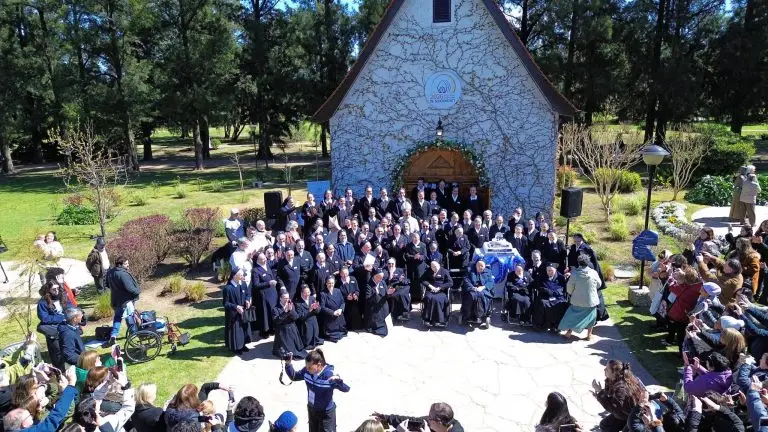
With that certainty as a starting point, the International Gathering of Digital Missionaries and Communicators took place in Florencio Varela (Buenos Aires, Argentina). It was a space that was much more than a program of activities. It was an invitation to view the digital world not as a territory foreign to the faith, but as one of the places where, to a large extent, the Church’s mission is played out today.
The Digital World as a Mission Field
We live in curious times. It has never been easier to communicate, and yet it has never seemed so difficult to truly connect. We have thousands of contacts and sometimes very few conversations. We share posts at an astonishing speed, yet we remain hungry for words that touch our souls.
That is why this gathering had something of a prophetic quality.
For three days, communicators, evangelizers, and digital missionaries from different parts of the world gathered to ask questions that go far beyond technology. How can we proclaim the Gospel in a culture permeated by algorithms? How can we build bridges amid so much polarization? How can we communicate hope in a world saturated with information, opinions, and noise?
The answers did not come as formulas. They came as intuitions.
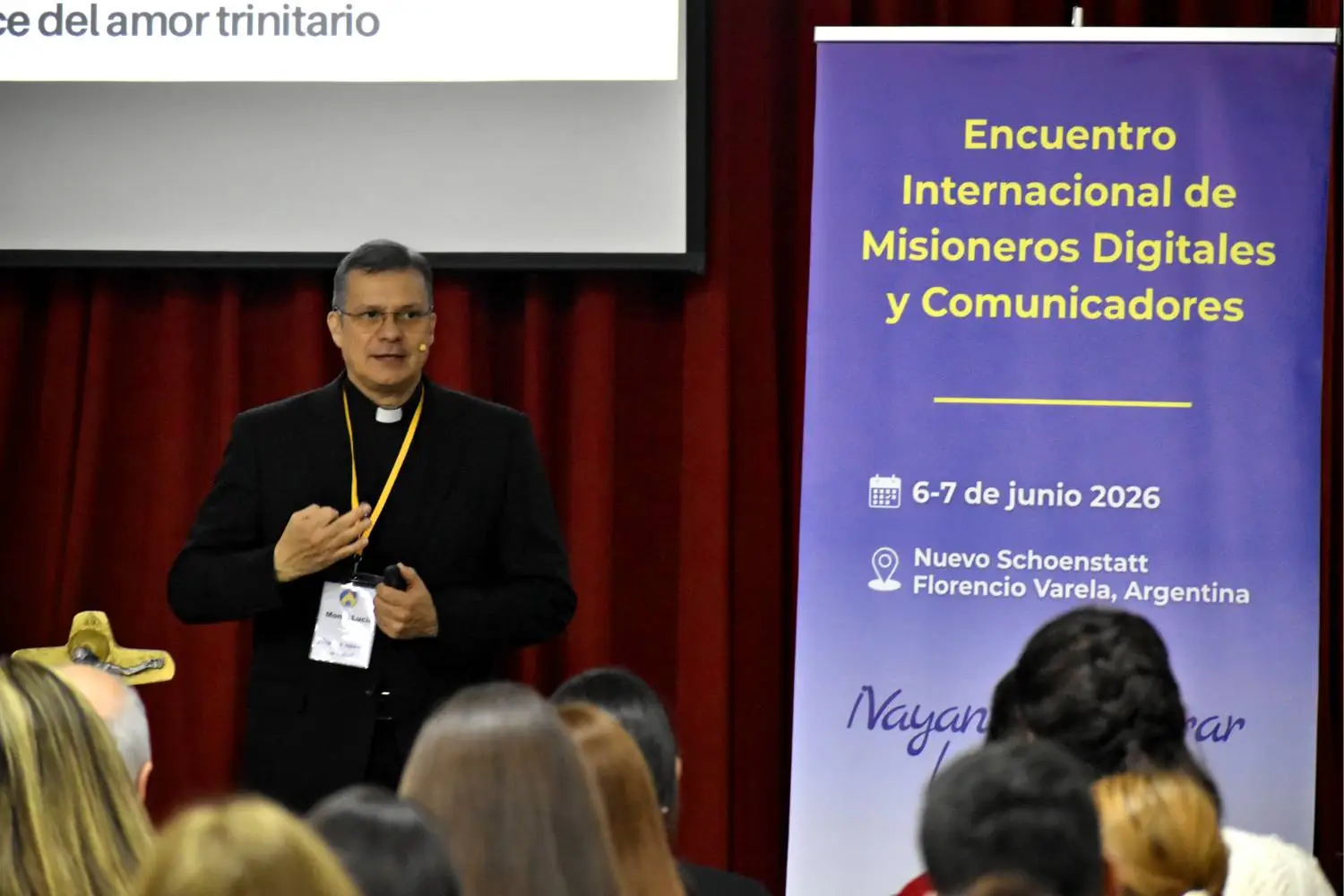
Fr. Lucio Ruiz, Secretary of the Dicastery for Communication of the Holy See, invited us to view the digital world not as just another tool, but as a true mission field. A simple statement, yet one capable of shifting our perspective. For if social media are mission fields, then they cease to be merely spaces for disseminating messages and become places where God is already at work, waiting for someone to discover Him.
In various conferences and spaces for reflection, a single certainty emerged: the Church is not called to conquer social media, but to inhabit it. Not to impose yet another voice among so many others, but to offer presence, listening, and humanity.
That was one of the words most frequently echoed throughout the entire gathering: presence. Presence to listen before responding. Presence to accompany rather than judge. Presence to remember that behind every comment, every private message, and every post there is a real person, with wounds, searches, questions, and hopes.

“To be a Good Samaritan” on social media
Father Santiago Ferrero, National Director of the Schoenstatt Movement in Argentina, used an image that lingered in many hearts: “to be a Good Samaritan on social media.” A simple and deeply evangelical expression. Because the Good Samaritan did not ask who was right nor check backgrounds before stopping. He simply saw someone wounded by the roadside and approached them.
Perhaps that is also the digital mission of our time. To approach. In a culture that tends to measure people’s worth by metrics, numbers, or “followers,” to approach. In a society where opinions abound but listening is scarce, to approach.
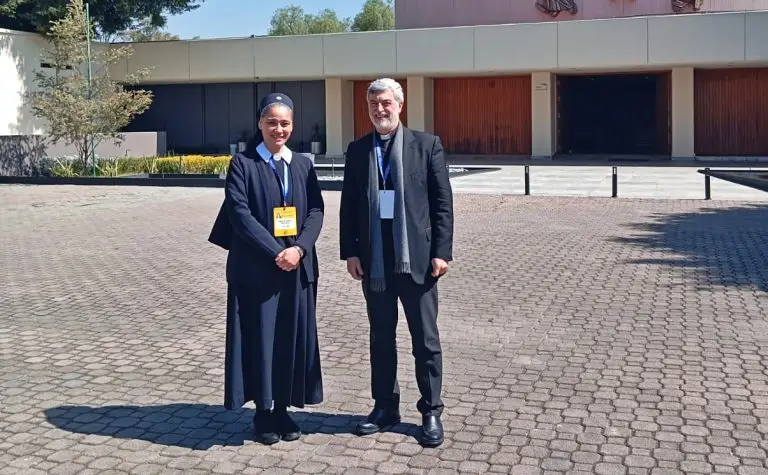
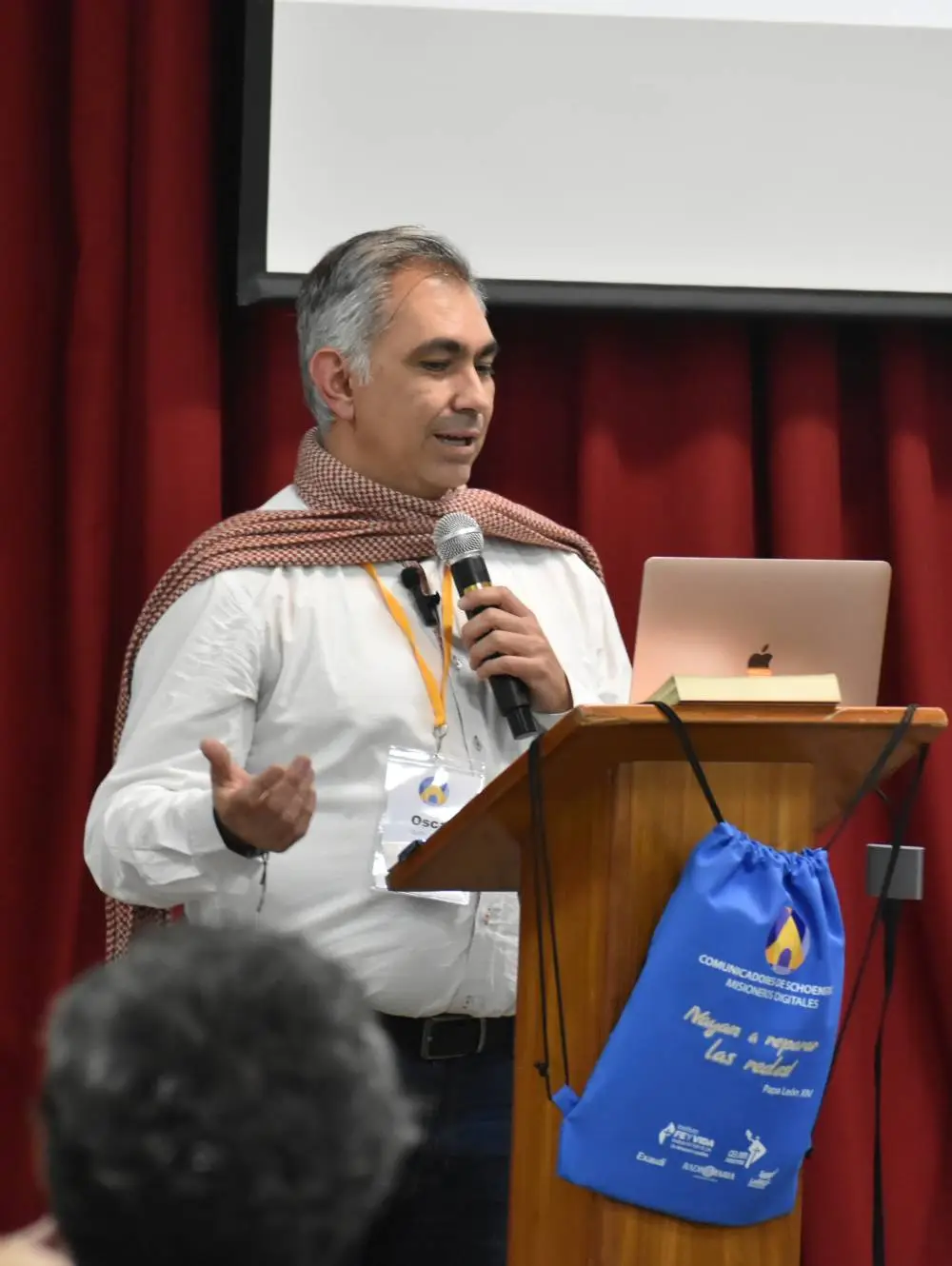
In this spirit of unity, representatives from the institutional communications office of the Latin American and Caribbean Episcopal Council (CELAM) were also present. Óscar Elizalde Prada, CELAM’s director of communications and communications consultant to the Holy See, presented inspiring examples of communication specific to the Latin American context, highlighting characteristics and lessons that can guide the Church’s mission of communication. In his remarks, he encouraged the Schoenstatt Movement to expand its presence in the media by contributing news and content that reflect the life and mission of the Movement.
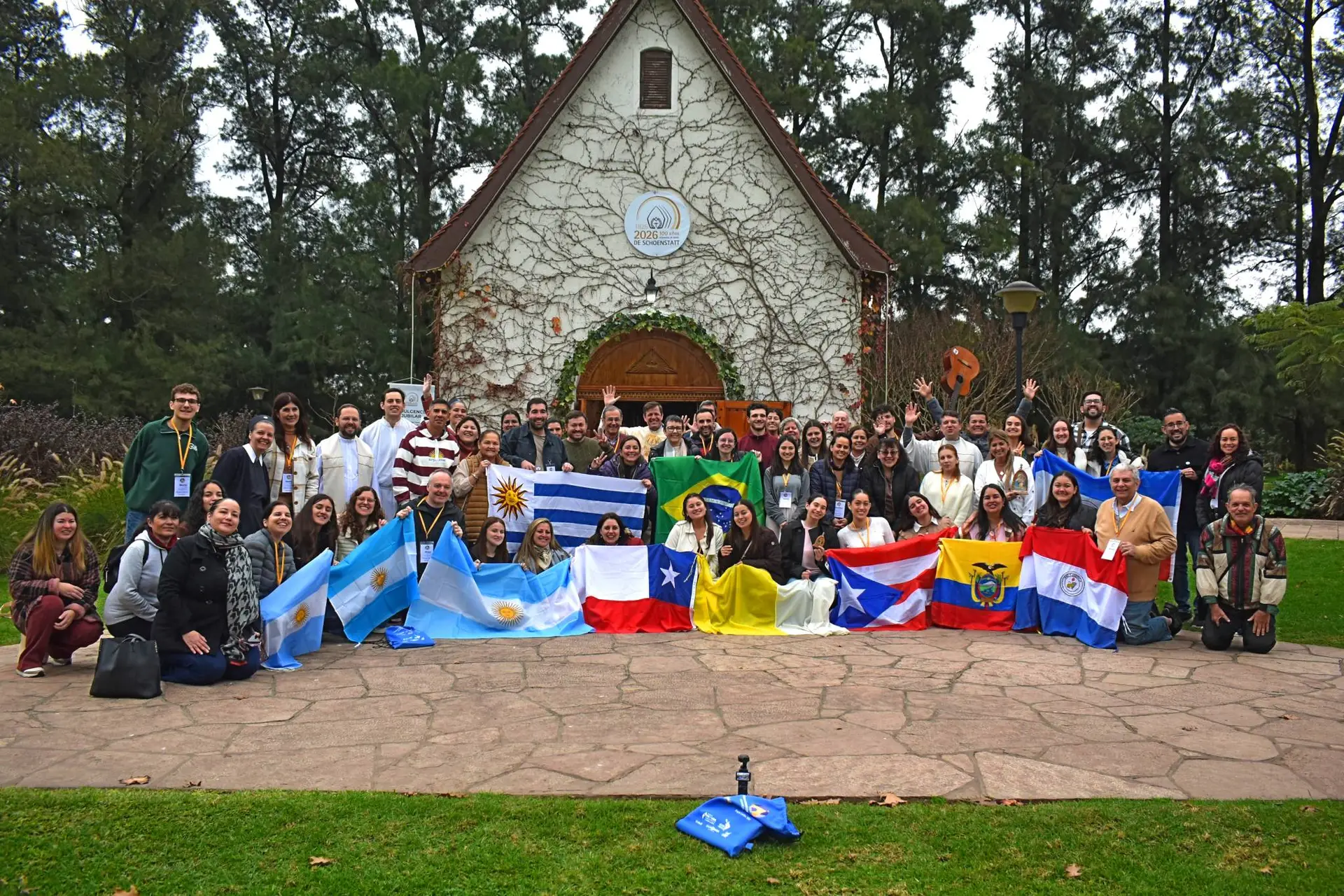
We are part of the same mission
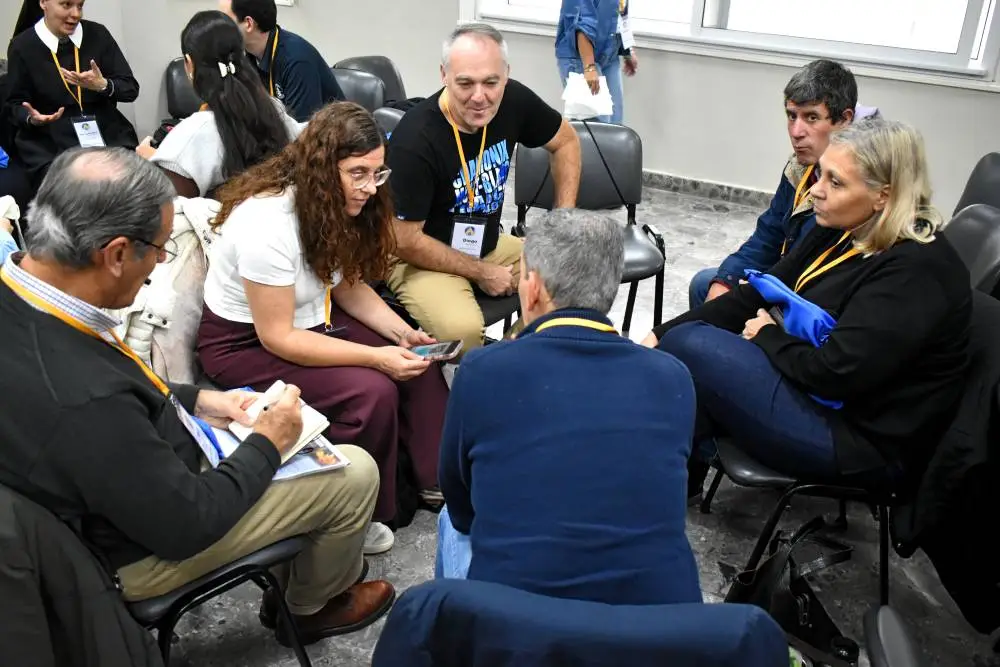
Between chats and chats, between shared mate and spontaneous conversations, the feeling gradually emerged that the true richness of the gathering lay not only in the content received. It lay in the experience of recognizing ourselves as part of the same mission. For no one evangelizes alone.
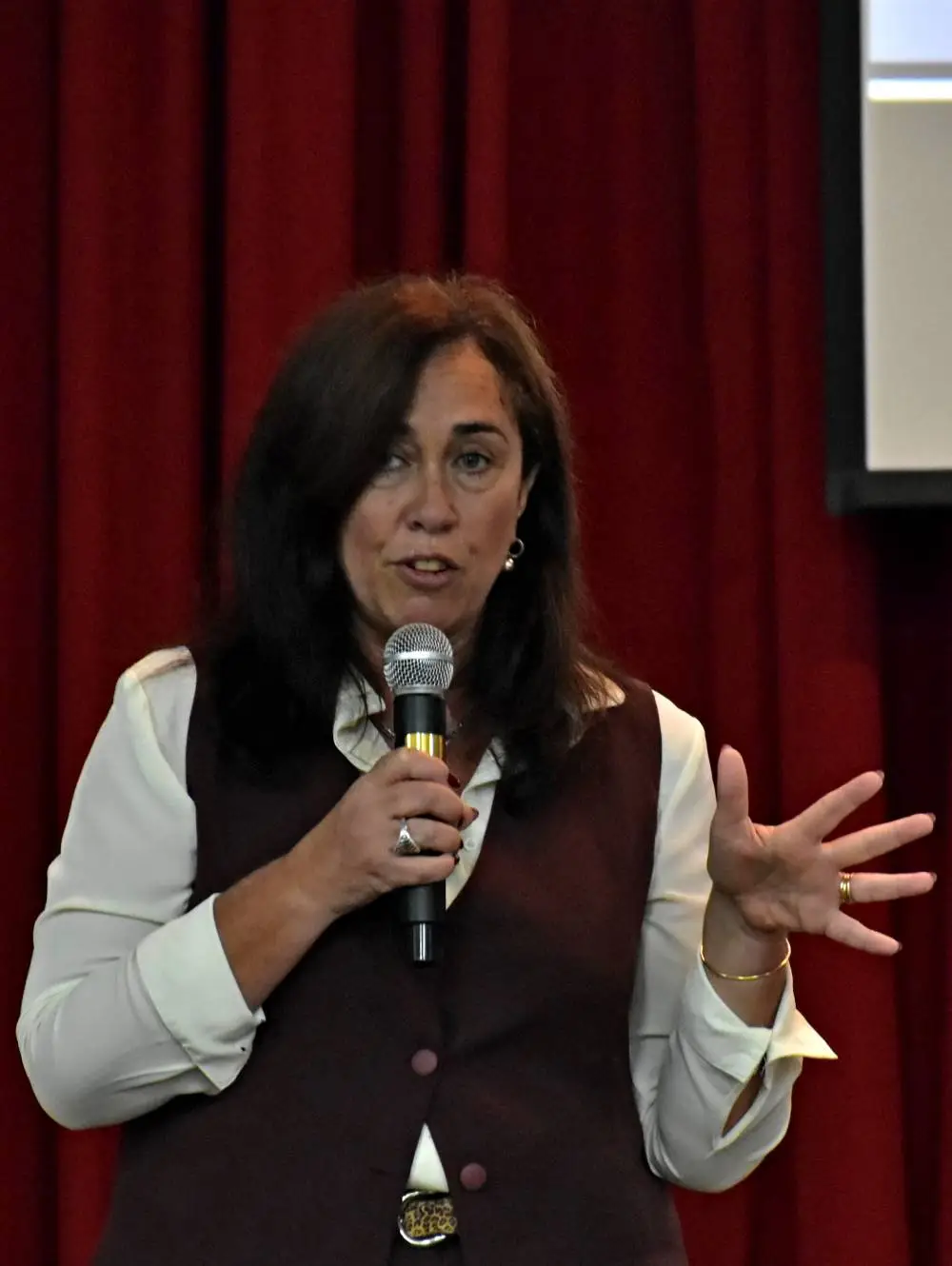
In practice, this also means having well-trained communicators. Soledad Oliva Carreras, a specialist in digital communication and former coordinator of the Communications Department at Schoenstatt Argentina, noted that many carry out their apostolate with great dedication but without specific training. For this reason, she believes that “training and fellowship are perhaps the two greatest needs for those working in communications.” According to her, moments like this allow people to return to their mission “with new ideas, renewed enthusiasm, and more resources to communicate more effectively.”

Sent from the center
The celebration of Corpus Christi marked both the end and, at the same time, the beginning. Before Jesus in the Eucharist, a simple truth became clear: before communicating Christ, we are called to encounter Him. Everything else comes after.
Strategies change. Platforms rise and fall. Algorithms are modified. Languages evolve. But the heart of the mission remains intact.
To continue bringing a word of hope wherever there is someone willing to hear it. Even behind a screen.
Even on that digital continent that sometimes seems so distant and yet is inhabited by millions of people who continue to seek what the human heart has always sought: meaning, truth, love, and encounter.
Yes, even on social media, we find sacred ground.
Translation: Sr. M. Lourdes Macías