
In a world increasingly shaped by the advance of artificial intelligence, profound questions arise about its impact on the person, relationships, and the life of faith. Are we facing a threat or an opportunity?
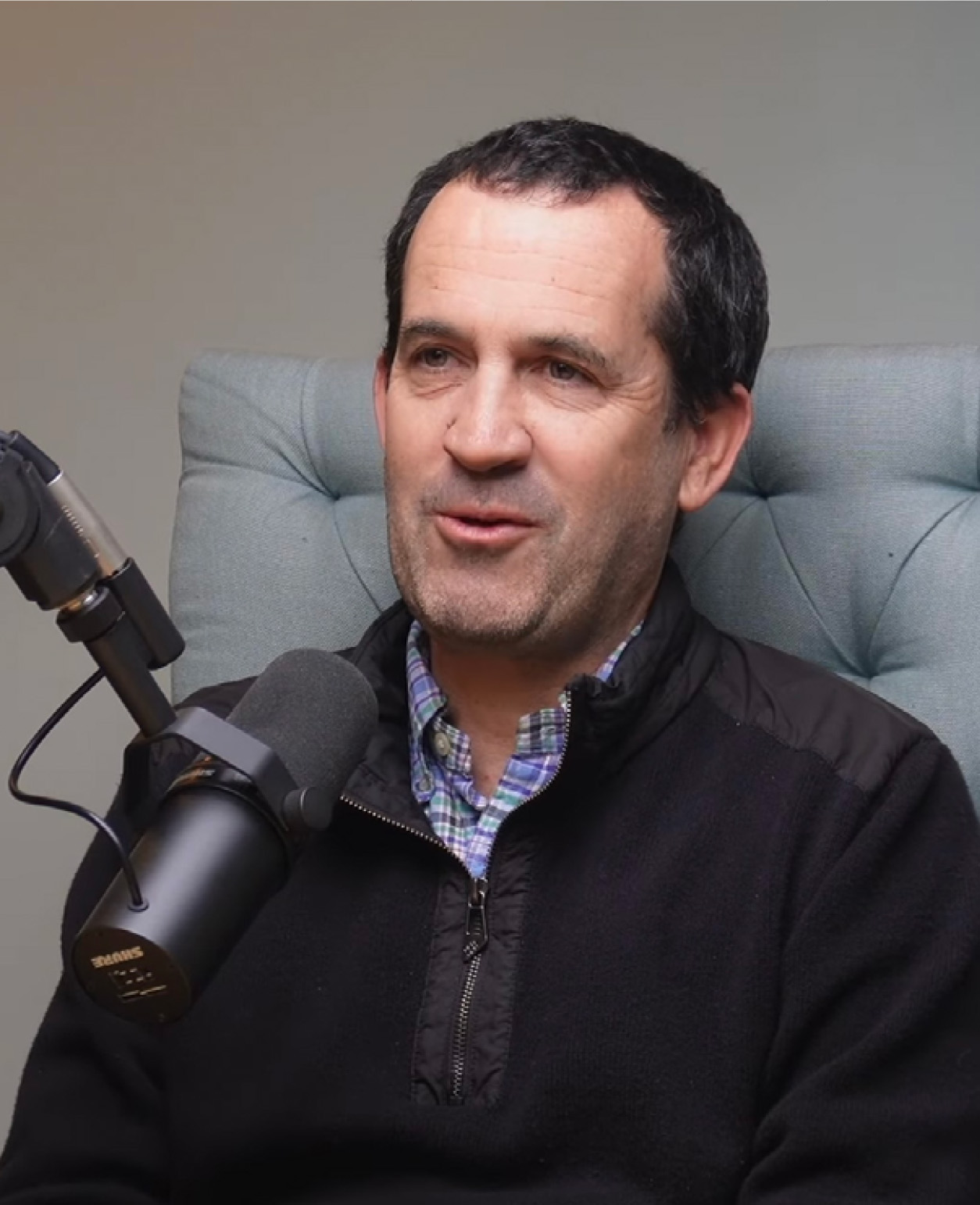
Civil engineer Andrés Vergara González of Chile, drawing on his experience developing and applying these technologies, offers a clear and provocative perspective: AI is not meant to replace what is human but to enhance it. But its true impact will depend on how we integrate it into our personal, communal, and spiritual lives.
Andrés is the co-founder and CEO of MAindset; he is no newcomer to the digital world. With 25 years of analytics experience, he now leads a consulting firm that helps organizations view AI through a human lens. An active member of Schoenstatt in Chile, Andrés invites us at the start of this year to discern how this technology can enhance our mission.
From the perspective of Schoenstatt spirituality, this conversation invites us to discern how we can use technology without losing what is essential—the bond, interiority, and inner freedom—in a time that is moving ever faster.
Artificial intelligence is increasingly present in our lives. From your experience, how can this technology truly be put at the service of the human person?
The key lies in one word: enhance. Not replace. I started working in analytics and artificial intelligence with large companies 25 years ago, and what I have seen time and again is that technology works when it amplifies what a person already is. At MAindset, the consulting firm we founded to help organizations view AI differently, we speak of the “augmented individual”: a person who, with the help of Artificial Intelligence, can do what truly matters better. A doctor who diagnoses more accurately can save many lives. A teacher who personalizes instruction can change the future for many young people. A manager who stops wasting 20 hours a month on mechanical tasks and can devote that time to leading people, understanding their concerns, and helping them transition from mechanical and repetitive tasks to more meaningful ones. AI serves people when it frees them for what is essentially human: thinking, deciding, connecting, creating. The problem arises when we reverse the equation: people become tools for technology.
Schoenstatt speaks often of a culture of bonds. How do you think artificial intelligence can strengthen—rather than weaken—our human and community bonds?
Look, Schoenstatt teaches us that bonds heal and transform. Not information, not efficiency—bonds. And AI, when used well, can be an ally to connection precisely because it gives you back time and attention. Let me give you a concrete example: in a project we’re doing with a large company, we automated reports that used to take the team an entire day of manual work. What happened? Those people now have space to talk with their clients, to think together, to connect truly. AI doesn’t create bonds; that is irreplaceably human. But it can remove the obstacles that prevent us from cultivating them. Now, this requires intentionality. If I use the time that AI frees up to stare at more screens, I’ve missed the opportunity. If I use it to be more present with my children, my community, and my team, then technology has served a connection.
Some fear that technology increases isolation. What challenges does AI pose for the quality of our connections and community life?
The most serious challenge isn’t what people imagine. It isn’t that a robot will replace you at work. The real challenge is the illusion of companionship. Today, millions of people are already chatting with chatbots as if they were friends or counselors. The technology is good enough to make you feel comfortable, even warm. But it’s a connection without risk, without vulnerability, without the real other who challenges me. One of the main biases of AI is its condescending nature. It tends to tell you what you want to hear, and that usually doesn’t help. Something similar happens with social media algorithms, which show you reels and stories that align with your opinions… but challenge you a little, distancing you from those who think differently. And that, from a Schoenstatt perspective, is clear to us: an authentic bond involves commitment, friction, and sacrifice. There is no technological shortcut for that. Another challenge is the fragmentation of attention. I have four children, and I see how technology constantly competes for their attention. It’s not a problem specific to AI, but AI amplifies it by making digital content increasingly personalized, more appealing, and harder to put down. Here, the community plays a fundamental role as a counterbalance; we need spaces where we can look each other in the face.
The development of AI also raises ethical questions. What do you think are the main risks or concerns we should be aware of today?
The first risk is the concentration of power. The most advanced AI models are being developed at two poles: on the one hand, by a few giant private companies in the United States—OpenAI, Alphabet, Anthropic, Nvidia, Meta, Amazon, Microsoft, x.ai—and on the other hand, by China, with open-source models developed by Deepseek, Alibaba, Xiaomi, among others. This means that decisions affecting millions—what information you see, how your credit is assessed, what content is filtered—are made by a very small group of people with their own biases and commercial incentives.
The second risk is the erosion of truth. Generative AI can create text, images, and video indistinguishable from reality. This isn’t the future—it’s today. In a world where it’s already hard to discern what’s true, this is fuel for the fire. Agents can produce thousands of times more text than humans—how will we navigate a world where we don’t know who wrote what, and, above all, where gems are buried in millions of pieces of junk content? It’s a major challenge posed by information overload.
The third risk, less visible yet equally profound, is the erosion of accountability. When you delegate decisions to an algorithm, it becomes unclear who is responsible. “The system decided it” is the new way to wash one’s hands of the matter. And as Christians, we know that freedom and responsibility are inseparable. We cannot delegate our conscience to a machine.
The Christian faith invites us to seek the truth and to discern. Can AI also help with spiritual growth or formation in the faith?
Yes, but as a tool, not as a source. I have personally used AI to delve deeper into Father Kentenich’s writings, compose religious music, and explore the philosophy of influential figures, among other things. It can also be used to cross-reference Father Kentenich’s thought with Church doctrine, prepare educational content for schools in the network, and for many other purposes. A helpful analogy is that for $23 a month, you can have a PhD research assistant in all disciplines who just arrived from India, learned to speak Spanish from a dictionary, and can help you get to what you need to study or what you want to do more quickly—if you learn to provide the right context. I say $23, not free, because using free language models is not secure (they use your information to train themselves) and they have a much lower intellectual level, a reduced ability to understand your personal context, poorer memory, etc.
A few months ago, I was asked to give a talk to the Schoenstatt Fathers and another to the Archdiocese of Santiago, specifically to explain what this wave of Generative AI is all about and how it can be used in pastoral work. The possibilities are enormous: from preparing homilies and educational content to supporting catechesis, systematizing pastoral experiences, and answering questions of faith with reliable sources. A priest serving five communities can multiply his reach without losing depth. The same is true for social and educational organizations that typically have many needs and few resources; AI can be a great equalizer if we know how to make the most of it. It is an opportunity we cannot afford to miss, but one we must also know how to nurture.
But—and this is fundamental—AI does not pray and harbors hidden biases. It has no experience of God or an inner life. It can organize information about the faith, dogmas, and the history of the Church, but faith is above all an encounter with God incarnate and with the community. No algorithm can replace a good conversation with a spiritual director, a community that accompanies you, or a moment of silence in the Shrine. When used well, it can greatly enrich these experiences.
Many young people already use AI tools to learn and study. What criteria would you recommend for using them responsibly and for educational purposes?
I want to bring concrete data to the table because this conversation cannot remain at the level of opinions (of which there are many and very diverse). A study by the MIT Media Lab this year monitored students with electroencephalograms while they wrote essays, some using ChatGPT and others on their own. Those who used ChatGPT showed lower brain activity, poorer memory, and essays that the evaluators themselves called “soulless.” The more they used it, the more their performance deteriorated. But here’s the interesting part: when the group that had first worked on their own, using their own brains, was then given access to AI, that group showed greater brain connectivity. In other words, AI used after thinking for yourself enhances learning. AI used instead of thinking for yourself destroys it.
And this is complemented by a Harvard study published this year in Scientific Reports, which found that a well-designed AI tutor—which didn’t give answers but asked questions, challenged, and guided—helped physics students learn twice as much in less time than in a traditional active classroom. Twice as much. The difference isn’t the tool; it’s how you use it.
So, three concrete criteria. First: use AI to think more, not less. If you use it to do your homework for you, you’re cheating yourself—and neuroscience now confirms it. If you use it as a sparring partner, an interrogator, or a tutor who challenges you, you’re growing.
Second: always verify. AI makes mistakes with great confidence. It can fabricate data, quotes, and even authors who don’t exist. A young person who uses AI without a critical mindset is more vulnerable to misinformation than one who doesn’t use it.
Third: don’t let it define you. Algorithms learn what you like and serve you more of the same. They create a comfortable bubble for you. Real formation—and anyone who has gone through a serious formation process in Schoenstatt knows this—involves exposing yourself to what makes you uncomfortable, what challenges you, and what makes you grow.
Christian spirituality invites us to cultivate interiority. In a hyperconnected world, how can we use technology without losing our inner silence and our relationship with God?
This is the most personal question for me. I work with AI all day; it is literally my profession. The temptation to stay constantly connected and producing is real. What I have learned—and continue to learn—is that silence must be protected with the same discipline as an important meeting. No one cancels a meeting with a client. But we cancel silence, prayer, and moments of doing nothing with remarkable ease.
I believe Ignatian and Kentenich spirituality offers us a powerful tool: the examination of conscience. At the end of the day, reflect: Where was I present? Where did I let myself be carried away by digital inertia? At what moment did the tool use me instead of me using it? It’s not about demonizing technology; that would be absurd coming from someone who makes a living from it. It’s about being the master of the tool, not its slave. And that requires a cultivated inner life, not an improvised one.
Father Kentenich spoke of forming “new men for a new community.” In the face of the advance of AI, what kind of people and culture do you think we need to form today?
Father Kentenich had a phrase that, in my opinion, captures well what that new community should be like: To live with “the hand on the pulse of the times, and the ear to the heart of God.” That phrase carries a concrete urgency today that I want to highlight: more than half of the money invested in new businesses is going to AI. The United States and China are in a frantic race to be the first to achieve general artificial intelligence—an AI that thinks like a human being. This is not science fiction; it is real geopolitics, real economics, and it is happening right now. And Schoenstatt cannot be left out of that conversation. We cannot afford to watch this from the sidelines with pious detachment while the world is being reshaped. This is the “May 31st mission” put into practice.
The Kentenichian question today is twofold: How do we ensure that this AI humanizes us rather than dehumanizes us? And what is this new social order we are going to build? Someone is going to build it; the question is whether it will be built solely by Silicon Valley engineers with their commercial incentives, or whether those of us who have a vision of the human person as the image of God—but who also understand the possibilities it offers—will participate as well.
The “new man” that Kentenich proposed is not someone who rejects his time, but someone who lives in it with inner freedom. Today, that means forming people with critical thinking who do not accept a result just because “the AI said so,” just as they should not accept something just because “the boss said so.” People with the capacity for real connection who understand that efficiency is not the supreme value. And people rooted in their faith, community, and identity. Because the greatest risk of a hyper-technological world is not that we lack tools, but that we have too much speed and lack roots, we need people who know why they live before they optimize how they live.
If I had to offer advice to those who live their faith and view the advance of AI with some concern, what inner attitude would I recommend for facing this new technological era?
Neither fear nor naivety. I would say: curiosity combined with discernment. Fear paralyzes you and is a poor guide; it makes you reject something you could use to serve better. Naivety makes you swallow everything without filtering it. The Christian is called to something more mature: to look reality in the face with open eyes and ask, “How do I use this for good?” Where are the real risks? What brings me closer to my mission, and what distracts me from it?
I would tell you to educate yourselves, try the tools, and let go of your fear of making mistakes with them. But never lose sight of the fundamental question: Does this make me freer or more dependent? More open to others or more closed off within myself? If you keep that question alive, technology—any technology—becomes what it should be: an instrument at the service of something greater than itself. And we, in Schoenstatt, know well what that “something greater” is.
The “new man” that Kentenich proposed is not someone who rejects his time, but someone who lives in it with inner freedom. Today, that means forming people with critical thinking who do not accept a result just because “the AI said so”.
Andrés Vergara González
Source: Vínculo Magazine, No. 400, May 2026
Translation: Sr. M. Lourdes Macías