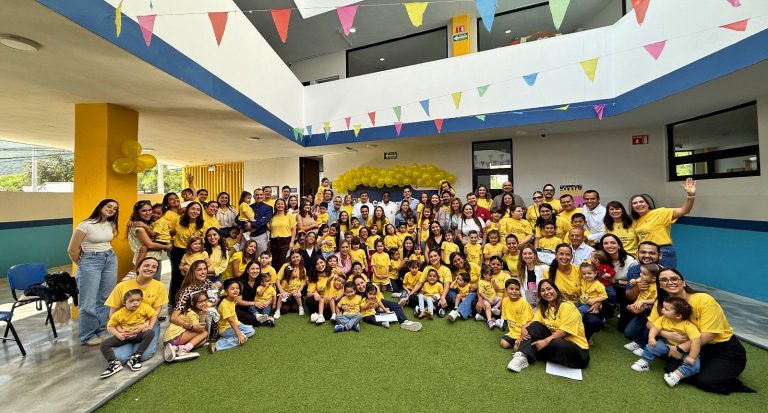
5:45 am. in San Luis Potosí, Mexico. The city is still asleep; there is no traffic, no voices—only the special silence the early morning reserves for those who choose to be there. The sky can’t quite decide whether it’s night or day, yet a group of young people is already on their feet, eyes barely open, feet moving before their minds permit them, on their way to church. In some countries, including Mexico, May is the Month of Mary. In the Schoenstatt Family of San Luis Potosí, May has had its own name for years: Heroic Holy Masses. Holy Masses at 6 am., every day of the month, as a living offering to the Blessed Mother. But this year, May arrived laden with a question no one wanted to ask aloud: with no Schoenstatt Fathers living in the city, who would celebrate? Would the tradition endure? Or would this be the first May in years when the church would wake up in silence?
The Tradition in Jeopardy
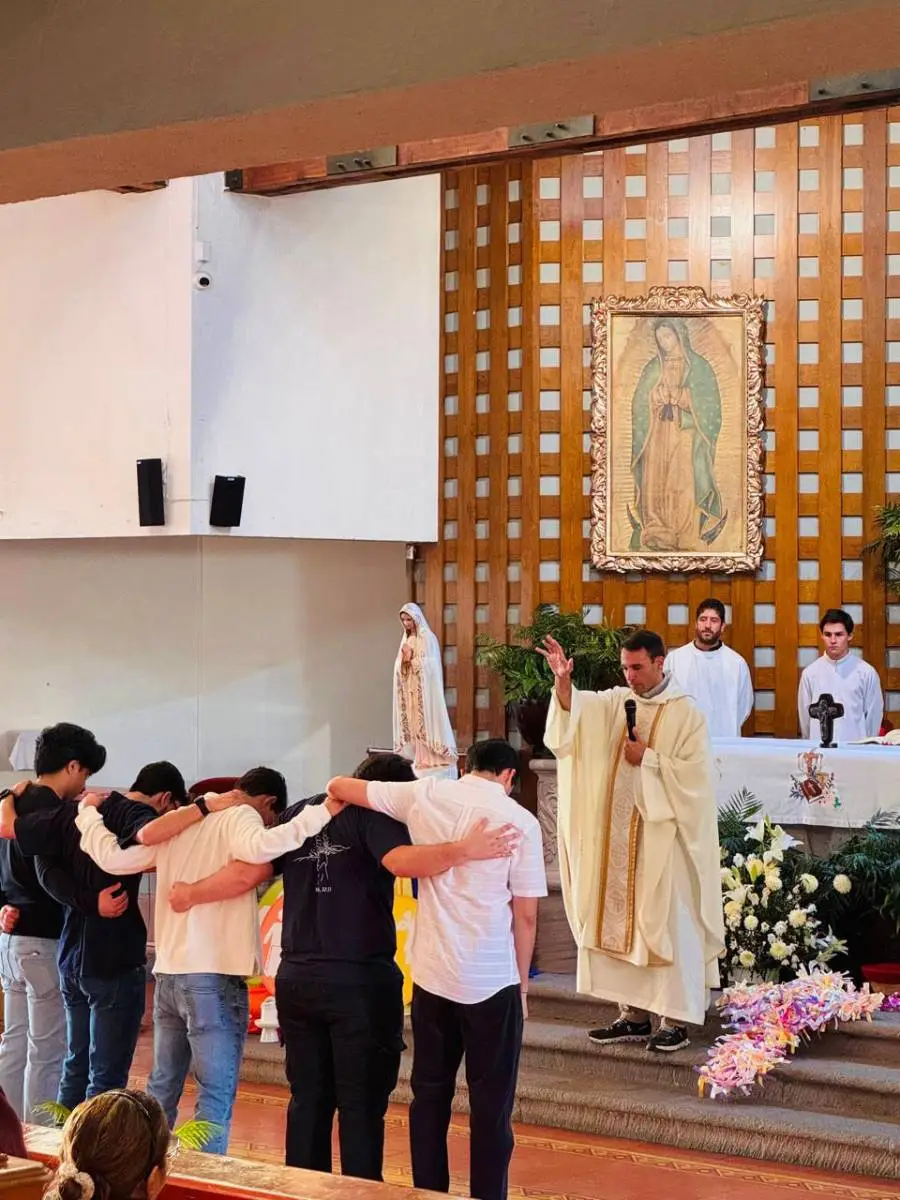
For years, May has held special significance for the Schoenstatt family in San Luis Potosí. Every morning at dawn, the Church of the Holy Family opens its doors to those who choose to start the day differently: not with their phones or the sound of an alarm clock, but with Christ. The Heroic Holy Masses of May are exactly that: Holy Masses celebrated at 6 am. every day of the month as an act of love for Mary in her month.
It’s not easy. It means setting the alarm even when it still hurts to wake up. It means giving up the rest that exams or work had already cut short the night before. It means deciding every morning that something is more important than the mattress.
This year, however, the challenge was different. The question wasn’t whether the young people would be willing. The question was more pressing: Would there be anyone to celebrate Holy Mass? The Schoenstatt community in San Luis Potosí currently has no Schoenstatt Fathers living in the city. Without a priest to preside over the Eucharist day after day, the entire tradition hung in the balance, dependent on an unanswered question. Some voiced their doubts quietly. Others preferred not to ask just yet, in case the answer would be “no.”
The “yes” that made it possible
The answer came soon, and it came from Querétaro.
Father Santiago Abella Peniche learned of the longing before it became a formal request. He responded before we had even finished explaining. He didn’t wait for us to present a finished plan, a list of confirmed celebrants, or a schedule of covered days. He responded to the desire, not the project. That is a kind of faith that very few practice: believing in what does not yet exist because you trust the one who wants to build it. From that trust, he took action without asking for anything in return.
From Querétaro, he initiated the conversation with Father Alejandro García Sánchez, who welcomed the Schoenstatt family with generosity worthy of mention: he made room for them, endorsed the project, and reached out to a group of young people seeking permission to pray.
Six liturgical leaders, a single commitment
Preparing a liturgy is not merely reading a text. It is choosing readings that speak to that day, crafting a reflection that resonates with the lives of those who rose early to be there, and sustaining silence in moments when silence is the most sincere form of prayer.
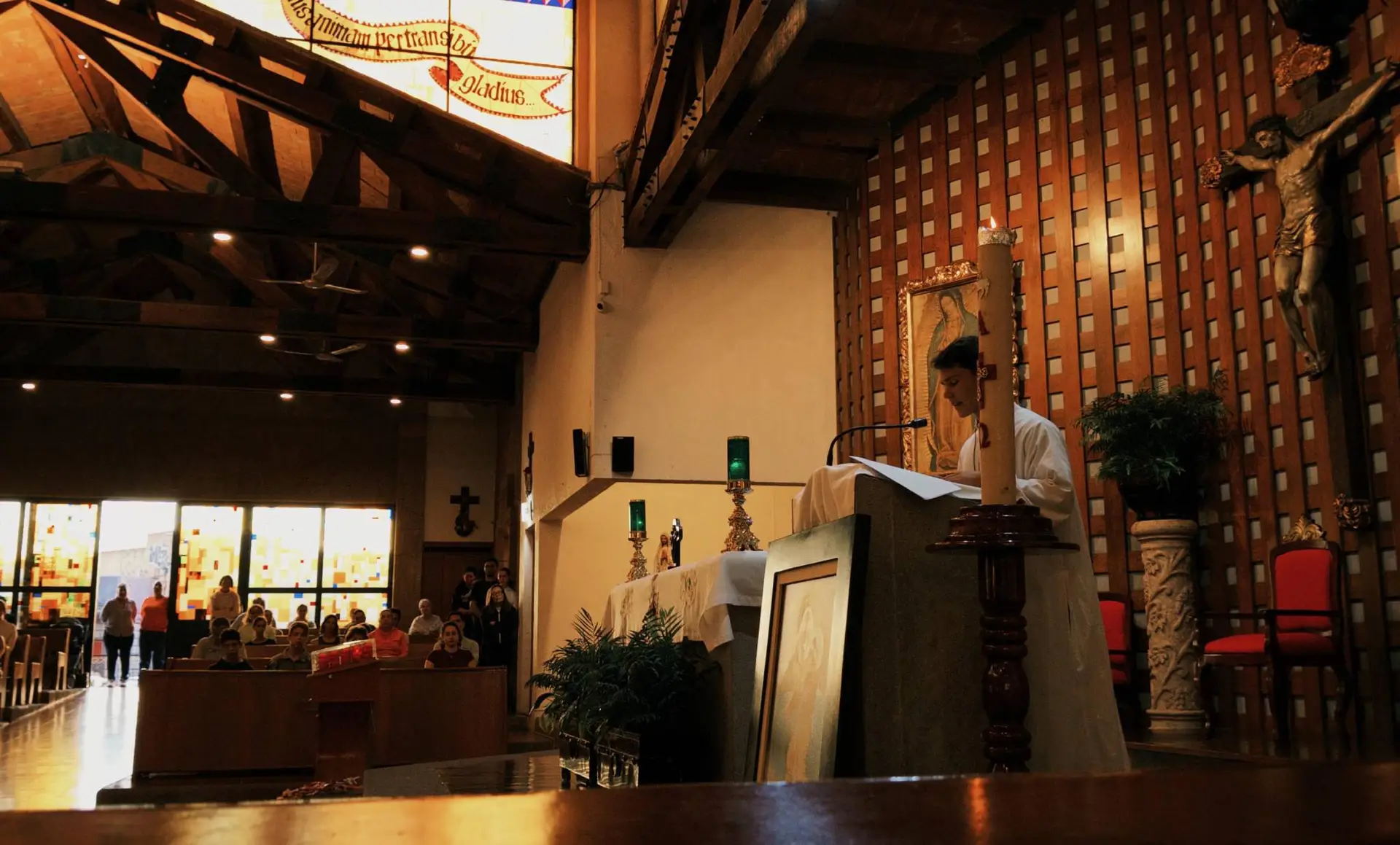
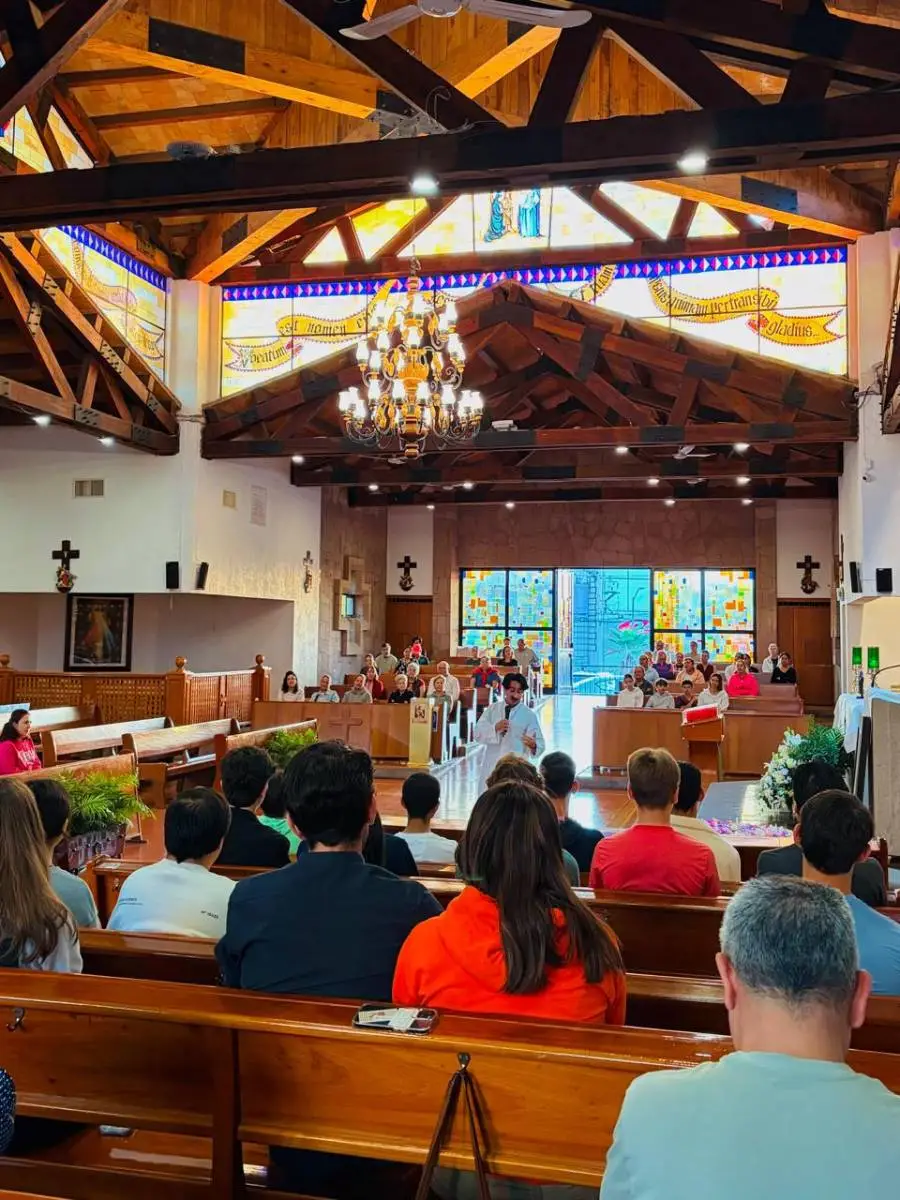
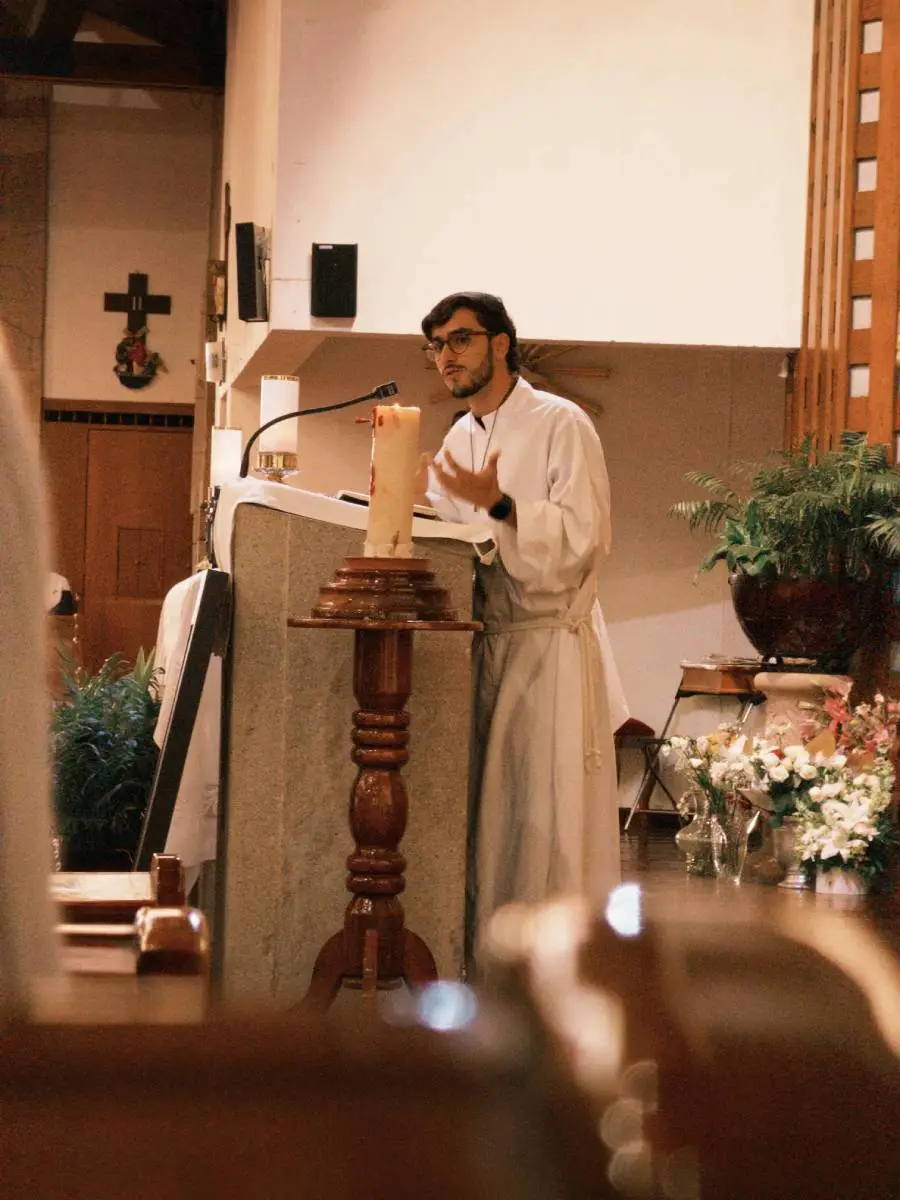
Six ministers of the Eucharist, from the Schoenstatt Shrine “Maravillas de María” and the Holy Family Parish, took on the responsibility of celebrating either Holy Mass or Liturgy each morning: Juan Pablo Velázquez Chávez, Mauricio Rodríguez Tacea, Diego Rosales Lara, Gonzalo Andrés Córdoba de Alba, Javier Soto Aranda, and Rafael Aguilar Díaz de León.
Each one made his way to the altar in a different way. Each of them gave time they didn’t have to spare, faith that can be hard to muster, and punctuality that, at 6 a.m., is a virtue in its own right.
Twenty-one days without fail
By the end of May, the tally was as follows: 6 Masses and 15 liturgies. Twenty-one celebrations. Twenty-one mornings when someone prepared and arrived at 6 am., so that whoever arrived would find an open door and a ready altar. Twenty-one days dawning with Jesus.
I like to open each liturgy with a phrase Jesus spoke that never ceases to amaze me: “Where two or more are gathered in my name, there I am among them.” It is a promise with no conditions on size and no requirement for a large crowd. Just presence. And after this month, I can say with certainty that the promise was fulfilled. Jesus was present at each of those twenty-one gatherings. He was there in the silence of dawn before the first song. He was there in the moment when someone closed their eyes and let go of what they’d been carrying since the night before. He was there, and He stayed.
Twenty-one days without fail is not a record to boast about. Each morning was a stone laid on the previous one with precision and at a cost. By the end of May, something had been built that did not exist before: the certainty—proven, not merely desired—that this family knows how to sustain itself even when conditions are not perfect. That the absence of what ideally should be there does not paralyze us but compels us to discover who we already are. That is the deepest revelation of this May: not what we lacked, but what we found when we decided that what was missing would not be an excuse.
The family that said “yes” every morning
None of the above makes any sense if no one shows up.
We liturgical ministers celebrate for someone. And that someone, every morning in May, was a family who chose to be there. We watched them arrive with eyes still half-closed, coffee they sometimes hadn’t had time to finish, and backpacks for the day already slung over their shoulders. We watched them enter in silence, take their places, and let prayer open their day before the day demanded everything of them.
I don’t know the specific sacrifices each of them made. I don’t know what they gave up the night before to arrive on time. I don’t know how many times turning off the alarm clock was a matter of willpower rather than desire. What I do know is that each person’s presence was the most genuine act of faith this month.
What Remains and What Lies Ahead
I pray that next year there will be a community of priests living in San Luis Potosí and that May will once again be a full Mass every day. But if that hasn’t happened yet, it will be an honor to celebrate with each of you again.
This May left us with a certainty we perhaps needed to rediscover: a family is not defined by what it lacks but by its ability to remain united, to serve, and to move forward when circumstances are less than ideal.
The Blessed Mother continues to form her children, build community, and remind us that God always finds a way to work when hearts are willing to respond. What began with uncertainty became an experience of trust, dedication, and family.
Let this be recorded for when someone asks again whether it was possible: yes, it was. Where there is love for Christ, trust in the Blessed Mother, and a family willing to say yes, there will always be a way. This May was proof of that. And it was also a promise of all that is yet to come.