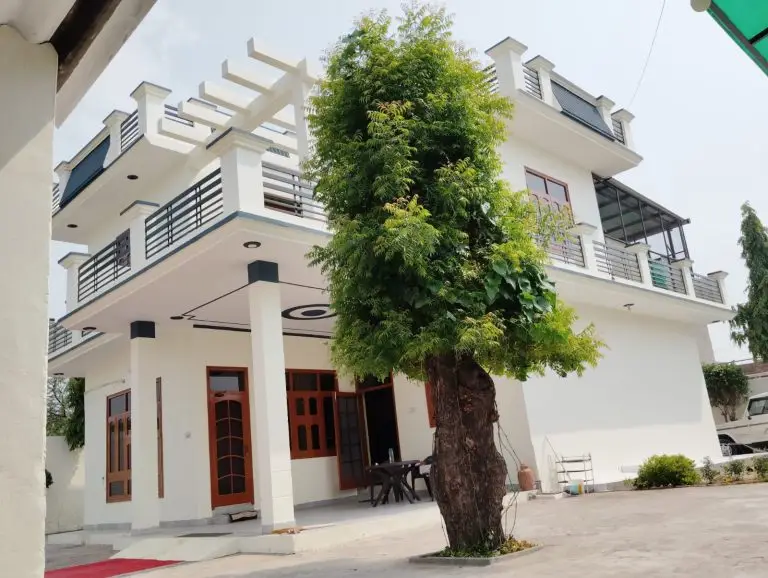
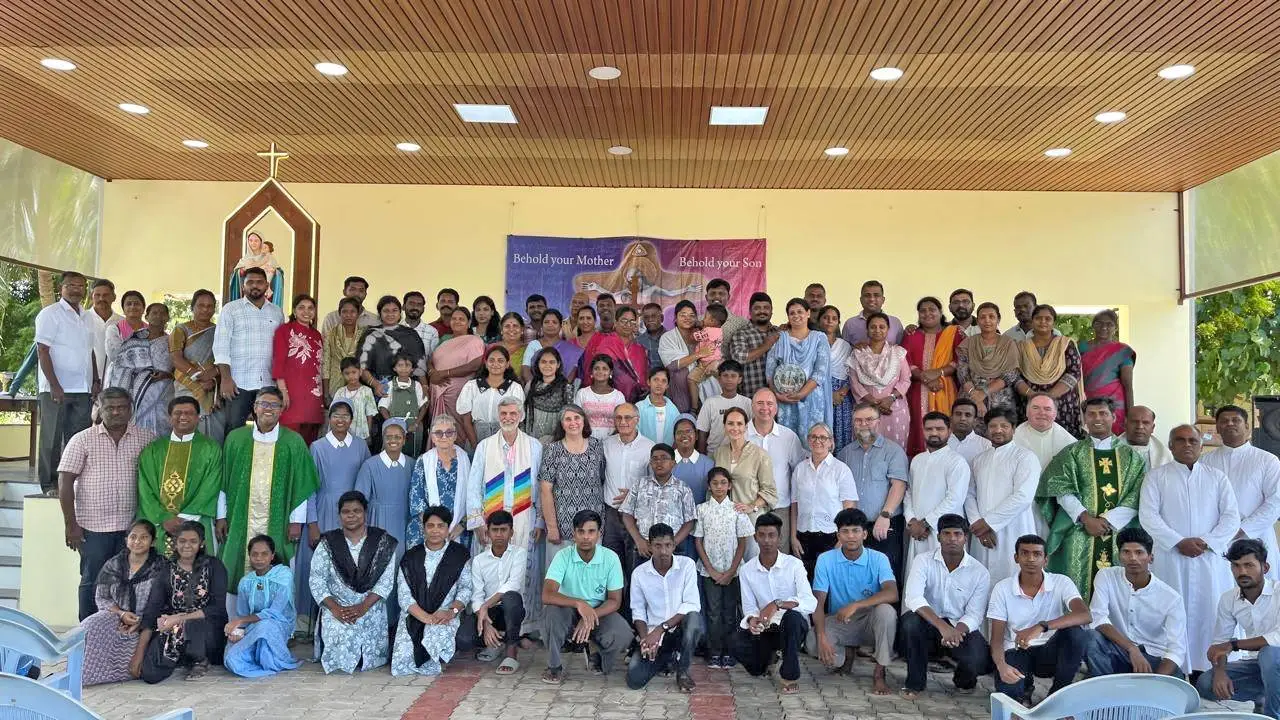
From August 6 to 19, 2026, a new session of the Schoenstatt Fathers’ International Pastoral Course was held in India. Following previous sessions at Mount Zion in Schoenstatt and at Mont Sion Gikungu in Burundi, this year’s journey brought us to Kuttur and Madurai. In this way, the Pastoral Course once again became a place of encounter, shared learning, and pastoral exchange that transcends borders and continents.
This year’s session took on special significance because of its strong focus on family ministry. For the first time, families from the Institute of Families and the Family Federation actively participated in preparing and implementing the course. Families from Kerala, Karnataka, and Tamil Nadu were invited to share their experiences and, together with the participants, reflect on paths toward a renewed family ministry within the Schoenstatt Movement.
An Important Step for India and Africa
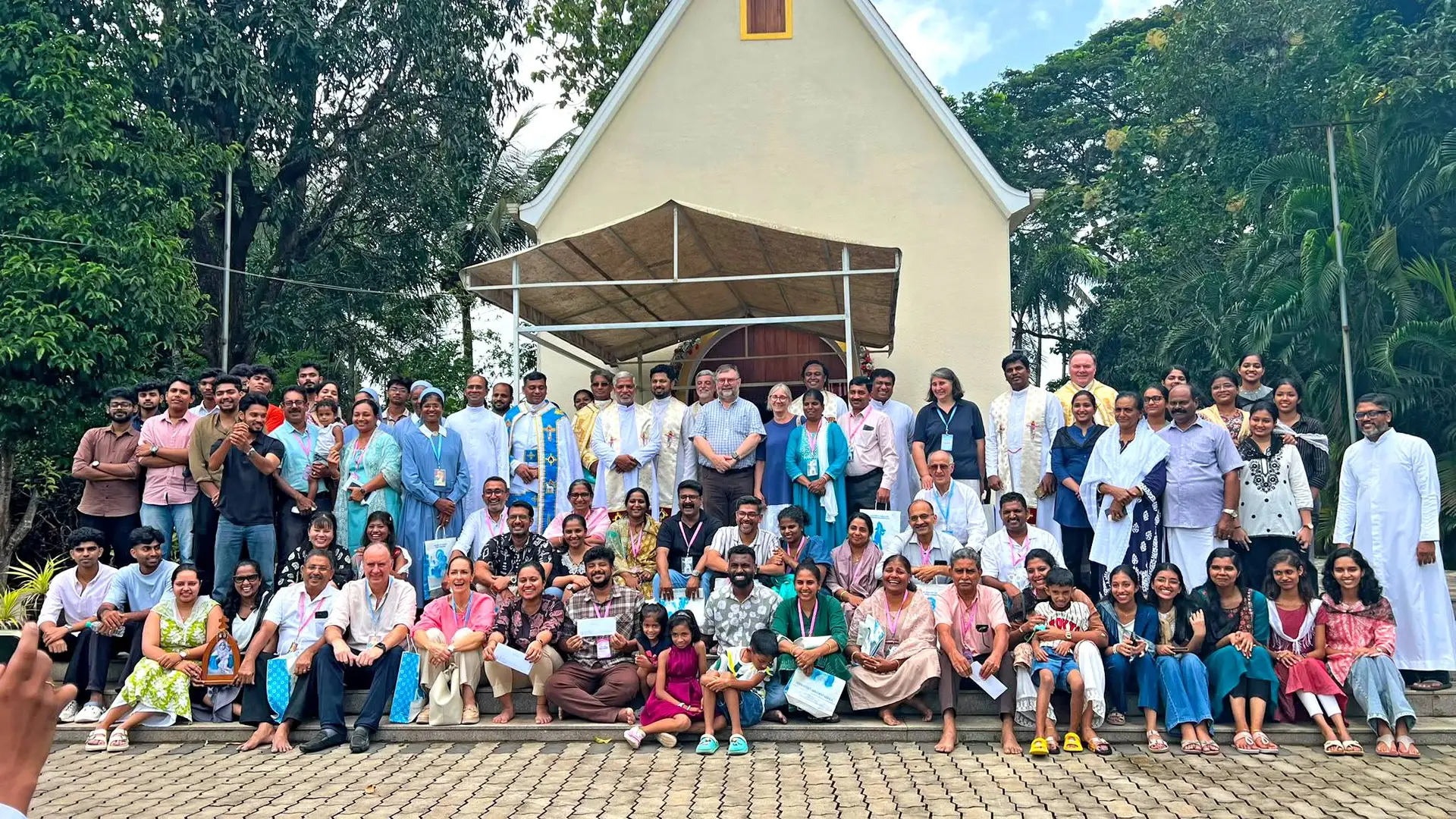
The continuation of the pastoral course is of great importance, not only for India but also for the future development of the Schoenstatt Movement in Africa and other regions, where pastoral challenges must increasingly be addressed from an international and intercultural perspective.
The course creates a space for sharing experiences across countries. This year, the gathering offered, among other things, the opportunity to exchange experiences with participants from Chile, Costa Rica, and Spain. It was precisely this international perspective that made it clear that pastoral ministry in the Schoenstatt spirit is nourished by cultural diversity and a willingness to learn from one another.
For India and Africa, the pastoral course can also serve as an important foundation for the formation and accompaniment of leaders. The pastoral experiences gathered here can be brought back to their respective countries and communities and further developed there. At the same time, the experiences from India and Africa can, in turn, enrich the entire Schoenstatt Movement.
In this way, the course becomes a space for mutual enrichment: we share our experiences, listen to others’ experiences, and discover new paths for the apostolate together.
The Family at the Center
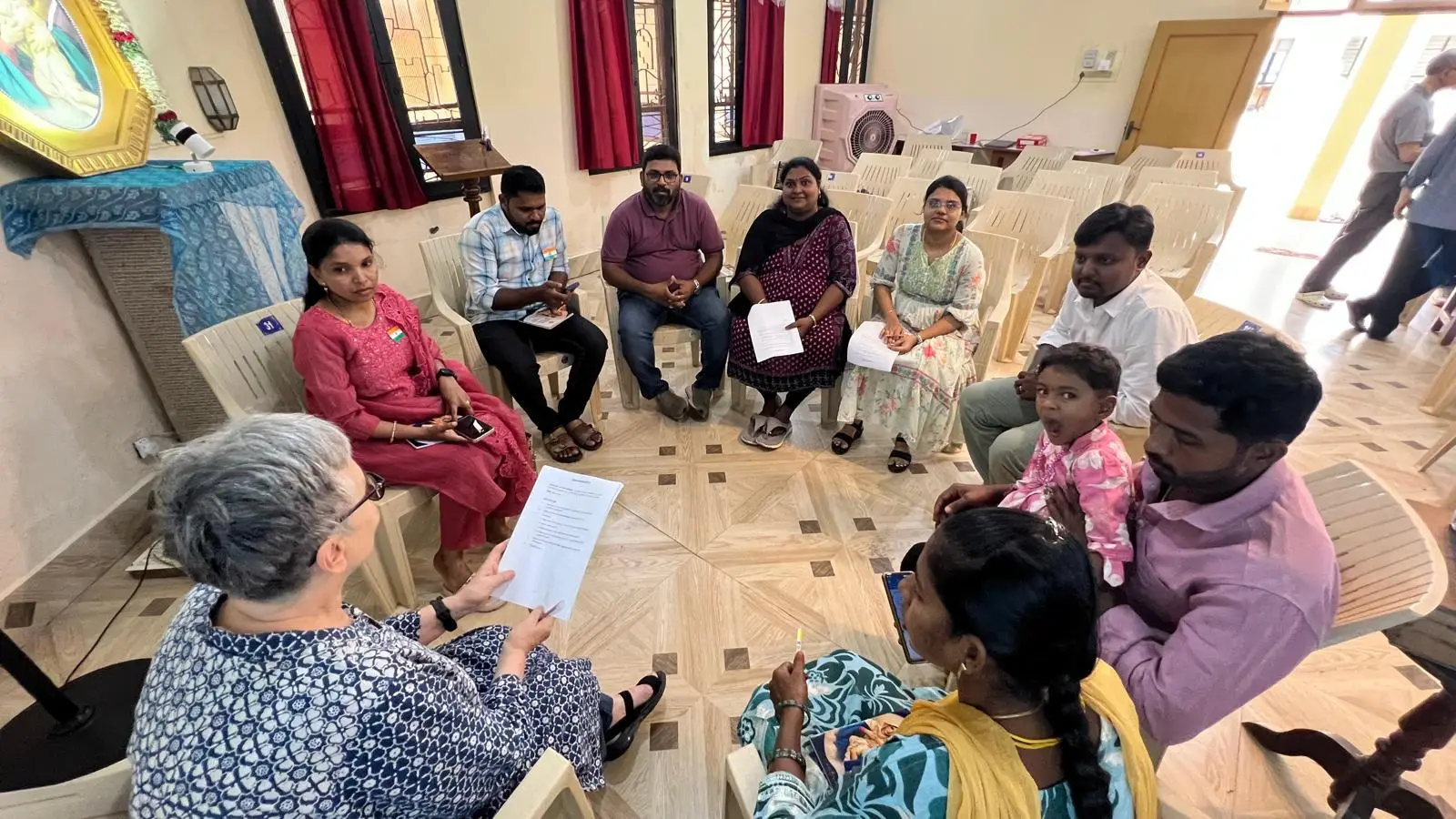
The focus of this year’s gathering was the family. The topics covered ranged from a general introduction to Schoenstatt to the structure of family ministry to specific issues in married and family life.
In this way, the course combined basic knowledge of Schoenstatt with concrete pastoral issues. It was not just a matter of talking about family ministry, but of seeking ways to accompany couples and families in their daily lives and to empower them to become bearers of the apostolate themselves.
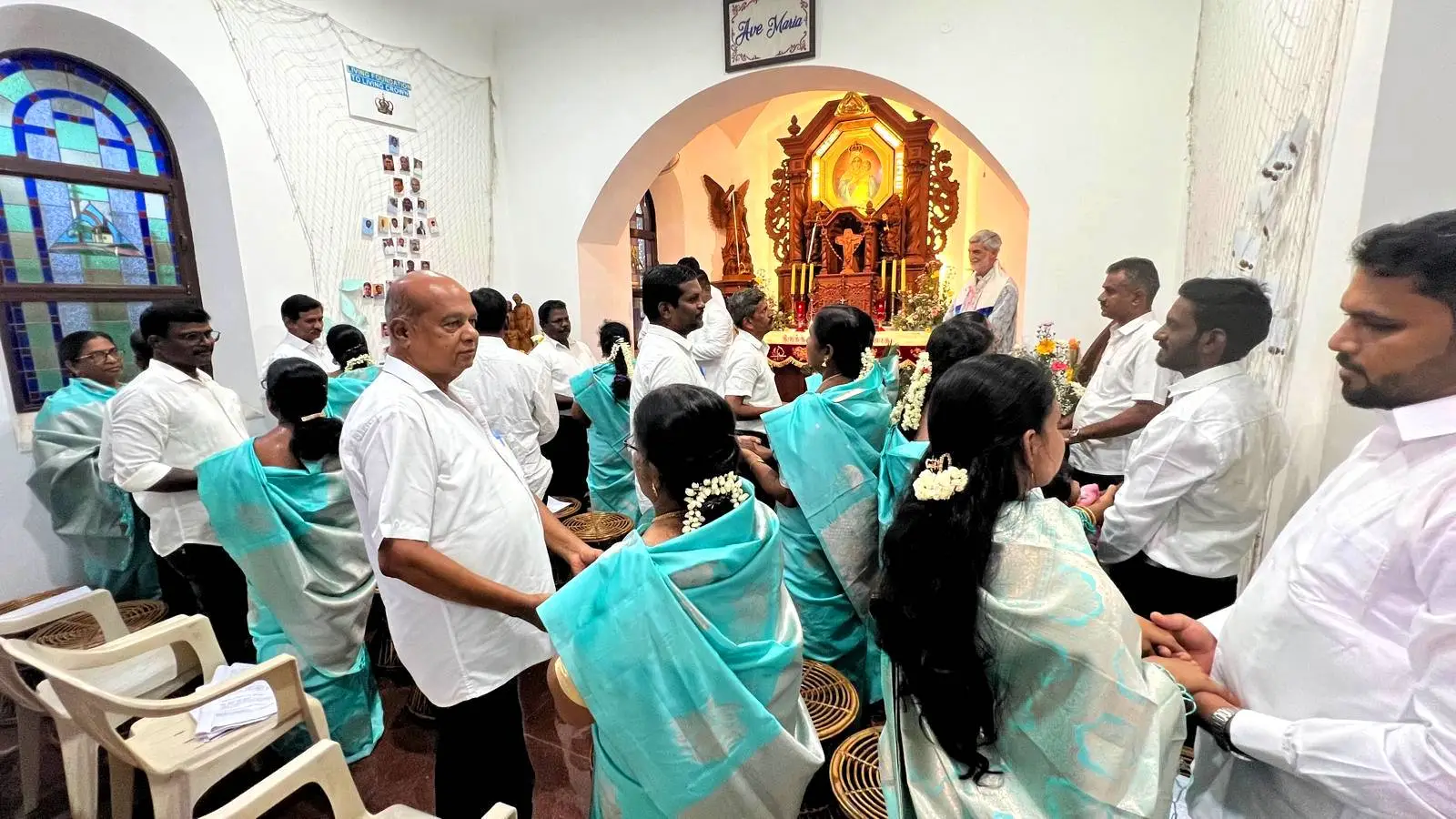
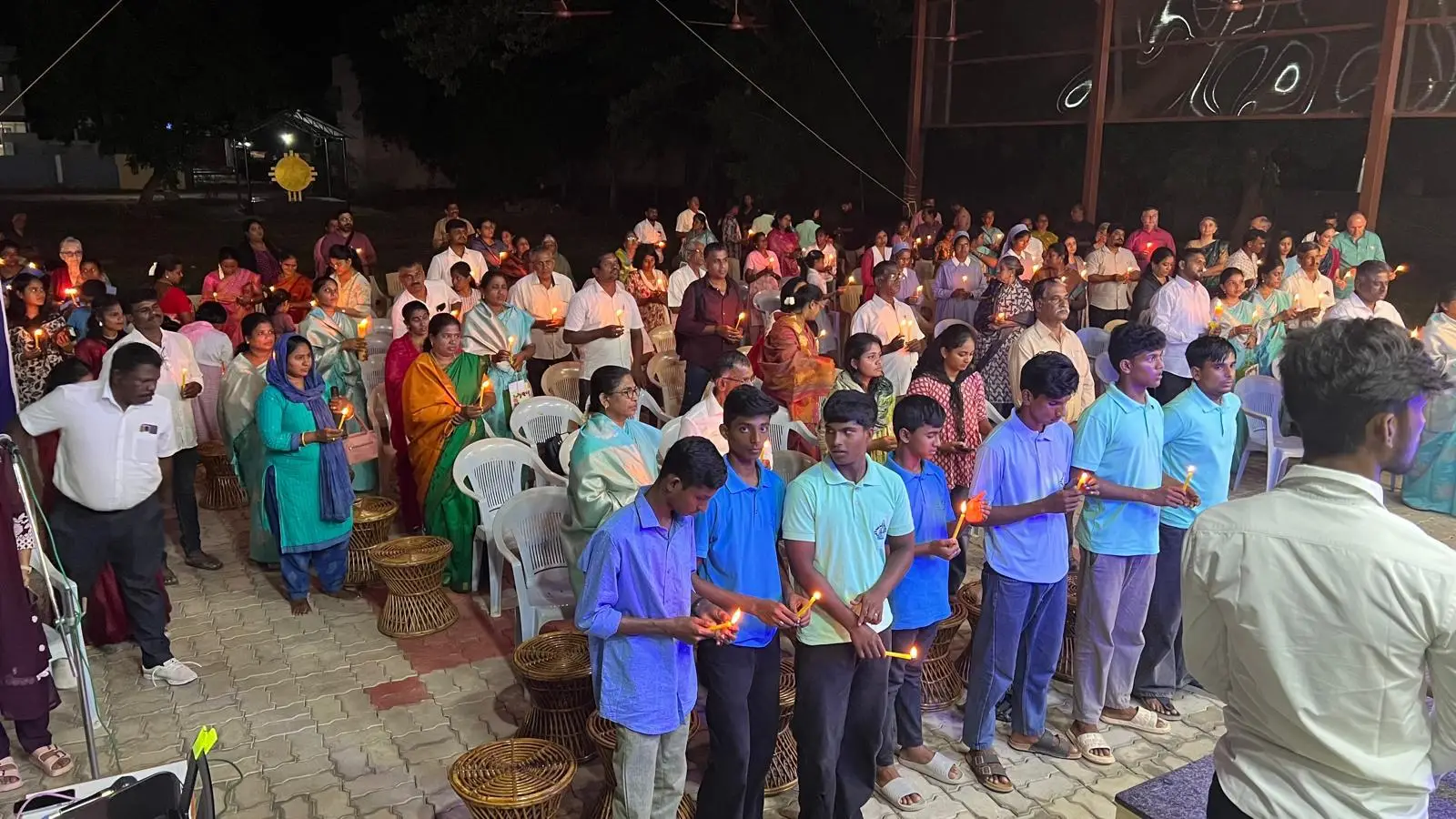
To our great joy, 12 couples from Madurai sealed the Covenant of Love.
Youth ministry and the Pilgrim Mother apostolate were also part of the program, as they had been in previous sessions of the pastoral course.
The Family Institute, the Family Federation, the Sisters of Mary, and local Schoenstatt Fathers working together
A highlight of this year’s session is the broad participation of various branches of the Schoenstatt Movement.
For the first time, the Family Institute and the Federation Families participated directly in the preparation and implementation. In this way, family ministry develops a special closeness to the concrete lives of couples and families.
In addition, the Sisters and local Schoenstatt Fathers from India participate in the weekend events. This fosters a diverse exchange among the different Schoenstatt communities. Each community contributes its own perspective and experience.
This is precisely where one of the great strengths of the pastoral course lies: it becomes a place where the different branches do not walk side by side, but together.
Encounter with the Church and the Culture of India
The program also includes an encounter with the local Church. A meeting with Auxiliary Bishop Mar Neelankavil Tony, of Trichur, offers an opportunity to gain a better understanding of the local pastoral situation and to situate Schoenstatt’s work within the context of the Indian Church.
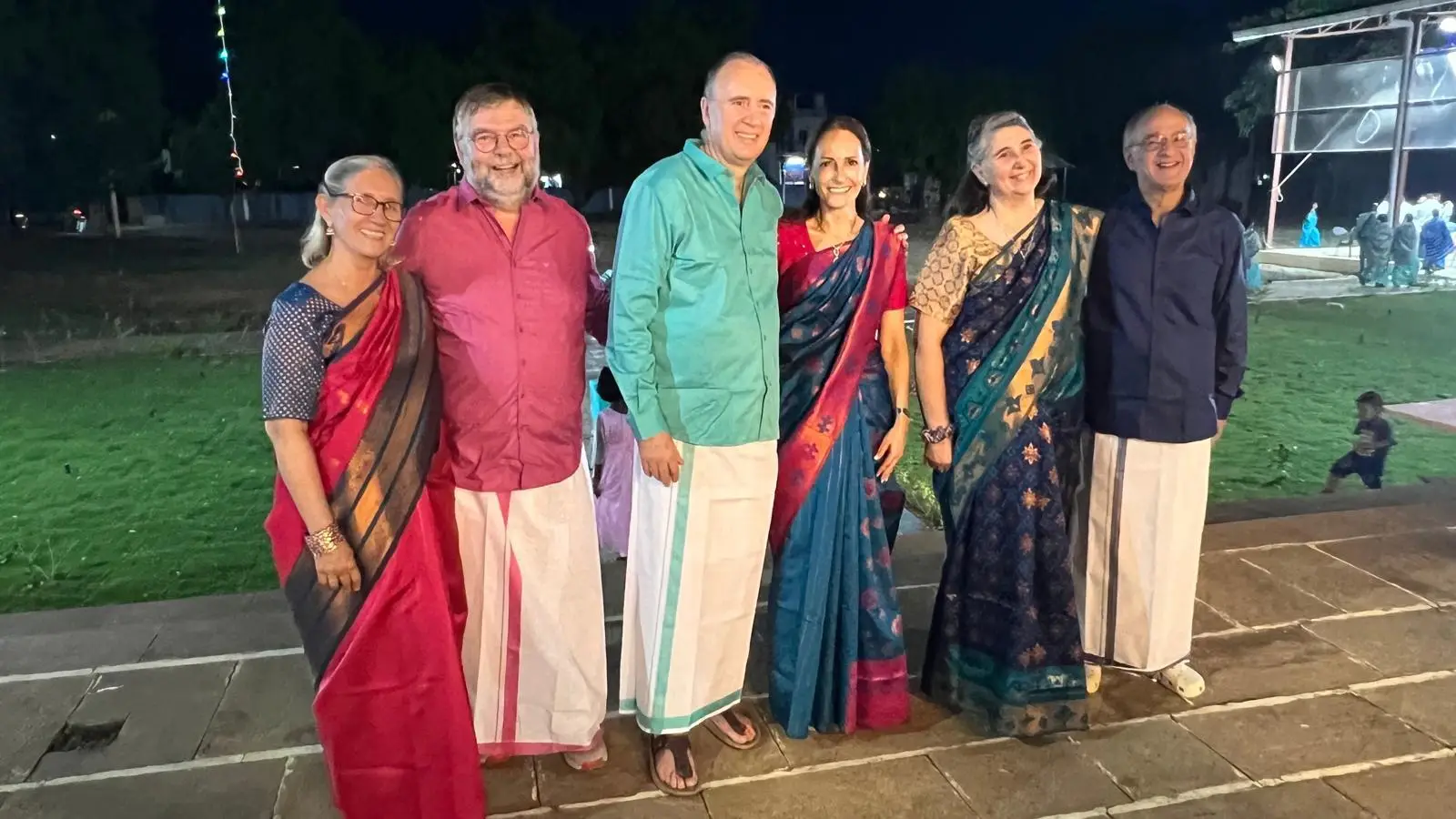
Equally important is the encounter with the country’s culture and traditions. The stay in India is not just a course but also a cultural learning experience. Participants encounter a rich diversity of customs, religious traditions, and forms of social coexistence.
A highlight is the pilgrimage to the Marian Shrine of Velankanny. This combines the course’s pastoral experience with a shared journey to an important Marian pilgrimage site in India.
A Course as a Space for International Exchange
The pastoral course convincingly demonstrates that pastoral challenges transcend national borders. Issues related to marriage, family, youth, the transmission of the faith, and the apostolate manifest differently across countries, yet they also share many common roots.
India contributes its experiences and challenges. Chile, Costa Rica, Spain, and other countries contribute their perspectives. Experiences from Africa can also be an important part of this international exchange.
In this way, the pastoral course can foster a network of pastoral experiences that endures beyond individual course units. What is learned in India can have an impact on Africa; what has emerged in Africa can inspire India; and the experiences of Europe and Latin America can be incorporated into this process.
Taking Joint Responsibility for the Future
For this reason, continuing the Pastoral Course is more than simply completing it. It is a concrete contribution to the future of the Schoenstatt Movement and its mission.
Family ministry, in particular, offers great opportunities. Families can become bearers of the faith and the apostolate—in their homes, in their parishes, and within the Schoenstatt Movement.
The 2026 Pastoral Course in India aims to equip people to take on this responsibility. At the same time, it reminds us that Schoenstatt remains alive wherever people are willing to share their experiences, learn from one another, and support one another.
The days in Kuttur and Madurai mark another step on a shared journey: a journey of pastoral collaboration, international unity, and mutual commitment.
May the unity of this course bear abundant fruit—for India, Africa, and the entire international Schoenstatt Family.