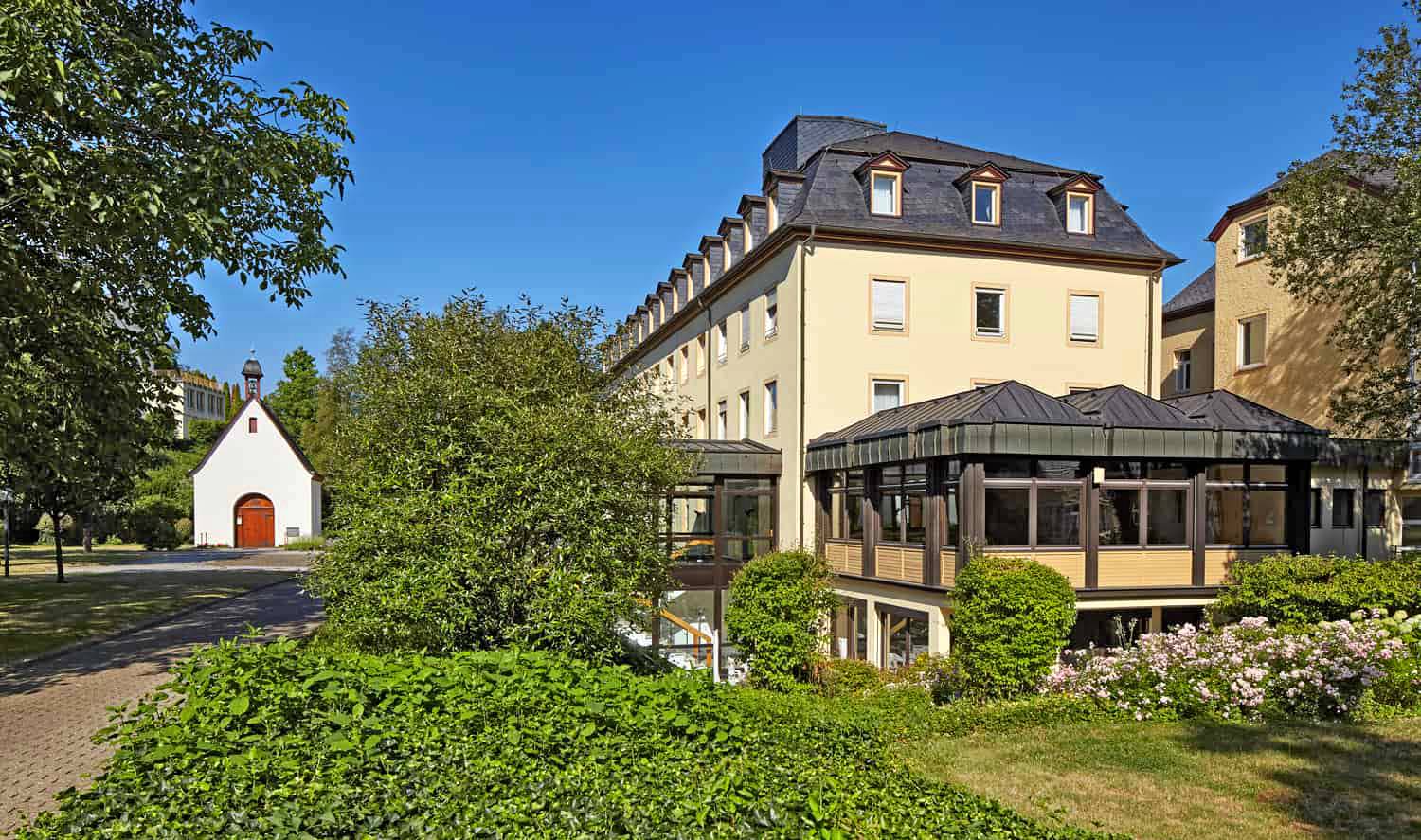
From a home for priests and guests to the “Movement House”: the Marienau in Schoenstatt (Vallendar) is entering a new chapter in its eventful history. The Schoenstatt Priests’ Federation is transferring the house and the land to the German Schoenstatt Movement. This will create a central space at Schoenstatt’s original place for gatherings, retreats, formation, and work with national media—and for the Movement’s future.
A House Steeped in History
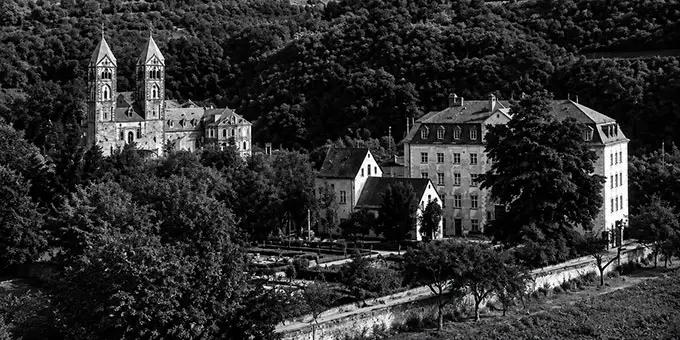
Anyone visiting the Marienau in Schoenstatt today discovers a place whose history extends far beyond the Schoenstatt Movement’s origins. Historical photographs from the second half of the 19th century show the building and its extensive grounds in the immediate vicinity of the medieval Schoenstatt monastic complex. At that time, two towers of the old monastery basilica still stood, and large open spaces spread around the buildings. The Marienau building was originally constructed as a textile mill. The mill was powered by water, in keeping with the name Vallendar, which derives from the Celtic word for “valley of waters.”
In 1888, Maria Wolters purchased the house and the adjacent land. She named it “Marienau” and established a Catholic boarding school for girls and a teacher training center there. At the time, this was a remarkable and truly revolutionary initiative: women were trained to pursue a profession and earn their own living, even if they remained unmarried.
From 1920 to 1950, Marienau served as the provincial headquarters and novitiate for the Steyler Missionary Sisters.
76 Years as a Home and Father House for Schoenstatt Priests
In 1950, the Schoenstatt Diocesan Priests acquired the house and land. In the 1960s, the Federation, the League, and the Institute were established. The Institute of Diocesan Priests moved to Mount Moriah, while the Federation of Schoenstatt Priests continued to own and manage the Marienau. For 76 years, the Marienau served as the Diocesan Priests’ Federation headquarters, home, and father house.
Father Joseph Kentenich, founder of the Schoenstatt Movement, also enjoyed spending time at the Marienau. Meetings for priests and the Schoenstatt Movement were held here. At the same time, Father Kentenich valued the house as a place of retreat and tranquility.
Over the decades, the Marienau gradually opened its doors to more and more people. At first, it was primarily members of the Schoenstatt Movement and church groups who stayed there. However, the house also became increasingly open to people who, whether or not they belonged to the Movement, appreciated the “House by the Spring.”
Transition to a New Phase: The Marienau Becomes the “Movement House”
A new chapter in the history of the Marienau is now beginning. The Diocesan Priests’ Federation is transferring the “Marienau for Priests and Guests” to the German Schoenstatt Movement. In the future, the Marienau will serve as the “Movement House” at Schoenstatt’s original place —in a sense, reclaiming the role the former Federation House once played as a central place for the Schoenstatt Movement’s gatherings, work, and communal life.
For several months now, a team has been working on this transition project. Members of the Diocesan Priests’ Federation, the Schoenstatt Fathers, and the German Schoenstatt Movement are collaborating with experts to develop the necessary structural, personnel, and financial plans.
This process is being led by the director of the Movement, Father Felix Geyer. For everyone involved, this reorientation presents a challenge. At the same time, it is a matter of listening and observing: What is the next step in the light of Divine Providence? What is feasible and has a future? How can the Marienau fulfill its mission for the Schoenstatt Movement today and tomorrow?
It is now the headquarters of the German Schoenstatt Movement
The change is already visible in very concrete ways. The Marienau is now the headquarters of the German Schoenstatt Movement and has a new address: Höhrer Straße 86. The current phone number remains the same for the time being. The Movement’s Director, Father Felix Geyer, and the secretariat, led by Sister Marie-Siegrun, have moved to the Marienau. Several Schoenstatt Fathers who work both in Schoenstatt and within the Movement also reside here. In addition, the German Schoenstatt Movement’s media center and press office have already been established there. Plans are in place to open additional offices.
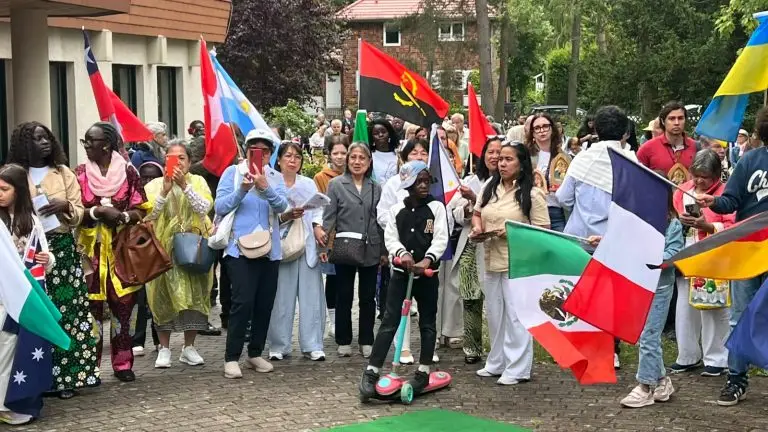
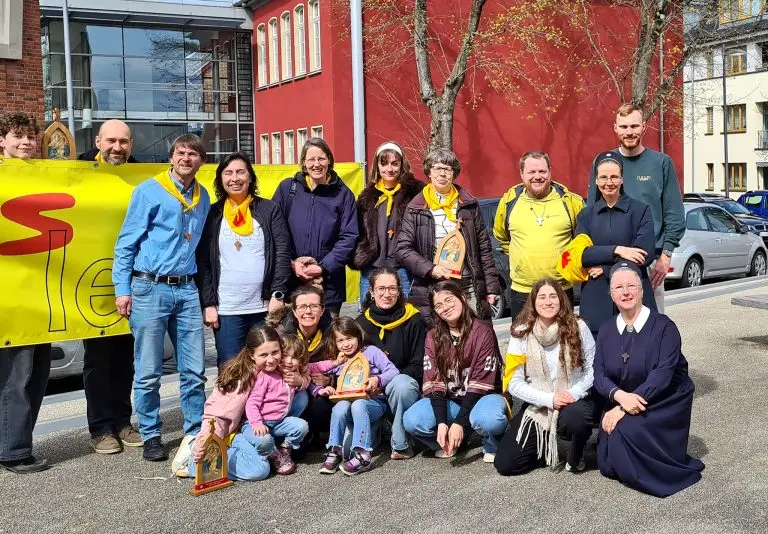
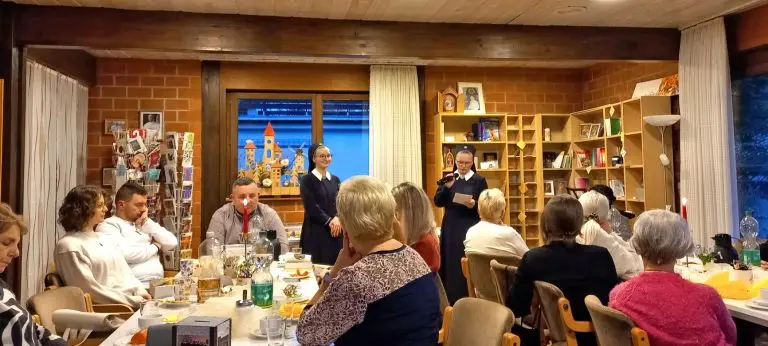
At the same time, life at the house is flourishing. Visits, gatherings, formation days, and courses bring together people from different areas of the Schoenstatt Movement and beyond. Thus, the Marienau is increasingly becoming what its new name expresses: the “Movement House.”
The Marienau remains a Guesthouse
Despite all the changes, the Marienau remains a place of hospitality. In total, 22 rooms with private bathrooms remain available, including single and double rooms. In the annex building, there are also nine simple rooms. In this way, the house continues to welcome people to the original place of Schoenstatt—for conferences and courses, gatherings, formation programs, or even personal stays.
The Schoenstatt Federation of Diocesan Priests Remains Present
The handover of the Marienau by no means marks the end of the Schoenstatt Federation of Diocesan Priests’ presence in the town of Schoenstatt. They remain present with their “Canaan-Patris Shrine” and the “Karl Leisner House” in the garden of the Marienau. There, among other things, are living quarters and offices for the international leadership, the shrine’s rector, the secretariat, and the archives.
The connection between the Federation of Diocesan Priests and the Marienau will continue. When the priests of the Federation gather in Schoenstatt for conferences, they will continue to feel warmly welcome at the new “Movement House.”
Transparency Instead of a Wall
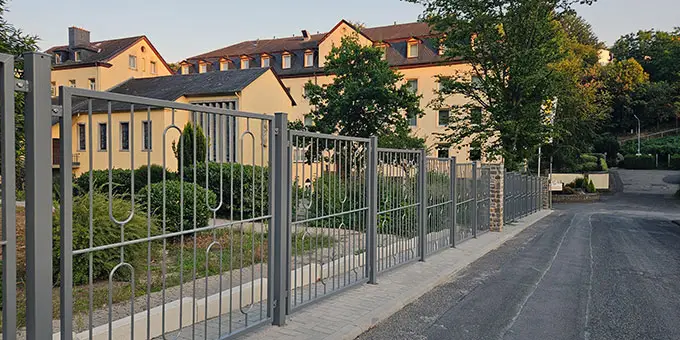
Even from the street, a visible sign of change welcomes visitors. The old wall, which for decades had defined the grounds of the Marienau, could not be preserved. In its place, a high-quality, transparent fence has been installed. “There are already more than enough walls,” writes Rector Egon M. Zillekens. The new design offers a clearer view of the house and its grounds and can thus also be seen as a symbol of this new era: less separation, more openness; less isolation, more encounter.
Funding for this new fence was made possible by a priest from the federation, who is seriously ill, and who provided the necessary funds—a personal testament to his connection to the Marienau and its future.
A House for the Future
The Marienau has already undergone many changes throughout its history. Now a new phase begins. As the “Movement House,” the Marienau will in the future be a place where the German Schoenstatt Movement gathers, works, prays, is formed, and shapes the future. A house at the original Schoenstatt, which draws strength from its history and is, at the same time, open to what lies ahead.
The story of the Marienau continues.
Source: schoenstatt.de