We have entered the age of AI, marked by great technological achievements and impressive advances, yet accompanied by many doubts. Today, the world’s fastest mode of transportation, the Shanghai Maglev train, reaches 431 km/h, breaking barriers that had not even been imagined before. We can communicate with people anywhere on the planet—or even on the Moon, as the Artemis II mission recently demonstrated. We live in a world where distances seem to be shrinking, yet divisions are becoming ever deeper.
In 2026, the Day of the Covenant of Love invites us to renew our mission in a world marked by polarization and radicalism. In many countries, dialogue is giving way to intolerance, and peace is increasingly fragile. Individuals, families, and nations are divided by conflicts that seem to build ever-higher walls. Since his election, Pope Leo XIV has warned that we must commit concretely to peace. Faced with this reality, we look at our times and ask ourselves: What is our role as the International Schoenstatt Family?
When our Father and Founder, Fr. Joseph Kentenich, dared to write the letter of May 31, he had the good of the Church and the destiny of our culture in mind. Our Father affirms that Mary has a mission for this time and that she wishes to carry it out from the Schoenstatt Shrine. This mission is the Covenant of Love—and you and I are part of it!
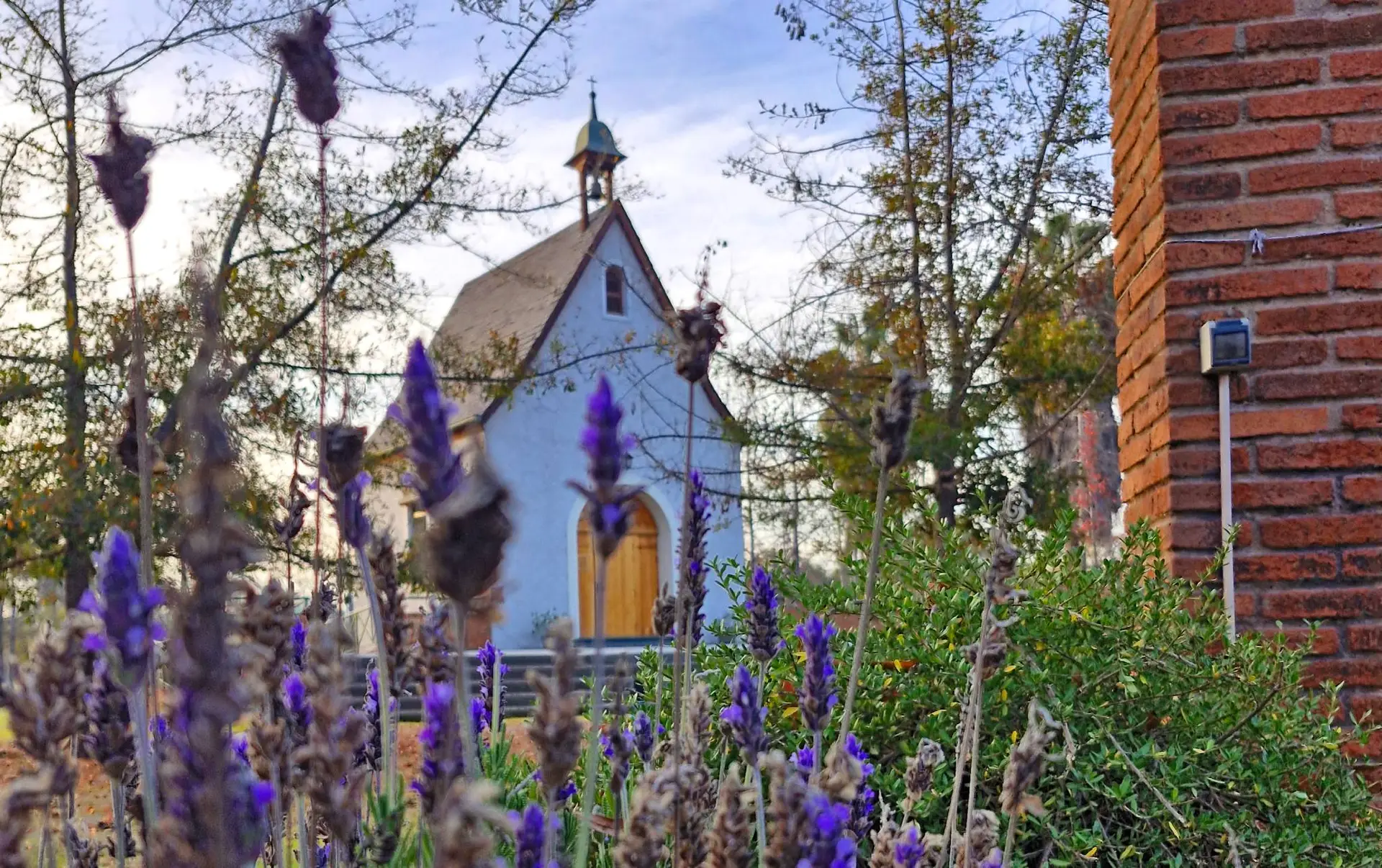
This mission is the Covenant of Love: we want to be Mary’s response to the world!
Fr. Kentenich identified one deep-rooted cause of the divisions of our time: mechanistic thinking. According to him, the contemporary person is sick, and that sickness manifests in a mindset that separates what should remain united.
We can recognize its effects in everyday life. One need only observe certain political debates, social conflicts, and even conversations on social media. Instead of listening, people seek arguments to discredit the other. Instead of recognizing the good in those who think differently, we see only what separates us.
This is how differences of opinion can lead to polarization; polarization can fuel radicalism, and, little by little, differences turn into walls. What could be an opportunity for mutual enrichment becomes a source of confrontation.
Fr. Rafael Fernández explains this mindset as follows:
“This way of thinking—or this mechanistic mindset—mechanically separates the elements of a whole that are, in reality, united. It cannot see the part in the whole, nor the whole in its parts. […] Mechanistic thinking regards as separate and opposing elements those that, by themselves and by God’s will, constitute an organic whole, in which they are called to complement, support, and enrich one another. It mechanically separates where there is unity; it divides and pits against one another where there are only differences or polarities intended for mutual complementarity.” [1]
In light of this, an important question arises: to live in unity, do we all have to think the same way?
Do we all have to think the same way? Is that unity?
It is natural to have different paths and choices. Each person brings with them their own history, experiences, values, and ways of understanding reality. The problem lies not in the differences themselves, but in how we handle them. As Pope Leo XIV says: “We must disarm our words.” [2]
How can we coexist with those who hold different perspectives and styles without turning disagreement into enmity? How can we build unity without demanding universal agreement?
From an academic perspective, Sister M. Nilza Pereira da Silva has closely followed the highly polarized climate in her country, Brazil. She recently received a national communications award. As she reflects on the challenges of dialogue in our time, she presents the Covenant of Love as a path toward unity:
“One of Schoenstatt’s pedagogical methods is rooted in what are called ‘creative tensions’—that is, in learning to live with them positively. Why? Because where there are differences, there are tensions, and these do not have to be negative. One person thinks differently from another; one group thinks differently from another; and that must be respected. It is these tensions that allow us to move forward, as they bring new ideas into dialogue.
When we speak of “Cor unum in Patre,” “one mind and one heart,” we are not referring to “groupthink” or to the idea that everyone must think alike. This expression means that unity lies in everyone desiring the good, united in the same love, with a single desire: to bring together our differences to discern and fulfill God’s will.
Mechanistic thinking divides; it suggests that one distinct side cannot coexist with another, that they cannot come together. Polarities separate the two extremes, each on its own side, while an organic vision focuses on the good that everyone has in common. We all have good qualities as well as limitations. Therefore, if we know how to manage tensions in a healthy way, we will seek, together, to reach consensus—that is, common ground that unites our differences for the good of all.”
The proposal is challenging yet concrete: we do not need uniformity in everything to build something together. But we do need sincere goodwill, dialogue, and a search for common ground. As Pope Leo XIV says: “The true tools for building peace are not weapons of destruction, but truth, dialogue, patience, kindness, justice, mercy, understanding, care, and love” (Message for the World Day of Peace 2026).
Let’s look at a concrete example…
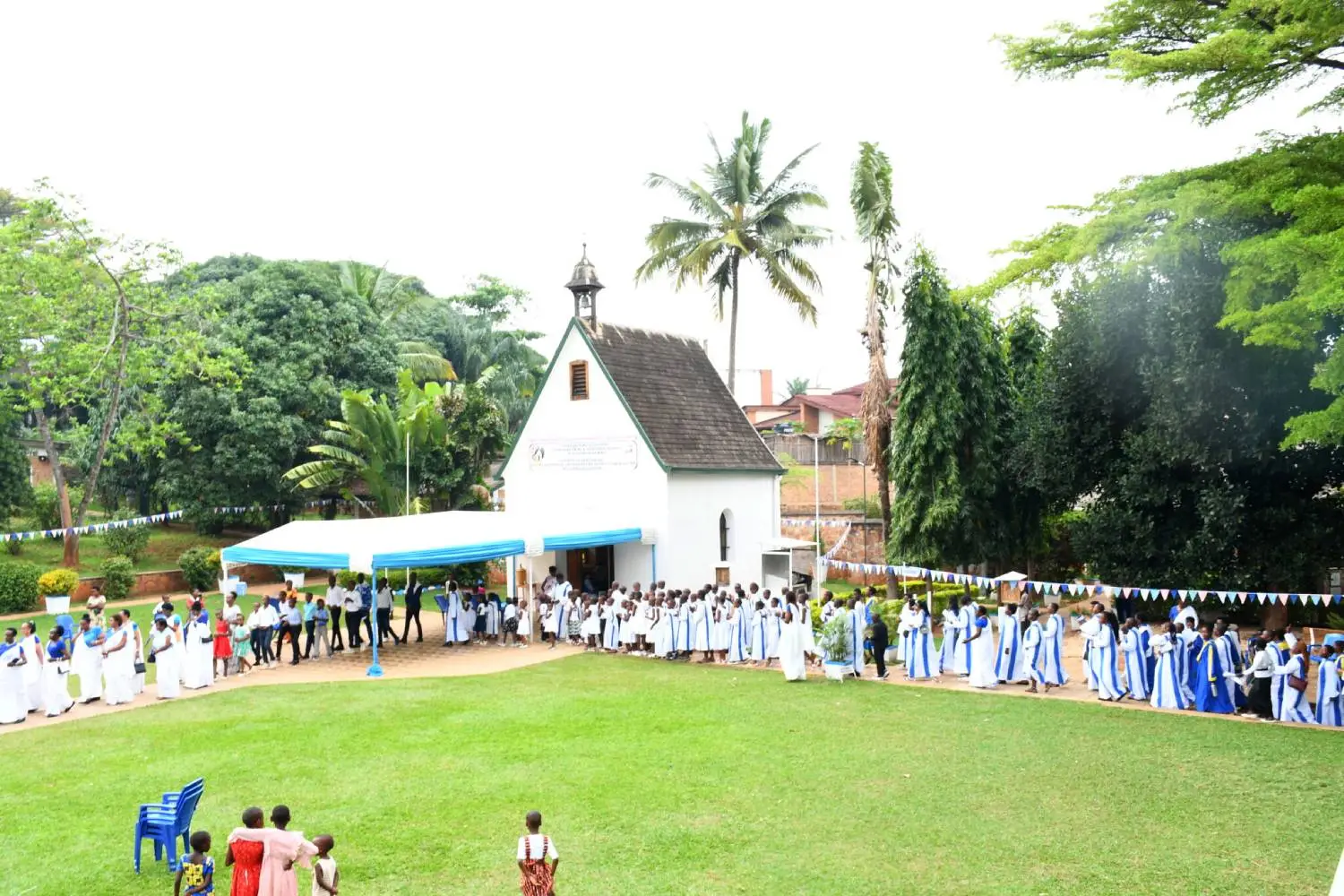
In Burundi, Africa—a country marked by civil wars and ethnic conflicts—the Mount Zion Gikungu Shrine has become a recognized model of peace. It has already welcomed large pilgrimages, including former political prisoners and high-ranking government officials.
The national director of the Movement in Burundi, Fr. Jean Bosco Habonimana, recounts this story:
“The Shrine was inaugurated on October 23, 1994, when Burundi was in the midst of a civil war. Not far from the Shrine, on the northern slope of the hill, poor families lived, and rebels frequently attacked the area. Wealthier people lived on the lower part of the hill. For some time, people from the southern part of the city were afraid to go to Mount Zion Gikungu because it was said that the place belonged to the rebels.
Over time, however, Mary drew these people to herself. Many who had previously refused to come began visiting the Shrine and, later, shared their testimonies. During the war, whenever gunfire was heard, people would run to take refuge in the Shrine’s shadow. Many believe that our Mother Mary protected them all, since no one died on Mount Sion Gikungu.
In 2009, a grand celebration crowned Mary Queen of Peace and Reconciliation in gratitude for the peace she helped bring to Burundi. Today, through the Covenant of Love—especially during the monthly Covenant celebrations on the 18th—people from all ethnic groups, rich and poor, gather from across Bujumbura.
Mount Zion Gikungu thus demonstrates that the Covenant of Love can become a true source of peace, unity, and reconciliation in a country marked by division and conflict.”
This is how the Shrine became a meeting place for people who, in other contexts, might otherwise remain divided by fear, social differences, or the wounds of history. The Covenant of Love created space for a new way of relating: not based on what divides us, but on what can unite us.
And what about us—where do we want to go?
The world remains divided, and perhaps it is beyond our power to resolve all the conflicts we see around us. But there is something we can do: from the Sanctuary of our hearts, choose how we view those who are different, how we participate in conversations, how we respond to differences, and how we build our relationships.
The Covenant of Love invites us to begin with what is within our reach. In our families, communities, workplaces, and spaces for social engagement, we can be people who bring others together rather than divide them, who listen before judging, and who seek dialogue without compromising our values.
This does not mean ignoring differences or accepting everything without discernment. It means learning to distinguish what truly separates us from what—even if different—can enrich us. It means building a unity that respects people, drawing on the strength that comes from being part of this deeply blessed Family. In the encyclical Magnifica Humanitas, the Pope invites us to build a united society that, in addition to being founded on our relationship with God, has “as its rule, the acceptance of human limitations as something natural and positive; as its style, shared responsibility and the language of the Gospel” (n.236).
The Covenant of Love is Mary’s response to a divided world. And that response comes to life every time we, together with her, heal the tensions arising from our differences and allow it to transform the way we think, love, and act into a healthy flow of bonds, just as the Family that we are.
References
[1] ANDRACA, P. Rafael Fernández de. May 31: A Mission for Our Time. Brazilian edition. Santa Maria/RS, Brazil.
[2] POPE LEO XIV. Address to representatives of the media. 12 May 2025. https://www.vatican.va/content/leo-xiv/en/speeches/2025/may/documents/20250512-media.html