We are in Lent, a privileged time of penance and inner renewal. Among the spiritual practices of this period, the Way of the Cross stands out throughout the world. With it, we accompany Jesus from his condemnation to Easter, passing through the sacrifice of the cross.
Praying the Way of the Cross can sometimes be interpreted as a purely pious and even individualistic gesture. But that is not true: it has an impact on society! Specifically, we can recall the example of Venerable Deacon João Luiz Pozzobon. He demonstrated that the Way of the Cross is linked to the transformation of the world, not only in a spiritual sense, but also in a social sense.
João Pozzobon and the Way of the Cross
Pozzobon is usually remembered for praying his 15 rosaries daily. But perhaps not everyone knows that he also meditated daily on the Stations of the Cross.
After attending Mass at the Tabor Shrine, he would return home, praying the Way of the Cross along a 1 km route. When he traveled with the Pilgrim Mother, he would pray the Way of the Cross along with his first prayers of the day.
“Whenever I went for a walk in the countryside, I kept in mind the great suffering of Christ, who carried the cross and did so out of love for all of us. I also wanted to include myself in this, making my small contribution, cooperating in his sacrifice…” [1]
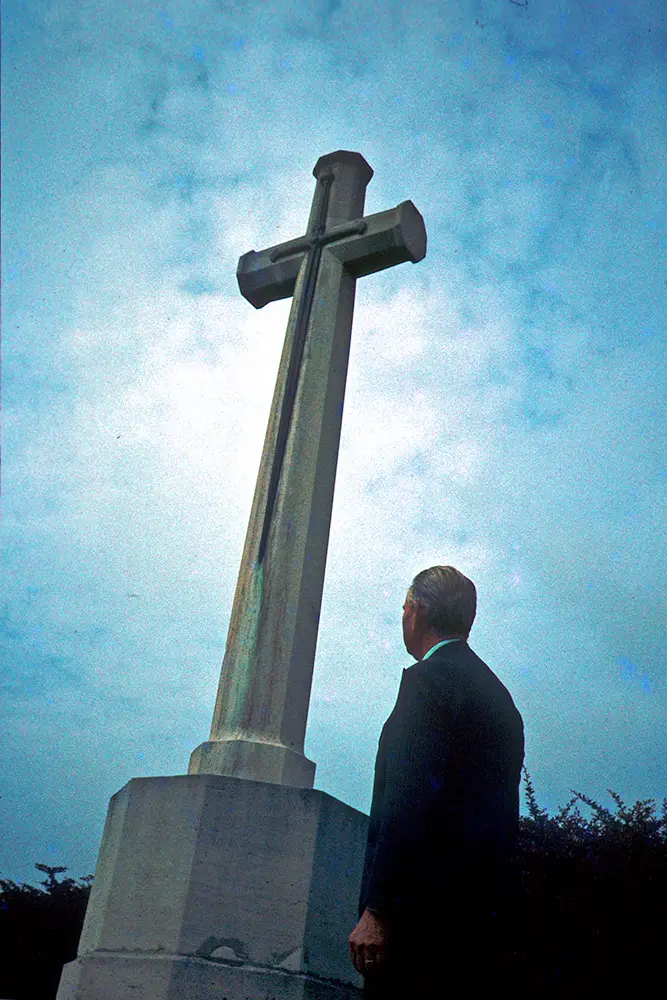
The Way of the Cross and the social challenge
When João Pozzobon spoke of the Way of the Cross, he pointed out two important aspects:
- Uniting one’s own sufferings with those of Christ,
- Contemplating, in the Way of the Cross, the suffering of our brothers and sisters.
With this thought in mind and always to bring people closer to the path of holiness, he committed himself to a special project at the end of his life.
His last great project: social and pious
The “Noble Village of Charity” (Vila Nobre da Caridade) was the place where, together with the needy community, small houses were built for those who needed a decent home. As his last “great project,” Pozzobon conceived a Way of the Cross that ran from the Tabor Shrine to the Noble Village of Charity.
He gave the Way of the Cross the name “Way of Life.”
“(…) The ‘Way of Life’ is to feel the other person, to feel what he feels. The Way of the Cross towards the ‘Noble Village’ is the fruit of the great Apostolate (of the Pilgrim Mother) and of what the Church considers its objective: to orient itself towards the humble. It seems to me that the Way of the Cross towards the “Village” makes more sense; it leads us to encounter the words of Christ: “Blessed are the humble.” [2]
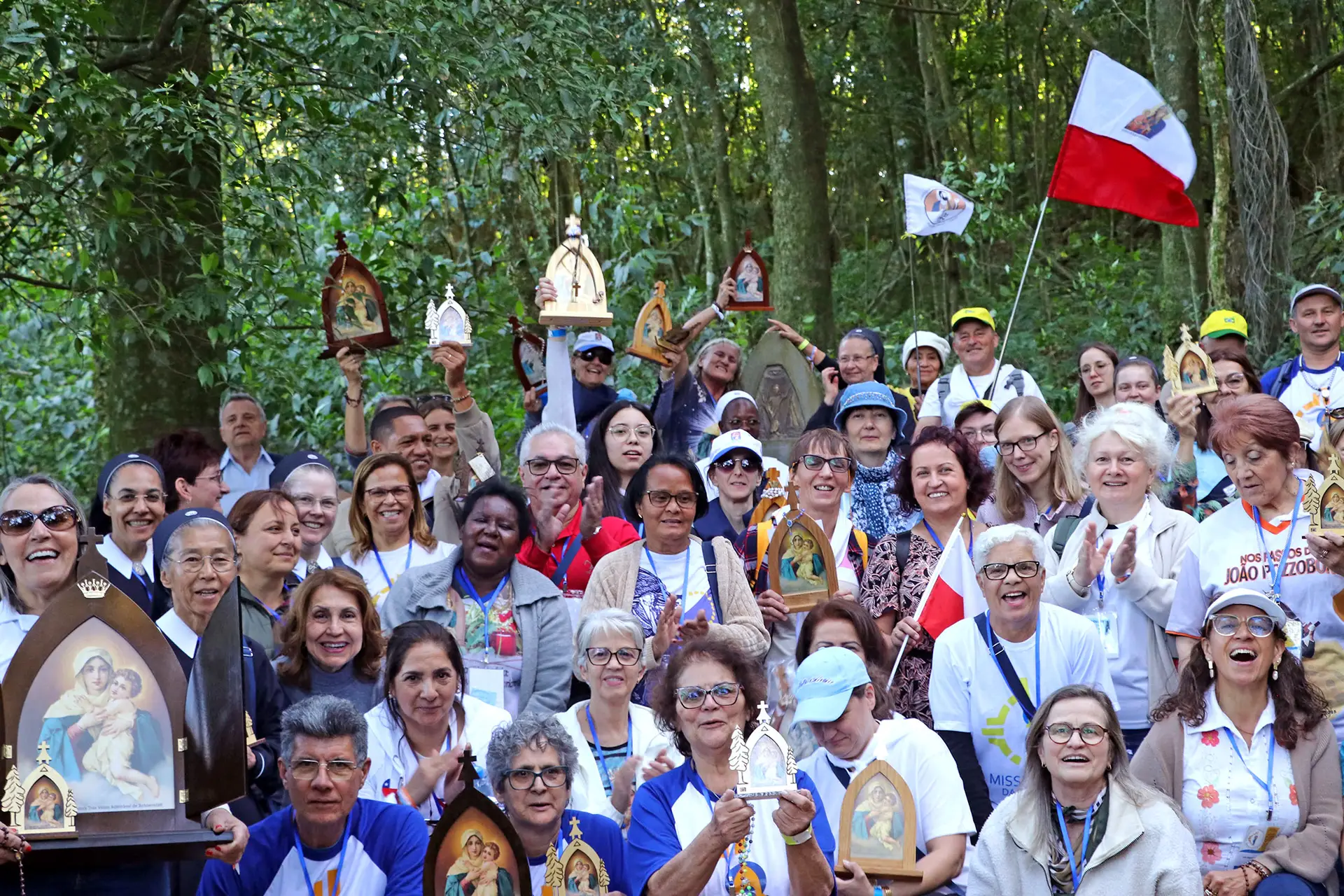
He accompanied the creation of each piece
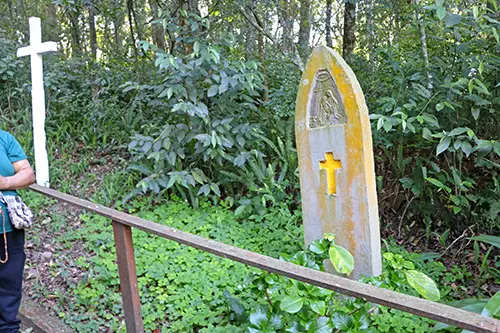
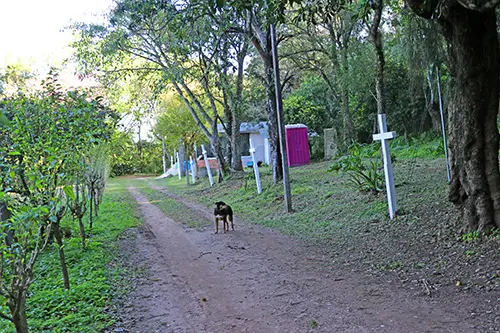
Those who come to Santa Maria, in southern Brazil, on pilgrimage to the Tabor Shrine usually pass through these stations, which have become known as the “Way of the Cross of Mr. João.”
Pozzobon planned and oversaw the manufacture of each station. However, he was unable to participate in their installation, which took place only after his death.
During the creation of the Way of the Cross, the route was questioned because of its distance. Then a proposal was made to end it at Mr. João’s house, as this would facilitate people’s participation. Pozzobon, however, maintained his original idea and asked that it be placed at Noble Village, since the Way of the Cross also consists in meditating on the suffering of our brothers and sisters, especially the poor. And so, it was done.
“I began to appreciate the Way of the Cross in 1955, when I placed the stations in Noble Village of Charity to pray it once a month. Then I understood the meaning of the Way of the Cross, the sufferings of Christ, and those of our brothers and sisters.”[3]
What does João Pozzobon’s love for the Way of the Cross teach us?
References [1], [2], and [3]: URIBURU, J. Esteban. A Hero Today Not Tomorrow: The Life of John Louis Pozzobon, a Poor Pilgrim and Deacon. Santa Maria/RS: Secular Institute of the Schoenstatt Fathers, 1991. Pages 81 and 82.
Translation: Sr. M. Lourdes Macías