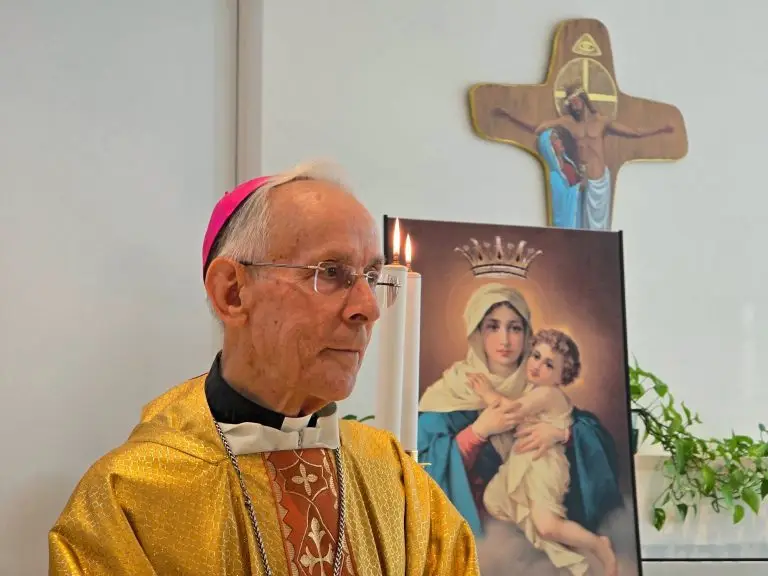
The Schoenstatt Family, especially the Family in Italy, celebrates a special achievement on this April 18, Covenant of Love day. The Movement’s official website—schoenstatt.com—is officially launched in Italian.
The volunteer translator who led the project is Eugenio Minici, a member of the Schoenstatt Family Federation and a resident of Rome. Several months of work have resulted in some 90 permanent pages and dozens of news articles translated into Italian. Thanks to this effort, the Schoenstatt Family now has a new and important channel of communication.
Italian News Group
Anyone who wishes to receive up-to-date news about the Movement’s life in Italian can now join our communication channels. We have groups on WhatsApp and Telegram, in addition to the email newsletter subscription.
Director of the Movement: Growing in the Identity of the Charism
Below, we share the conversation with the national director of the Movement in Italy, Fr. Pablo Pérez, and the website translator regarding this launch.
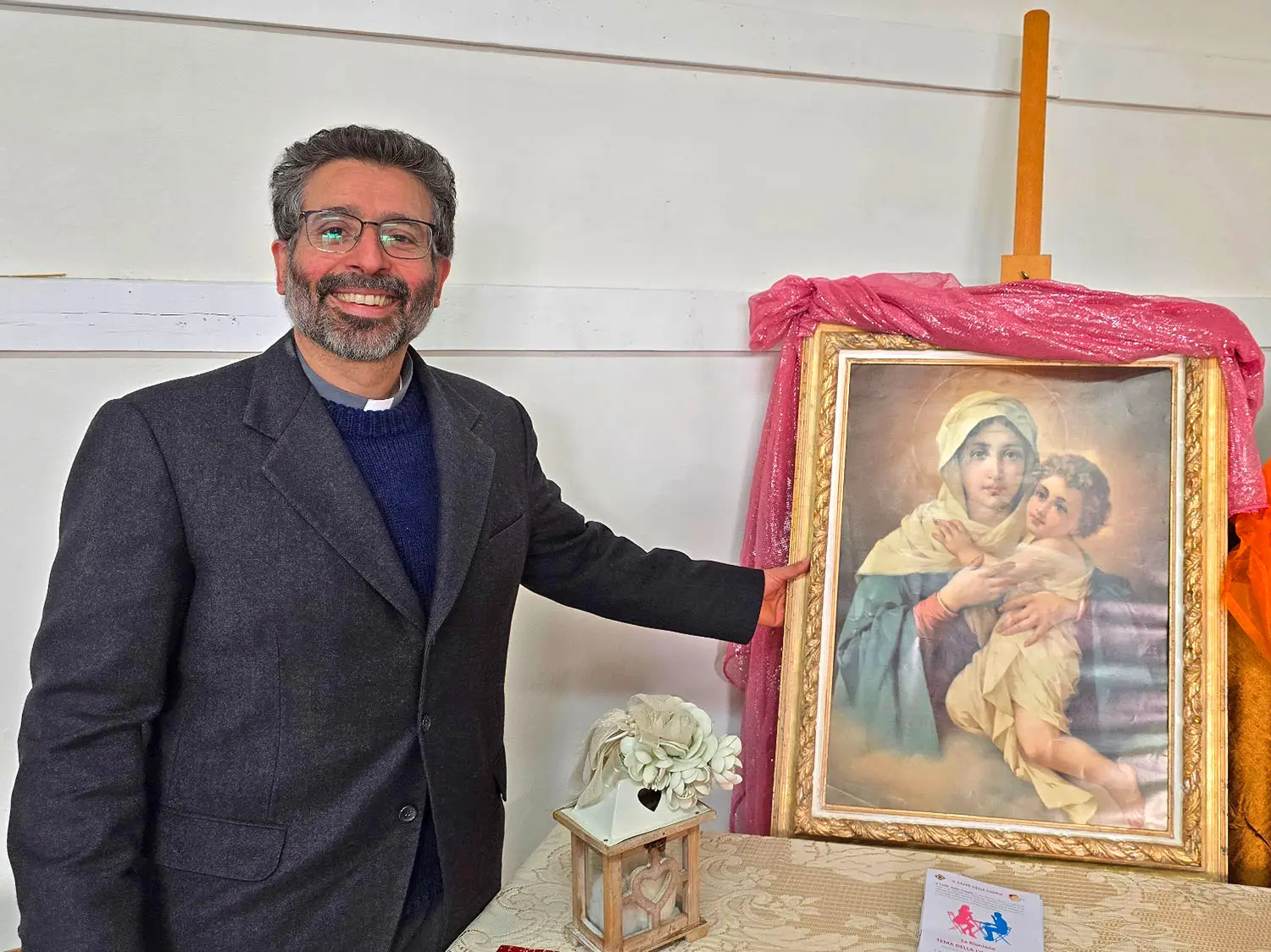
Father Pablo, how has the Schoenstatt Movement developed in Italy today?
Historically, the Movement has developed most intensely in various regions of Italy, mainly in Sicily and Tuscany, and not so much in the major historic Italian cities, but rather in many parishes in small towns and villages. The development in these regions is due, above all, to the Pilgrim Mother Apostolate.
In Rome, there are currently some League groups, couples’ groups, and groups of professional women who were formerly part of the Girls’ Youth, as well as a Family Federation course. It is the first Family Federation course in Italy, called “Mariae apostoli.” In June, they will make their third consecration in anticipation of the final one. Their journey began around 2019–2020. This course plays a strategic role in service; in fact, several couples are involved in various aspects of the Movement.
The Sisters’ Shrine, Cor Ecclesiae, is the most frequently visited by Roman families, while the Belmonte Shrine is the national center for pilgrimages and national retreats.
Recently, the Cor Ecclesiae Shrine has been offering open meetings for engaged and married couples, and at the Santi Patroni d’Italia parish, where the Schoenstatt Fathers live, a workshop on the Covenant is also offered, open to everyone.
For decades, the Matri Ecclesiae Shrine has been a center for prayer and cultural formation, hosting gatherings and conferences during the liturgical seasons and, more recently, debates on topics of social and cultural relevance initiated by some Schoenstatters.
As national director, how do you assess the launch of this new communication channel in Italian?
It is a great joy that the Schoenstatt Family in Italy can access information from the official website of the Schoenstatt Movement and, in this way, grow in the charism’s identity and historical awareness, and stay up to date on news about the movement’s life in other parts of the world.
How do you think this new version of the site can help make Schoenstatt spirituality better known in Italy and strengthen the bond with the Church in Rome?
I hope it can also serve to make available useful material in Italian specific to Schoenstatt spirituality, which, unfortunately, until now has lacked a virtual space to share it. The Italian-language site will also undoubtedly help make what is happening in Italy known in other countries, contributing to the growth of life and the exchange of experiences.
Finally, at the ecclesial level, I believe that having an official Italian-language site will offer more immediate access to the reality of Schoenstatt, especially for the Roman Church and the Vatican, which have their vital center right here and use Italian as their official language. I hope that in this way we can be more present in ecclesial life, also through this virtual space, which, for all intents and purposes, is a pastoral space for accompaniment and formation in the Christian life.
Translator: Schoenstatt’s charism made more understandable and closer to the Church
Eugenio Minici explains why he has dedicated so many hours of work to this project and why he continues to contribute to international communication:
Eugenio, in your opinion, how important is it to offer the official Schoenstatt website in Italian, especially for the Movement’s connection with the Church and with the public in Rome and Italy?
Offering this site in Italian is, in my opinion, strategically crucial. First and foremost, for an ecclesial reason: Italian is the language of the daily life of the universal Church, especially in the context of Rome and the Holy See. Having accessible and well-crafted content in Italian means entering into more direct dialogue with ecclesial institutions, the dicasteries, the religious communities present in the territory, and those who, at various levels, participate in the life of the Church.
Second, there is a cultural and pastoral dimension: Italy is not merely a geographical location, but also a place where faith, tradition, and communication are deeply intertwined. An international website in Italian allows the Movement to take deeper root in the local context by speaking a language that is not only understandable but also culturally meaningful. This fosters greater recognition, credibility, and closeness.
Furthermore, it is a fundamental tool for internal communion: it allows Italian members to truly feel part of an international network, rather than merely recipients of content translated as an afterthought. When the language is carefully crafted and tailored for the Italian audience, a stronger sense of belonging and more active participation are fostered.
Finally, there is a missionary aspect: an Italian-language website opens Schoenstatt to a much broader audience—young people, families, educators, and those searching—who would otherwise have difficulty accessing content in other languages. In this sense, it becomes a concrete tool for evangelization, capable of reaching even those on the margins or who do not yet have a direct connection to the Movement.
With all the work that has been done, what fruits do you hope this new channel will bear in the life of the Schoenstatt Family?
I believe this new channel can bring several benefits to the life of the Schoenstatt Movement Family in Italy. First and foremost, it will foster greater unity and internal communication: having content accessible in Italian allows more people to truly feel part of the same family, informed and connected, including to what is happening internationally.
Secondly, it represents an important opportunity for visibility and mission. A site in Italian makes the Schoenstatt charism more understandable and accessible to the Church and the public in our country, especially in a context like Rome’s, where dialogue with the ecclesial reality takes on special relevance.
Another fundamental aspect is the transmission of the charism: texts, testimonies, and formative content in one’s own language help not only to understand but also to internalize the spirituality more deeply, making it more alive and rooted in the local culture.
Finally, I hope this channel becomes a space for encounter and the generation of life: not just an informational site, but also a point of reference capable of sparking questions, vocations, initiatives, and new relationships within the Schoenstatt Family in Italy.

With this new channel, we give thanks to the Mother and Queen of Schoenstatt and continue to transmit her message to the world, faithful to the Covenant, now closer to the heart of the Church!
Translation: Sr. M. Lourdes Macías