
Approximately one year ago, the first Men’s Rosary group linked to the spirituality of the Schoenstatt Movement was formed in the region of Tuscany (Italy). This initiative brings together the men of the community weekly to pray the rosary (more information here). This moment of prayer fosters bonds between them and makes them protagonists of an essentially masculine project.
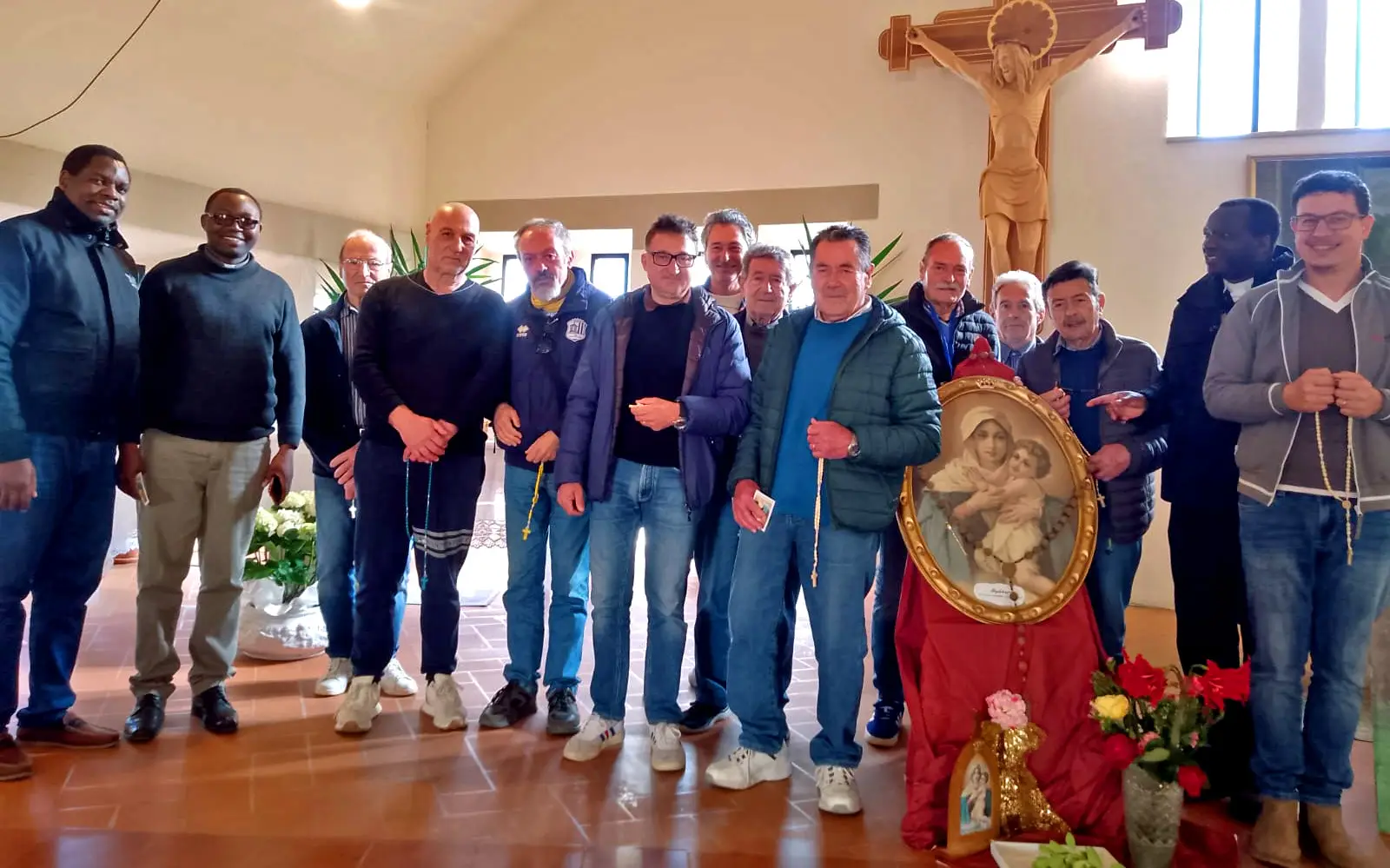
The Men’s Rosary group in Tuscany meets faithfully every last Saturday of the month, thanks to the Blessed Mother. Over time, the meetings have become established, and a beautiful friendship has been born, nourished by prayer and the usual breakfast with homemade sweets prepared by the wives of the participants. It is genuinely something very valuable.
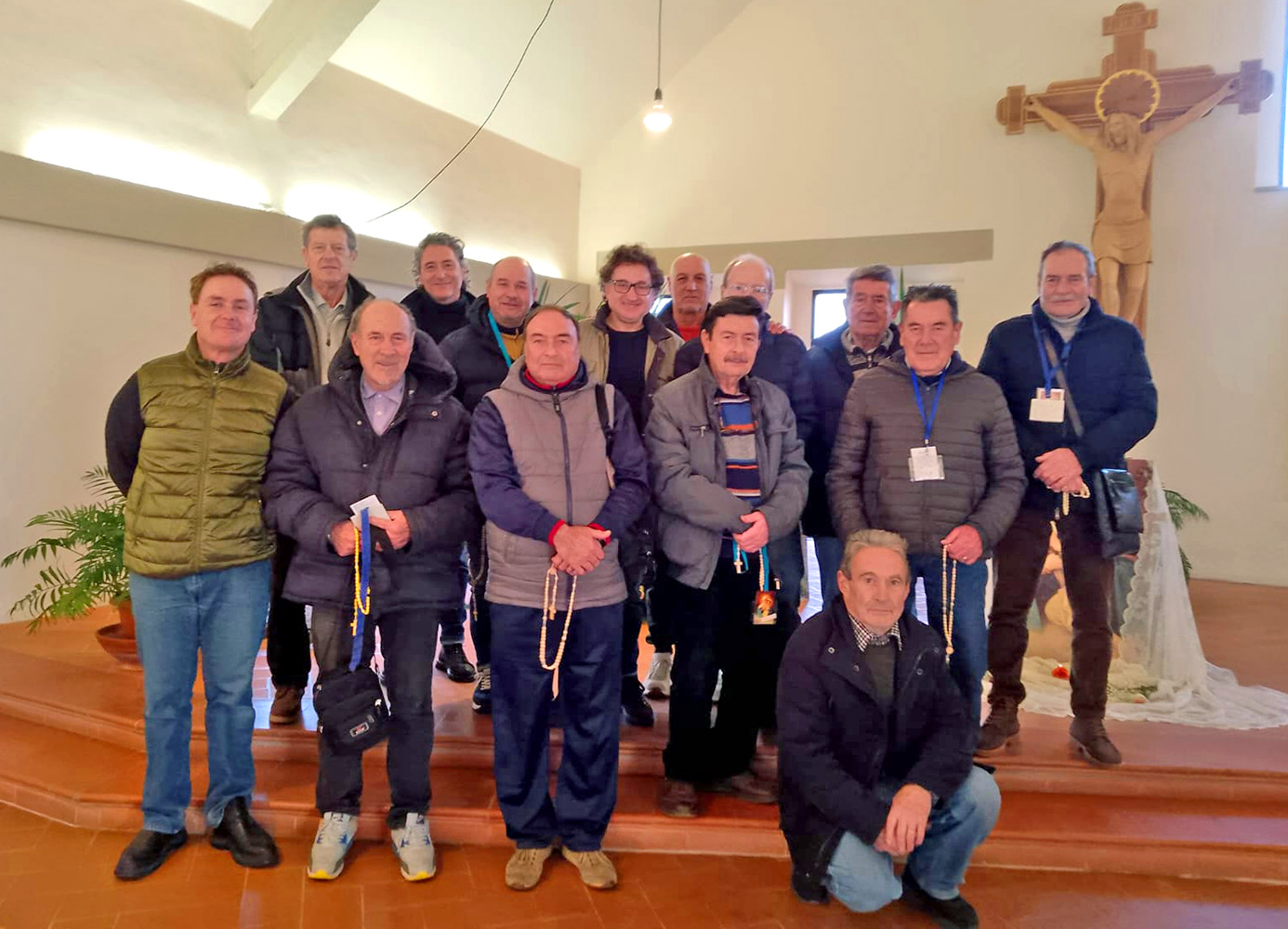
The Men’s Rosary in Capannoli (Pisa, Tuscany, Italy)
During these autumn months, in Capannoli (Tuscany), 15 men have gathered to continue this beautiful devotion to the Mother of God. In the silence of the small church, their prayer has been immersed in a profound and simple atmosphere. It is surprising to see these men gather in the quiet of a church to pray the Rosary in a small town like Capannoli. They make no noise, they do not seek visibility: they preserve a tradition that, in their hands, comes back to life, becomes concrete, and acquires an inestimable value.
Most impressive is the fraternity that spans generations: from 14 to 84 years old, the same thread of the Hail Mary transcends differences, unites diverse experiences and stories, and creates a bridge between those at the beginning of their life journey and those with decades of memories behind them. It is a sign of a faith that knows no age and flows like a silent inheritance, not imposed but offered. Thus, Capannoli becomes a small icon: a place where devotion is not “something for others,” but a free and shared choice; a place where prayer does not isolate, but builds community; a place where Mary is not a distant image, but a Mother who gathers and accompanies.
“I hope it will spread throughout Italy”

The Men’s Rosary was born in Tuscany on the initiative of Giorgio Bessi, a simple and wise man whose gaze seems to pierce the horizon. He himself recounts:
“One Sunday, I saw an article in the Mass booklet about a group of men who gathered to pray. So, I thought I’d try it too. I chose the last Saturday of May, invited some friends, and was sure that we would not reach ten, but to my surprise, there were 15 of us, and then more and more, until we reached 25 on some Saturdays. We would meet early in the morning, at 8:30, and after prayer, we would stay on the church porch drinking coffee and eating sweets made by our wives. A beautiful group was formed, not only for prayer, but also for sharing joy. I am very happy to have carried out this initiative, both for us and to encourage other parishes, who are surprised by the results we have obtained.”
Mr. Andrea Fiorentini also gives his testimony, in which he emphasizes:
“I feel very happy and proud to participate in the Men’s Rosary of the Schoenstatt Movement. When I have the opportunity, I am happy to lead it and bring Mary’s prayer through my voice as an instrument of God. I am filled with joy when my thirteen-year-old son is present, because I feel that a new generation is being ignited and renewed. The time spent together after the rosary may seem superfluous, but we establish a kind of friendship with the men present, and it is good to have coffee and a small sweet together and exchange a few words in the morning breeze. I am grateful for the opportunity I have been given to participate in the first Italian Men’s Rosary, and I hope it will spread throughout Italy.”
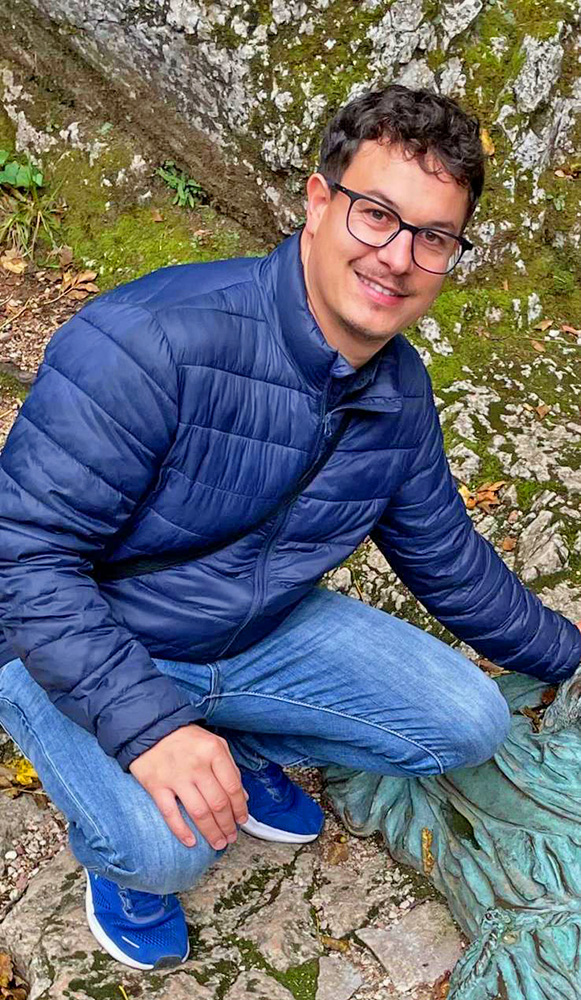
The origin of the Schoenstatt Men’s Rosary
The Men’s Rosary began in Brazil in 1997 and currently brings together a large number of men weekly in parishes and communities around the world. The Men’s Rosary prayer is inspired by the values of the Schoenstatt Movement, particularly in the following aspects: spirit of covenant and attachment to the Shrine, spirit of mission (being men who bring Mary to the world), character formation, discipline and commitment, and responsibility to the family, understood as the first apostolic field. The Rosary, therefore, also has an intensely masculine dimension, capable of forging character and spirit. In Europe, its spread is more recent, especially in Germany, Spain, Portugal, and Italy.
Origin of the Rosary
The Rosary emerged as a form of meditative, repetitive prayer that developed over the 11th to 15th centuries, reaching its current form in the 16th century. The fundamental prayer is the Hail Mary, which consists, first, of the biblical part (Luke 1:28 and 1:42), while the second part (“Holy Mary, Mother of God…”) became popular in the 11th century and was not consolidated until the 15th and 16th centuries. A popular tradition attributes the creation of the rosary to St. Dominic. However, the initiative is said to have originated with the Dominican Blessed Alan de la Roche in the 14th century. In 1569, Pope Pius V published the bull Consueverunt Romani Pontifices, which established the structure of the rosary as it is known today. In 2002, Pope John Paul II published the apostolic letter Rosarium Virginis Mariae, in which he introduced the Mysteries of Light. He concluded: “Such an easy and at the same time rich prayer truly deserves to be rediscovered by the Christian community.”
Translation: Sr. M. Lourdes Macías