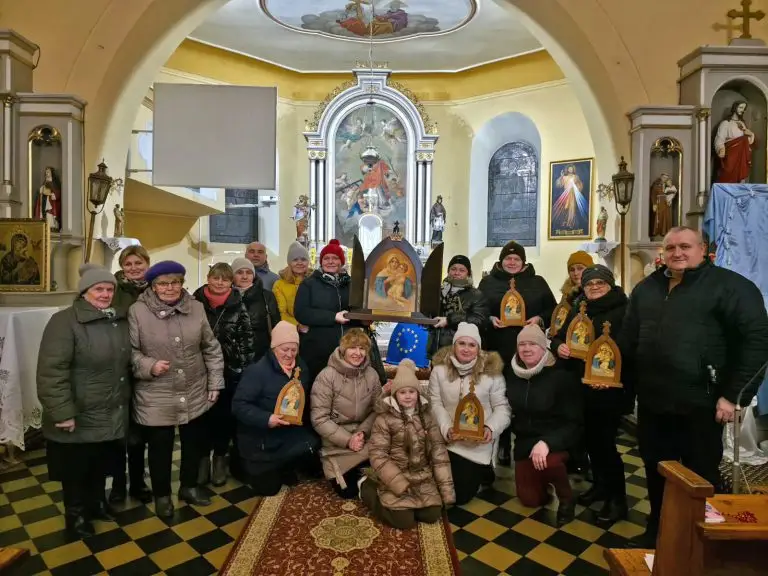
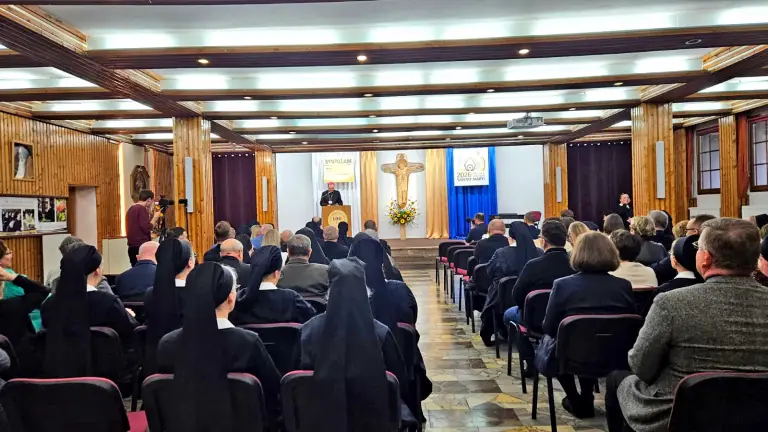
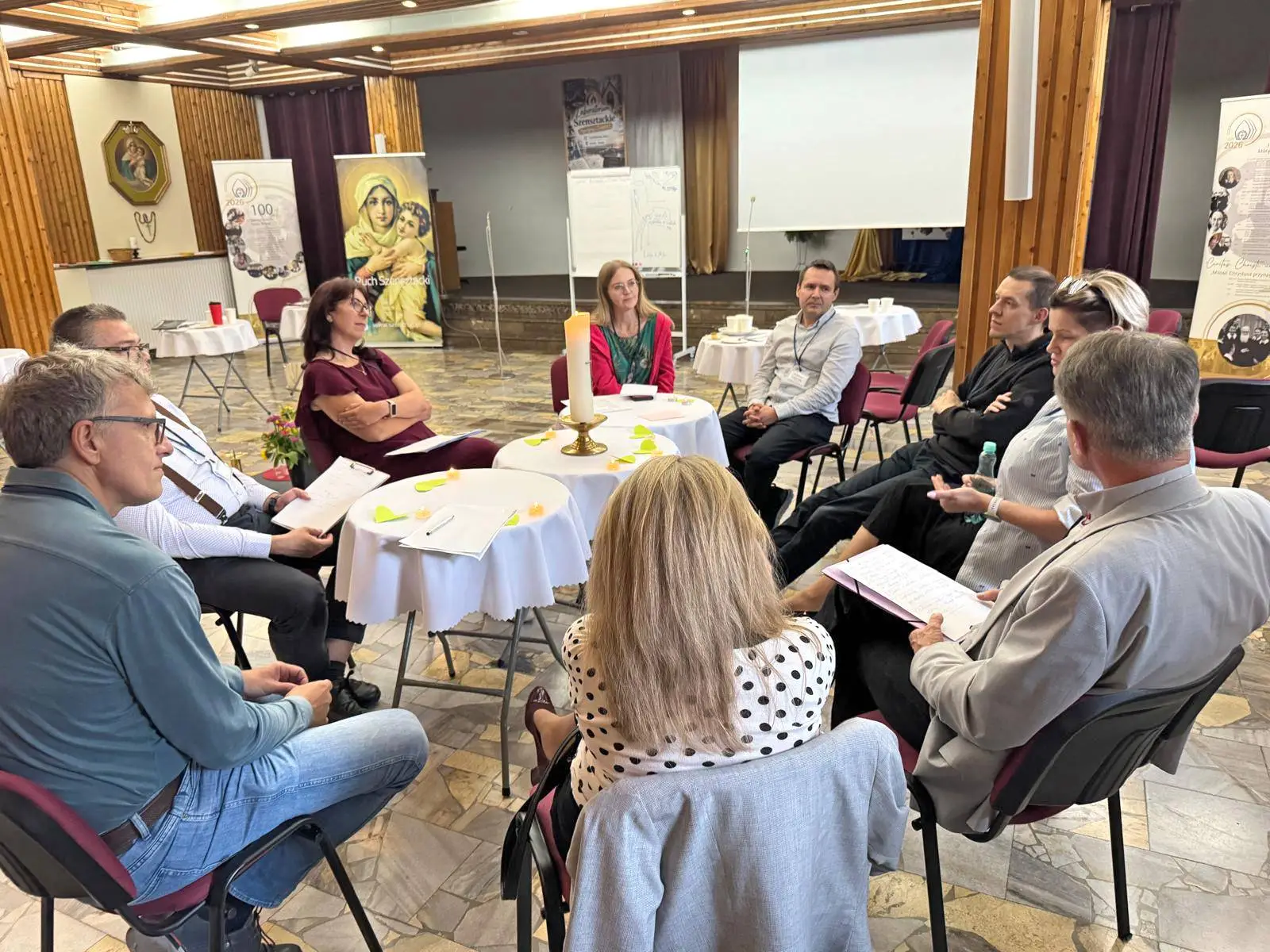
On October 3, 2026, members of the Apostolic Federation of Schoenstatt in Poland gathered at the Schoenstatt Movement center in Swider to deepen their understanding of their identity and mission within the framework of the Schoenstatt Movement. Representatives from the Federation of Families, the Women’s Federation, and individuals interested in the Federation of Mothers attended. The gathering took the form of a “laboratory” and encouraged experimentation and exchange, aiming to return to the mission’s roots in a renewed way that is in step with the times.
The “laboratory” inspired this gathering. During the event, participants actively conducted experiments, posed new questions, and sought answers.
Being Apostles in everyday life
The first prompt led participants to reflect on the beginnings of the Federation’s communities, which date back to a gathering in Hörde (Germany). Participants engaged with the dynamics of those early days: the personal commitment of the young people who gathered in Dortmund-Hörde to respond to the desire to serve the Church as lay apostles. The married couple Katarzyna and Łukasz Krzemińscy presented this milestone. During individual work, participants were asked what aspirations had led them to choose the Federation community and what they currently hold in their hearts.
In the second reflection, led by Dr. Alicja Kostka of the Women’s Federation, the image of the “raising of the banner” of the interior life—with which Father Joseph Kentenich, in a letter to the participants in Hörde, clarified the essence of the Apostolic Federation: through the cultivation of the inner life, we become apostles. The characteristics of the 1920s—novelty, incisiveness, and shared leadership—took center stage.
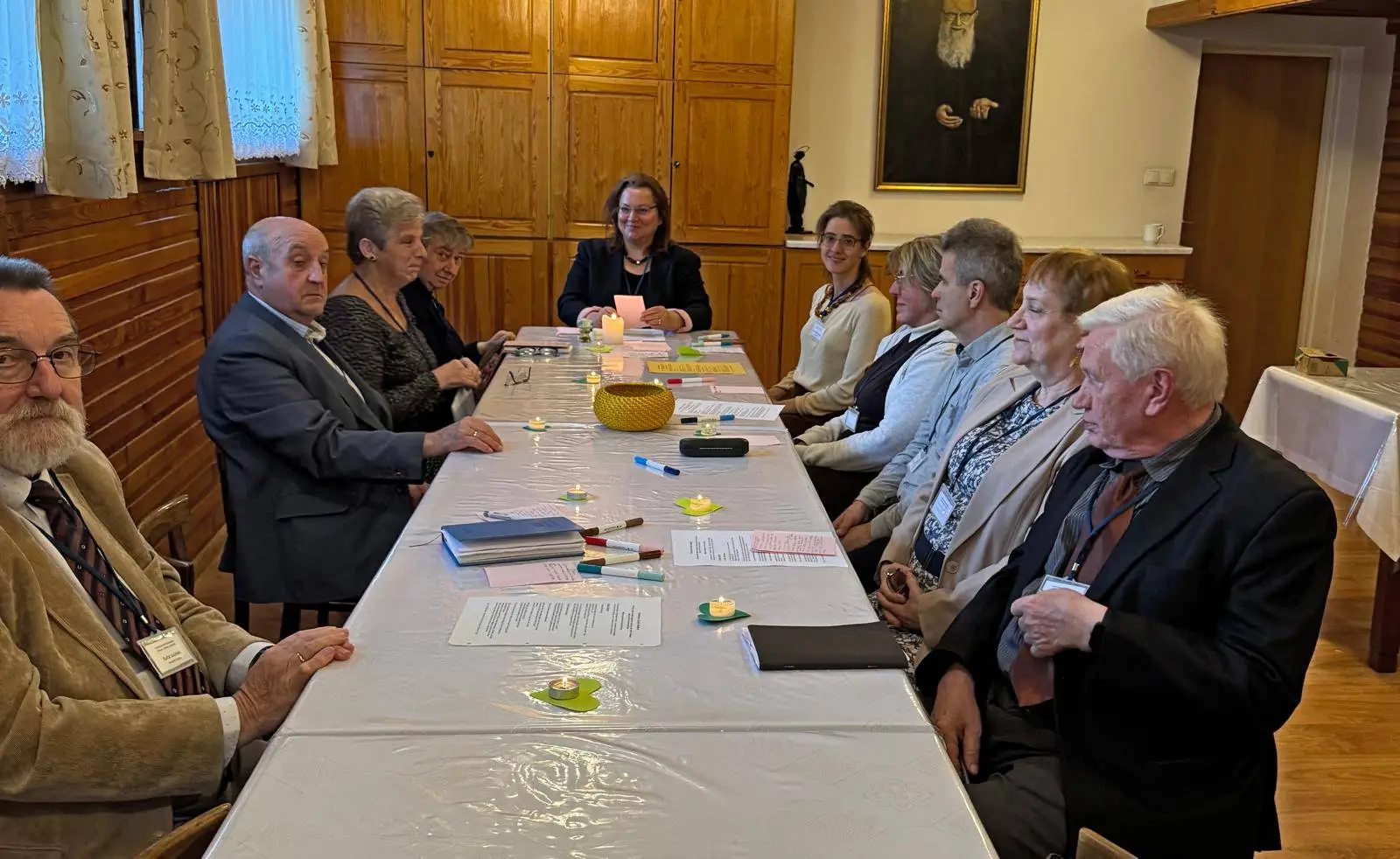
In a third step, the participants focused on the founding of the other federations in the 1950s: the Federation of Families and the Federation of Mothers were founded, and the Federation of Women was reconstituted. The question raised here was: Why were the federations so important to the founder of the Schoenstatt Movement—to the point that he wanted them to endure as mediating and central communities—and what hopes did he place in them? The subsequent small-group discussions led to further insights and fruits of this gathering.
From the reflections—the fruit of a “dialogue in the Spirit”—answers emerged such as:
- Spiritual life / LIVING BY THE SPIRIT brings about a genuine renewal of the Church.
- Autonomous growth toward holiness. Not being an anonymous mass, but having an individual relationship with each person.
- To be an institutional and structural support for people with a value system like that of the movement.
- A lasting community, united by a common vision.
- The community as a guarantee of stability in interpersonal relationships.
A vocation for many hearts
Barbara Sidor, interested in the Mothers’ Federation, remarked on the mission of the federations: “The federations are like a buffer, a filter that facilitates communication between the Church hierarchy and the laity, the foundation of the People of God.”
Barbara and Marek, a married couple, say: “We have realized once again that our vocation in the federation is that there are people who live in the world and understand its realities, and who are capable of changing them based on a solid spiritual life, not on worldly values.”
The gathering was a special moment for unity among the members of the Federations in Poland and for renewing their commitment to their mission as lay apostles in the service of the Church.