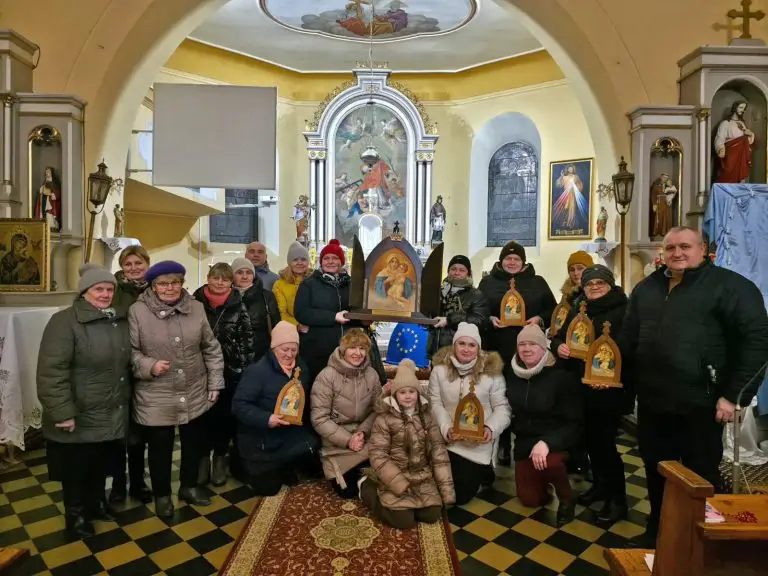
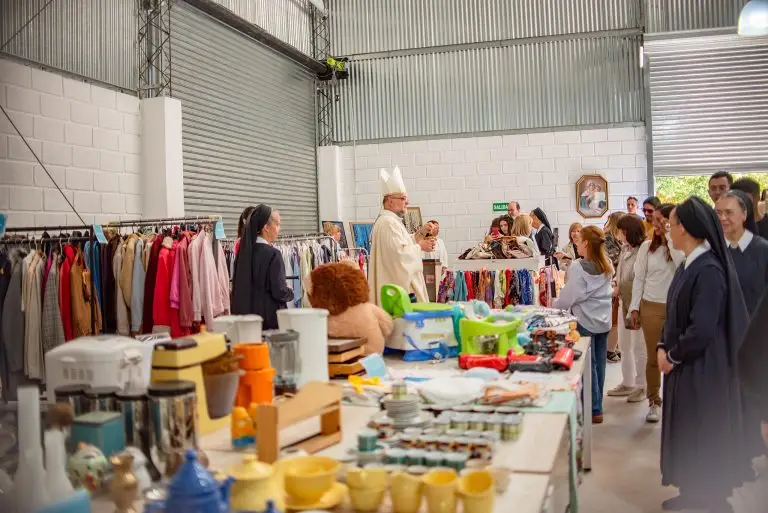
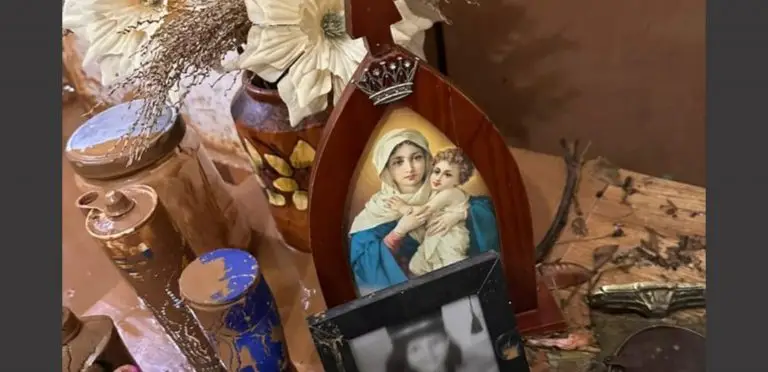
During this past Holy Week, we had a very profound experience as a family of the Schoenstatt Pilgrim Mother Apostolate in Argentina. From different parts of the country, representatives and missionaries from 22 provinces traveled to Villa Allende in Córdoba to gather, share the live streams, and renew our mission together. Beyond each talk, workshop, or activity, it was a gathering that left our hearts filled with love for all that was shared and for reaffirming that the Apostolate remains a very concrete path to holiness—a way to go out with Mary to meet others.
Friday, March 27 – From all corners of the country
The Convent of San Alfonso, with its imposing architecture, became a gathering place, full of life and anticipation for the missionaries of the Pilgrim Mother Apostolate.
Kisses, hugs, and sincere smiles marked the beginning of the day. Motivated by the inspiring words of our national moderators, Fr. José María Iturrería, Ana and Gustavo Gerbasoni, we knew we were about to experience something more than just a simple gathering of the Apostolate representatives.
As evening fell, the first gift arrived: we shared in the Holy Mass concelebrated by Fr. José María, Fr. Vitor Possetti—vice-postulator of the Cause for Beatification of Venerable João Luiz Pozzobon, who had come from Santa Maria, Brazil, for this gathering— and Fr. Paul Chidi, accompanied by permanent deacon and missionary Juan Carlos Farías from Ushuaia. We then experienced the Way of the Cross, illuminated by flickering candles held by the missionaries, which fostered a moment of serene recollection and deep prayer.
Saturday, March 28 – João Pozzobon, a gift for a Church that goes forth
Silence fell as Father Vitor began to speak on the theme that had brought us together: “João Pozzobon, a gift for a Church that goes out to meet others.” He described João as a “modern pastoralist,” since his life is a parable of a Church that reaches out. The stories of simplicity, dedication, and love for our Mother deeply touched everyone present. This testimony reminds us once again that our encounter with the Blessed Mother should always be a bridge to Jesus and to the Father, and that our mission is to allow ourselves to be used as instruments so she can reach more people. Along this path, the idea that we are Living Shrines, called to be close, listening, supportive, and hopeful in every encounter, also resonated strongly.
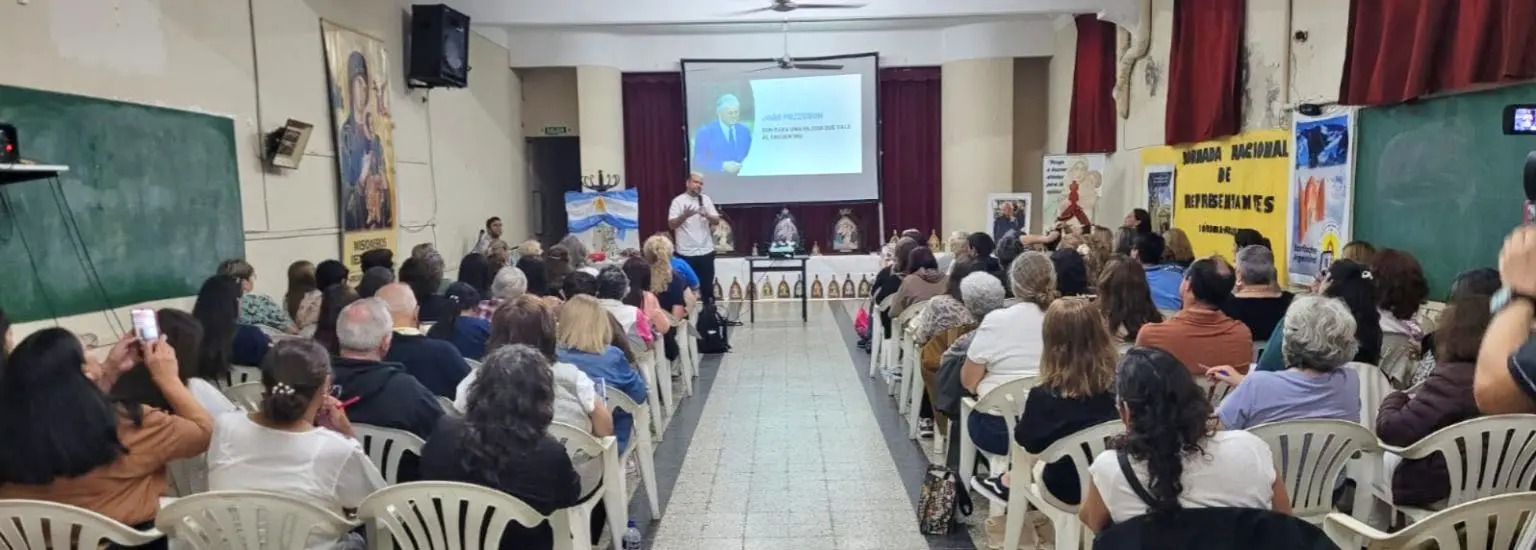
Fr. José María encouraged us to be “missionaries in the style of Fr. João, for a Church that goes out to meet others” with creativity and attentiveness to the signs of the times; today, more than ever, we need a pastoral ministry of closeness, listening, and accompaniment. If children do not come to the Mother, she goes out to meet them, but it is not just about carrying the Pilgrim Image—it’s about radiating it through our lives!
In the afternoon, the group work sessions offered an opportunity to share experiences. Still, they also served as a genuine gathering of life and community where every story, reality, and testimony enriched everyone’s hearts. It was a valuable opportunity to see how different forms of ministry are practiced across provinces and to explore the importance of accompanying those we serve not only through prayer but also through tangible presence, listening, and simple gestures that often speak volumes.
Then, with songs of joy, faith, and hope, we made a pilgrimage to the Shrine of Villa Warcalde to visit Her, our Blessed Mother. It was one of the most powerful moments. Through a moving Rosary in Adoration, we entrusted our lives, mission, and hearts to Her. Later, celebrating Mass in that place so full of grace, as a community, was an experience of deep reflection and joy.
Sunday, March 29 – We began Holy Week
Palm Sunday Mass marked the beginning of this meaningful season together. With olive branches raised high, we greeted the Lord, accompanied the procession to the altar, shared in the Word and the Eucharist, and renewed our missionary commitment to live our faith with joy and dedication.
Next, we participated in the talk “Three Great Treasures of the Pilgrim Mother Apostolate” led by four highly valued leaders and witnesses from that first encounter with João: Ana de Echevarría, Mercedes de Bonorino, and the married couple Flavia and Emilio Bianchi. Each of them reminded us of the essential elements of this Apostolate: Don João as a role model, the Pilgrim MTA who brings her love and graces wherever she goes, and the Rosary prayed and lived in the Covenant, the fuel of the Apostolate. We understand that with every bead of the Rosary we offer to Mary, we draw closer to Jesus; therefore, praying the Rosary should be driven by desire, not obligation: what matters most is the love we put into praying it and the effort to live it.
One of the most touching moments was receiving the Jubilee Pilgrim MTA, which holds a piece of cloth that touched Don João’s body, along with a fragment of the original Pilgrim MTA he carried. With deep emotion and gratitude, we were entrusted with the task of carrying—like little donkeys—this image that traveled from the Tabor Shrine, the birthplace of the Pilgrim Mother Apostolate in Santa Maria, Brazil, to each of our shrines in Argentina.
After lunch, the day ended with hugs, emotion, and gratitude. We return with our hearts full!
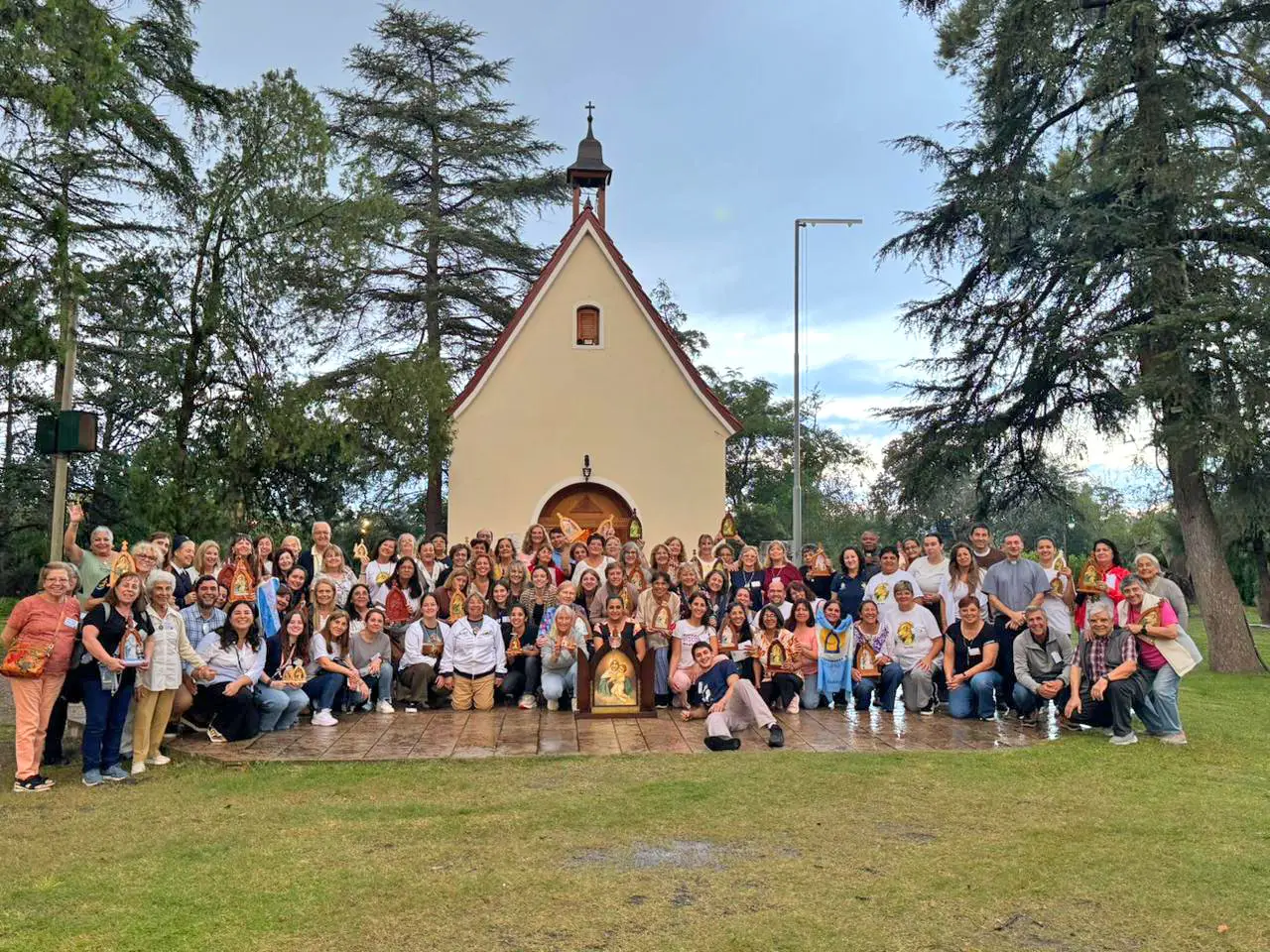
We return to our home communities deeply grateful, with renewed spirits, inspired by the experience we’ve shared and the love we’ve received. We carry a renewed certainty that Schoenstatt is exactly that: a family, a community, a mission, and a Church that reaches out to others. We go forward encouraged to continue our mission with greater strength and a firm commitment to show in our communities that the missionary must not only carry the Image but also radiate it. This transforms the mission into a ministry of closeness, listening, and accompaniment to our brothers and sisters, making us multipliers to reach everywhere with Mary, her Son, and her heart.
In times when closeness, hope, and concrete faith are so often lacking, these gatherings remind us that Mother Mary continues to work and that we are called to be her instruments, with simplicity and availability, wherever she needs us.
Source: schoenstatt.org.ar