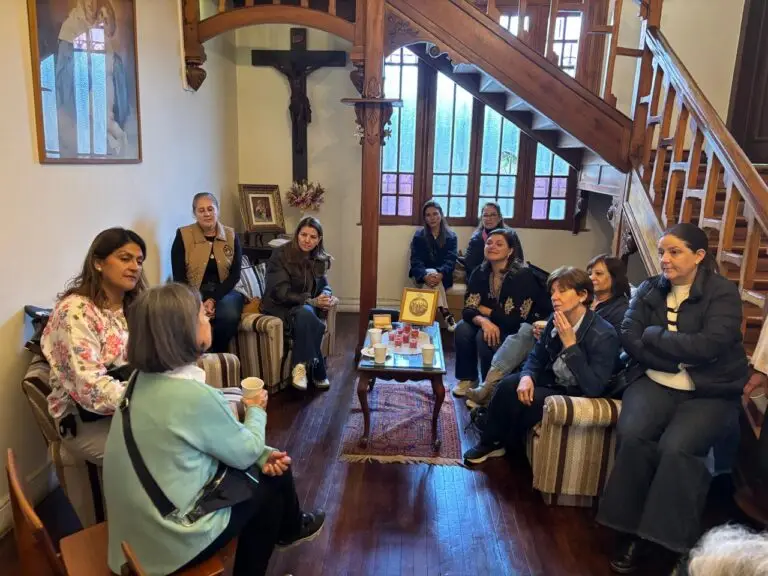
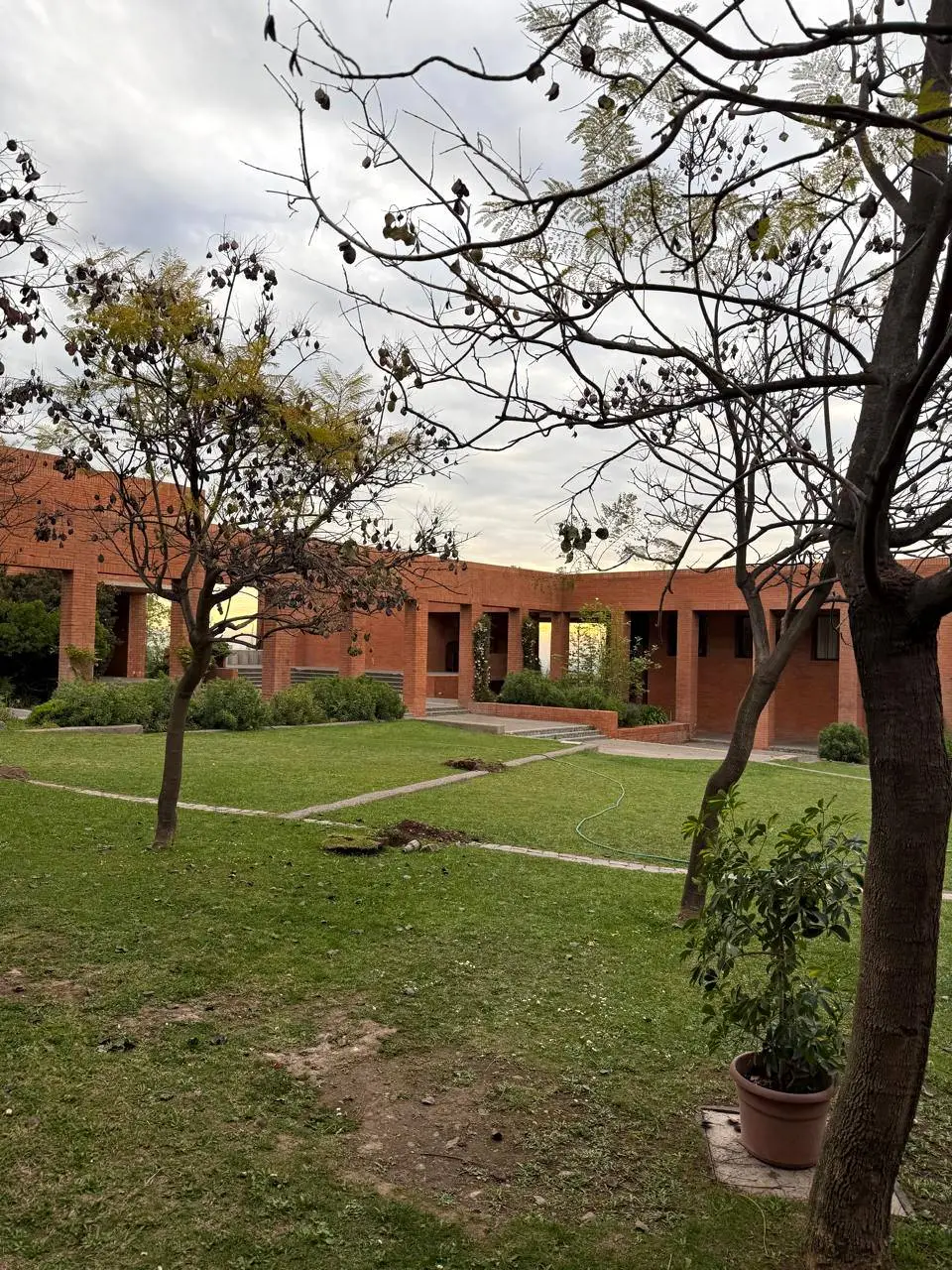
In Lo Cañas, Santiago, Chile, the Father Joseph Kentenich Major Seminary celebrates 30 years of history, forming generations of priests from the Schoenstatt Fathers who come from different countries around the world. It is a home where prayer, studies, the apostolate, and community life are interwoven with the spirituality of the Covenant of Love.
On this anniversary, we spoke with Álvaro Rodríguez, a 33-year-old Argentine seminarian who serves as “Prefect”—responsible for the house’s general management, helping to organize the schedule, and fostering community life. In this edition, he shares with us what priestly formation is like, the challenges of vocation, and the richness of Father Kentenich’s charism. We take a close look at the fruits of these three decades and the dreams that continue to inspire its mission.
What is the mission of the Major Seminary, and what is life like there?
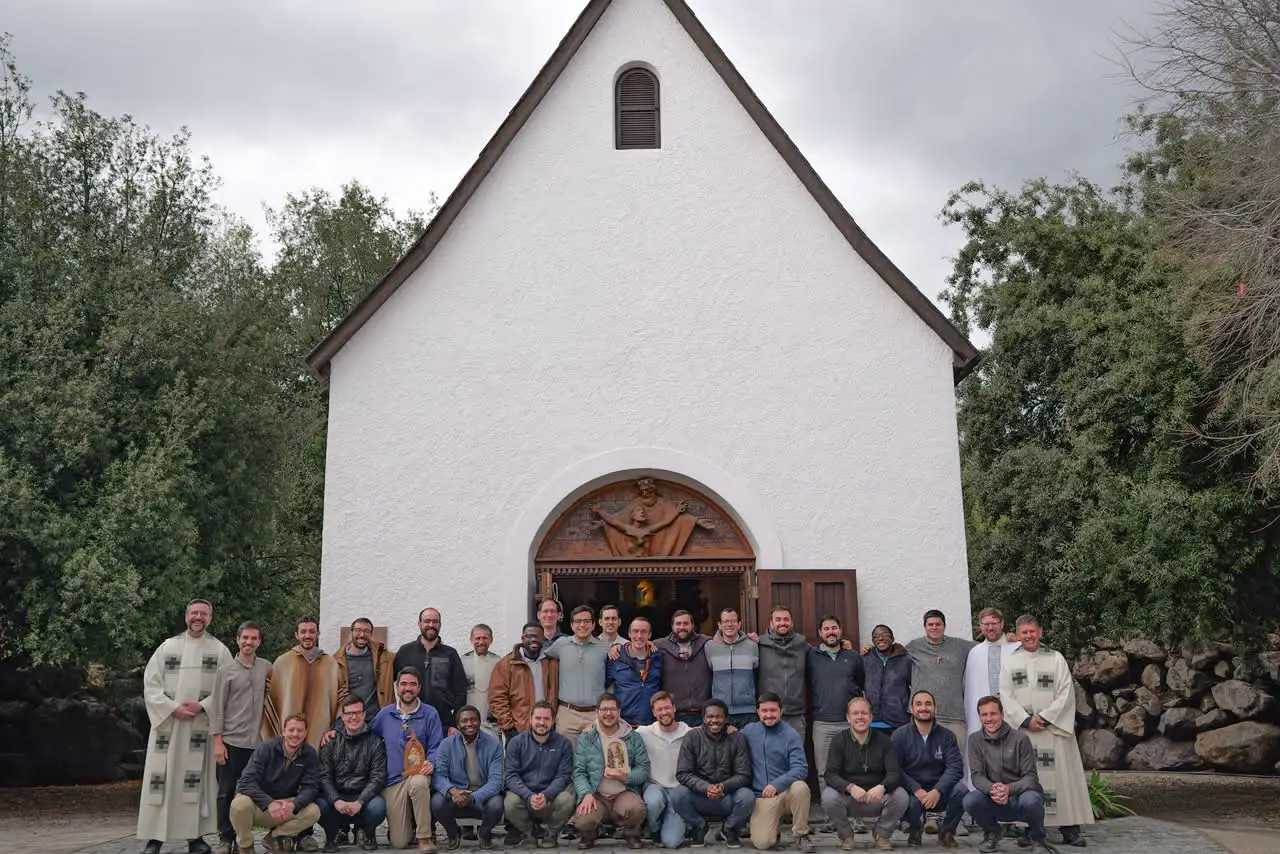
The mission of the Fr. Joseph Kentenich Seminary is to provide human and spiritual formation—rooted in the Schoenstatt charism and pedagogy—for those who wish to become priests in our community. It is to offer them the way to live out the faith and the priesthood that Fr. Kentenich proposed to us. At the Seminary, we experience an atmosphere as Schoenstatt-like as possible, nourished by the Shrine, the Covenant of Love, and love for the Blessed Mother. It is a space of communion and growth, of aspiring to ideals—but always with our feet on the ground and walking together toward them.
Today we have a special desire to grow in community life. This is no coincidence: it teaches us to love one another and to share Christ’s love. Our motto for this year is “Blessed are those invited to the Lord’s table,” taken from the ordination motto of our brother deacons. Four were ordained this year, and another will be ordained in November. It beautifully expresses the spirit we want to live out.
How many seminarians are there, and what countries do they come from?
Currently, there are 15 seminarians and one deacon. In addition, three formators live with us—two from Chile and one from Argentina. There are six of us in my class: two from Argentina, one from Paraguay, one from Chile, and two from Spain. There are also six brothers from Africa: three from Nigeria, two from Burundi, and one from the Congo.
We also have a Brazilian brother who belongs to our house but lives in Paul Harris; a Paraguayan from our class who is nearing ordination; and a brother from the United States. The deacon is Mexican and is waiting to return to the United States to begin his work there.
What is a typical day like for seminarians?
On weekdays, we start at 6:30 am. by praying Lauds in the Chapel. We have breakfast together, and then each of us takes the bus or subway to the university. We have lunch at 2:15 pm. and usually have Mass at 7:15 pm. Dinner is served by “modules,” which are like small apartments within the house.
On Mondays we have course meetings, and Thursdays are our community day: we have Mass early and gather as a house or by “modules.” Saturday is our day off, although some also do apostolic work on Fridays or Saturdays.
Sundays vary: one is for spiritual renewal, another for Mass at our apostolic ministries, one is spent at home, and another is for an open Holy Mass, when we welcome the people who accompany us. We share coffee and, when possible, lunch as well. Almost every Sunday, we end with adoration and a community dinner.
Each of us organizes our studies and apostolic work around our schedules; some of us go to school. We make a special point of gathering on Thursdays, Sundays, and during course meetings to come together, share our lives, hopes, and ideals.

How long does the formation last, and what are you preparing for?
Formation lasts approximately nine and a half years, culminating in priestly ordination. This is followed by a year of parish internship. The journey begins with two years of novitiate and continues with five years of study in Chile. Halfway through, we take a two-year break: a year and a half of internship and six months of study, prayer, and spiritual formation in Germany.
After completing our studies, we prepare for the final exam, make our perpetual vows, and receive diaconal ordination. We then leave the seminary to serve in a parish. After six months as a deacon, one becomes eligible for priestly ordination and typically completes another six months of parish ministry as a priest. Chileans usually remain in Chile; in my province, assignments may be in Argentina, Paraguay, or Uruguay.
During this stage, formation is also a journey of discernment and of personal and spiritual maturity. It is about choosing Jesus over time and discovering whether the priesthood is truly what God is calling us for, what one wants and is able to live out. That discernment takes place throughout the entire formation, which is why it is such a long process. Added to this are theological studies, a deeper exploration of the Schoenstatt charism, and a daily life of prayer and community.
How has the Seminary evolved over these 30 years?
Styles and practices have changed, but the core remains the same: the Blessed Mother, the Shrine, community life, and the Schoenstatt pedagogy—with its freedom, its attachments, and its Covenant of Love.
The number of seminarians fluctuates greatly because some arrive from the novitiate, others go out for practical training, and still others return.
There is also the opportunity to undertake a special pastoral experience in a house in Puente Alto, a very vulnerable neighborhood.
When I arrived in 2021, there were 25 of us; after that, we were around 15 for quite some time. Last year, we reached 31, with the house full. In July, a large group left for pastoral practice, and we were back down to 15. In March, we’re expecting about 16 novices, so we’ll be back up to around 31. I know there were times when there were about 50.
How are you addressing the decline in priestly vocations?
There has indeed been a decline. I think the pandemic and the crises within the Church have also played a role. It’s something we need to reflect on together, even though the crisis sometimes seems bigger than it really is. This year, four deacons were ordained; next year, another three or four would be ordained—myself among them—and there are 16 novices in the Ibero-American and Euro-American novitiate.
I believe much depends on the vitality of our youth and the Schoenstatt Family. I sense that faith is resurging in many places. But the question isn’t just about our work with young people; it’s about our own witness: whether we, as Schoenstatt Fathers, truly live out what God asks of us.
The challenge is to return to our charism, remain faithful to our mission and ideals, and respond to the signs of the times. I believe God continues to call, and that if we give a good witness, vocations will come.
How is Father Kentenich’s charism passed on to new generations?
I believe that Father Kentenich’s charism is a gift. Sometimes it is challenging to engage intellectually with his writings, and young people—even though I am no longer so young—tend to think that what is new is always better. We must be open to what the Father has to offer us.
We have three main opportunities to cultivate it. The first is an annual retreat, usually held in February, whose theme we continue to explore in depth throughout the first semester. The second is the “Father’s Seminars,” dedicated to Kentenichian study and priestly formation. Both are ongoing throughout our studies in Chile.
The third is the formation period in Germany: six months, three of which are spent in a third-year program to deepen our spiritual understanding of our own history and that of Schoenstatt, while the other three are more focused on studying Kentenich. Having this time is a gift from God. I believe it is important to engage Kentenich in dialogue with today’s world. He was a brilliant person with a special charism. The best way to convey this is to discover him and become enthusiastic about him.
As you celebrate the 30th anniversary, what fruits would you highlight, and what dreams do you have?
The greatest fruits are the priests who become fruitful, happy, and faithful people. It is a gift from the Blessed Mother to have formed so many priests who serve the Movement and build the Kingdom of God in so many places.
I find it beautiful to see priests who live out the charism with freedom, authenticity, and fidelity. Our formation encompasses the whole person: the intellectual, spiritual, pedagogical, human, and communal dimensions. The greatest fruit is the formation of authentic people, faithful to the Covenant of Love, who can offer the world Schoenstatt’s freedom and love for God.
My dream is that we continue to offer this charism to the Church, discerning the signs of the times and what God asks of us in each place. Today, I especially dream of passing on the spirit of living in community as a gift willed by God—a community built on charity and a deep, true, self-sacrificing love, capable of transforming reality and the world.
What would you say to a young man who is considering the priesthood?
I would tell him to seek out Jesus and the Blessed Mother, and to feel encouraged to discuss it with a priest or someone he trusts who can accompany him. This vocation is beautiful; it is full of surprises and joys. In my humble experience, God always surpasses Himself in generosity and continues to enlarge our hearts to receive more love.
I would tell him to seek sincerely and without fear what God wants for his life. It is a decision that deeply involves us, and we need to feel supported by those who love us. But we must take that step with confidence, authenticity, and truth.
If God planted that seed in our hearts, He will also know how to guide it. What God places within us is meant to bear fruit: the fruit of a full life for us and for those around us. May you be encouraged to seek the answer with generosity and courage. God can do great things when we place ourselves in His hands. I am a humble witness to this.
Source: Vínculo Magazine, n.406, NOV 2026