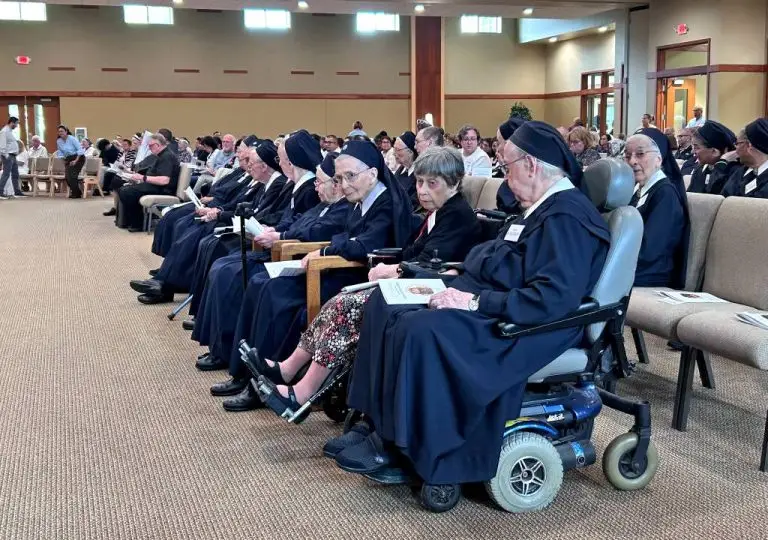
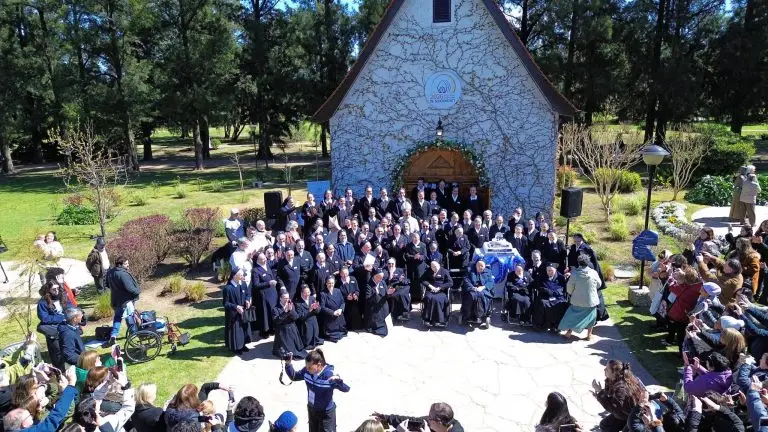
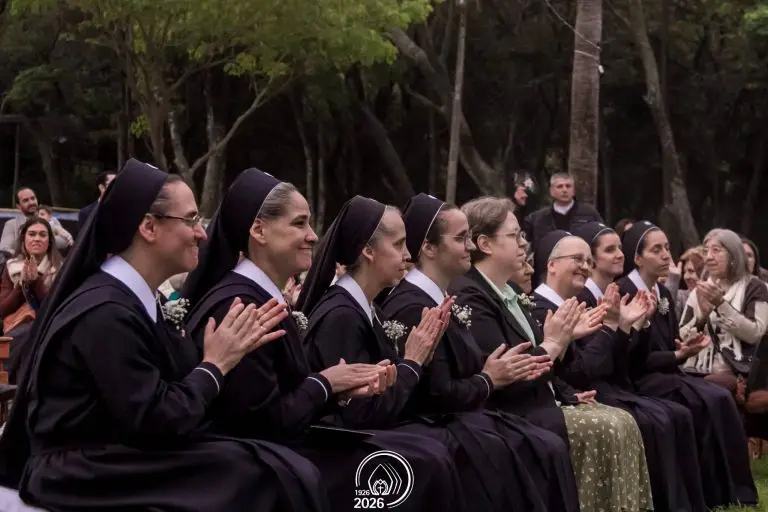
Under the motto “Mary, light of our hope”, the Schoenstatt Sisters of Mary around the world are celebrating the 100th anniversary of their foundation. On 1 October 2026, the community will mark a century of mission in the service of Schoenstatt, the Church and society, reflecting Mary to the world. Currently, the jubilee is being commemorated in the various Provinces and countries where the Sisters are present, bringing together stories, memories and, above all, gratitude for a life of consecration lived in the Covenant of Love.
Looking back on this century, the celebration is also an opportunity to recall the community’s roots, acknowledge the fruits of its history and look forward to the future. In this interview, the General Superior of the Secular Institute of the Schoenstatt Sisters of Mary, Sr M. Joanna Buckley ISSM, originally from the United States, speaks about the significance of this centenary, the experiences that have shaped the community’s journey, and the outlook for the coming years.
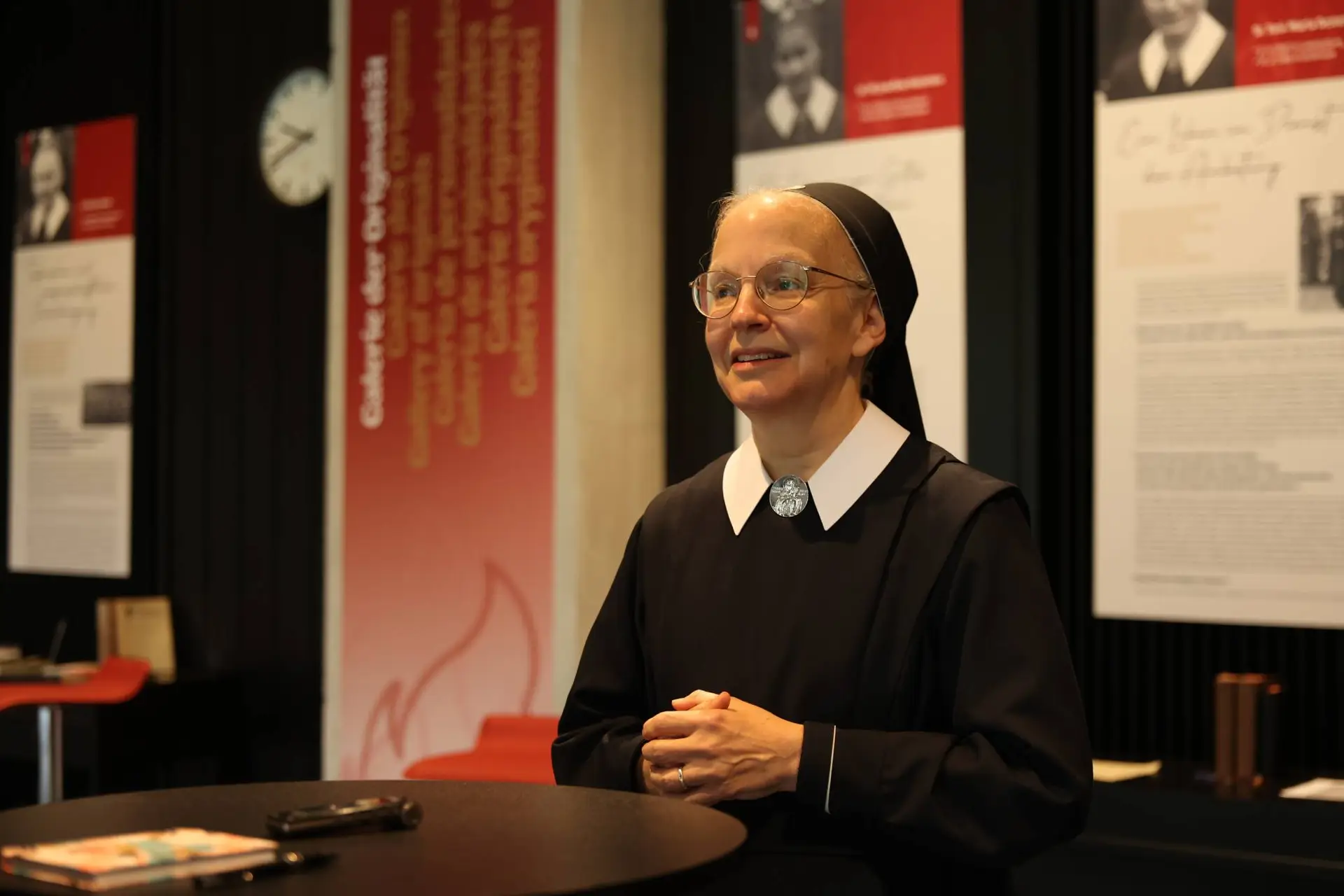
Sister M. Joanna, on October 1, 1926, almost 100 years ago, Father Josef Kentenich founded the community of the Schoenstatt Sisters of Mary together with several women from the Schoenstatt Movement at that time. With an entire jubilee year, your community is looking back over a full century of history: humble beginnings, enormous growth, interesting developments, and, above all, countless testimonies to the stories that the God of Life has written with your community and with individual members. When you look back on this jubilee year, what has made the strongest impression on you?
The response our jubilee has received throughout the entire Schoenstatt Family and far beyond has touched us deeply. Perhaps one example would be our jubilee exhibition at the Motherhouse on Mount Schoenstatt. It has repeatedly attracted interested groups and individuals; hardly a day went by without visitors. We had not expected such a high level of interest.
Our Sisters in Burundi told us that the jubilee indulgence granted to us for this year was a reason for hundreds of people to undertake long walks from the surrounding hills or from the outskirts of the cities to our shrine and chapels.
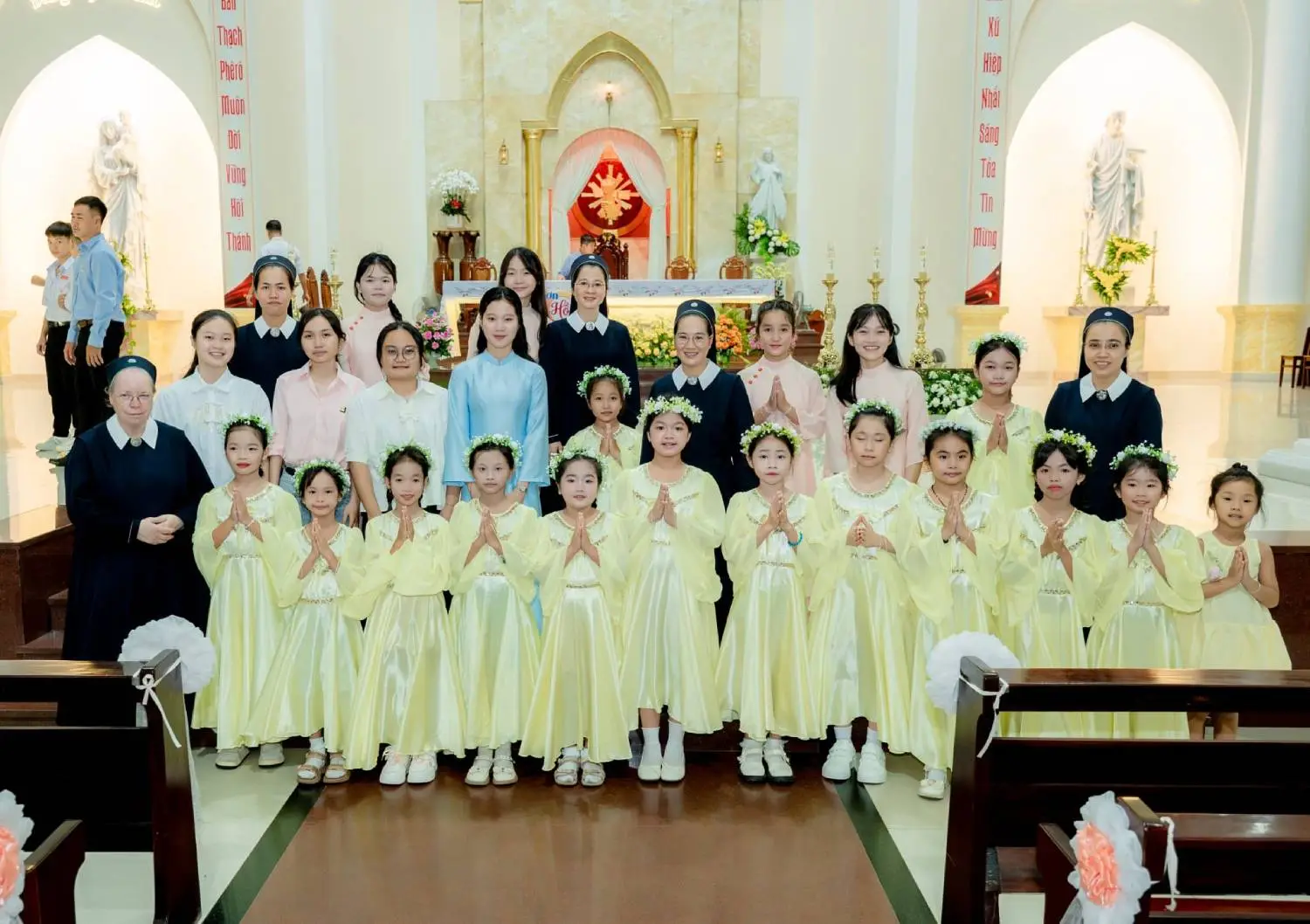
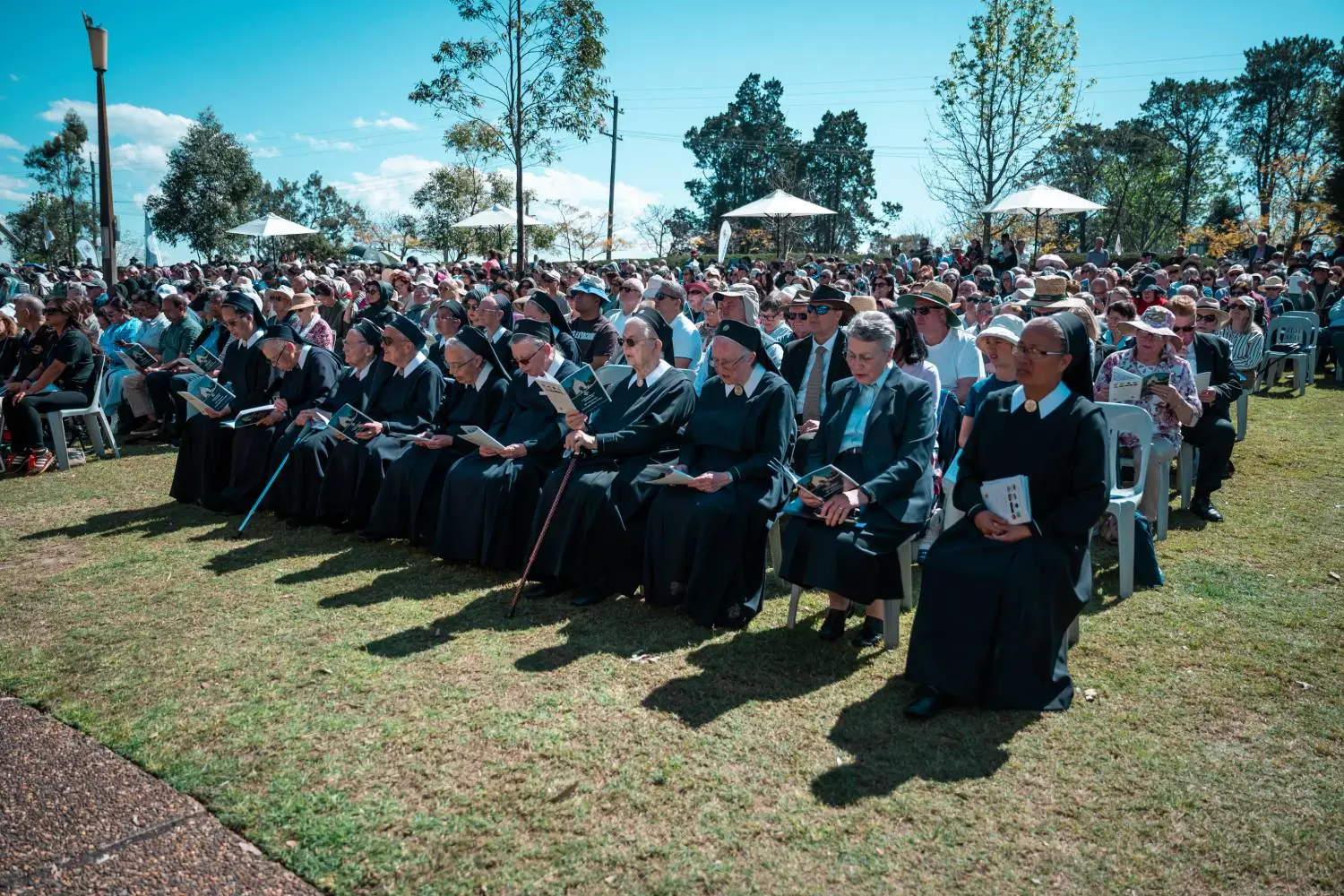
Many hundreds, and sometimes thousands, of people came to the jubilee celebrations in the various countries. In Vietnam, where our Sisters only began the Apostolate of the Pilgrim Shrines a few years ago, more than 500 people gathered for the jubilee celebration. In many dioceses, the bishops celebrated with us and expressed their gratitude for our work in the local churches.
Everywhere, the celebrations were also opportunities to thank the people with whom we are journeying, who work with us and support us. During this jubilee, we simply wanted to share with many others the gifts we have received over these 100 years. That is why we chose the motto for this year: “Mary – Light of Our Hope!” This is our experience – and it should also be our message.
What is particularly important for your community?
For us personally, this jubilee year was – I think I can say this – a great grace. We had prepared for it over many years. We sensed that the jubilee was an opportunity – not simply to give thanks and celebrate, but to say a new and decisive “yes” to our vocation today. In a sense, we went into the Upper Room and gathered around Mary like the disciples. As we take the step into the second century of our community, we wanted to ask the Mother of God for the light and strength of the Holy Spirit and make ourselves available to him. The symbol of the new pillar of light in the Adoration Church represents this process.
During a special “Magnificat Time,” we recalled the events of one year of our history on each of the 100 days and sang our thanksgiving in the Magnificat.
During Lent, we tried to empty our inner “backpacks” of some of the unhealthy burdens that we, personally or as a community, were still carrying with us: for example, personal negligence in living out our vocation, wounds caused by a lack of mutual reverence and love, reservations, and disappointments. Through a shared and mutual request for forgiveness and a prayer of reparation, each individual could also let go of her old burdens. That hour at the beginning of Holy Week made a particularly deep impression on us. In this way, the new century can also become a new beginning, with a certain lightness and a renewed readiness to continue on our journey.
These rich experiences of the jubilee year turn our attention to the history that God has shaped with generations of Sisters who placed their lives at the service of God and humanity. The God of the Covenant entrusted your community with challenges and, in moments of grace, allowed you to experience that he guides and strengthens the community, in the Holy Spirit and through Mary. How would you describe the major lines of development in the first 100 years of your community’s history?
Looking back at the beginnings of our community, we have become aware of what a great venture this foundation was for Father Kentenich. There was no money, no house of our own, no security whatsoever for the young women who had given up their professions. Some parents were shocked because they thought that everything would be provided for in a convent. But there was no convent. Our first Sisters lived in very modest circumstances, but they were burning with enthusiasm for Schoenstatt. They wanted to build something new. Within the first few weeks, some of the Sisters founded communities outside Schoenstatt. In our exhibition, the room dedicated to this first generation is entitled: “The Fire of the Beginning.”
The fire seems to have been contagious …
Yes, the community grew remarkably quickly. At the beginning there were 18; three years later, there were ten times as many.
And even at that time, a strong missionary spirit was evident in the community. Communities were soon founded in neighboring countries. The first Sisters were sent to South Africa in 1933, followed later by many others to South and North America and to Australia, and from there to other regions. This worldwide expansion is a continuous thread running through the first century.
At first, it was German Sisters who made themselves available as missionaries and, despite great difficulties at the beginning, helped establish Schoenstatt in the various countries. This development has now been reversed: today, Sisters from all countries are reaching out from their own provinces into new regions. Here in Schoenstatt, too, we are experiencing a kind of “returning stream” from the countries back to the place of origin; we are very international here. For several years now, our formation has been carried out centrally in Schoenstatt. At the same time, this is helping to lay important foundations for our worldwide cooperation in the future. One exception is our Delegation in Burundi, which continues to train its young Sisters in their own country because it has a relatively large number of candidates each year.
A movement in the opposite direction from this missionary line seems to have been the emergence of a branch of Adoration within your community here in Schoenstatt. Is that a fair way of putting it?
Yes, exactly. Just three years after the foundation, a small Adoration community was formed. Six Sisters took turns day and night in Eucharistic Adoration at the Original Shrine. Given the very cramped conditions in the Old House at the time, this was also an enormous physical challenge. The Sisters deliberately wanted to support the missionaries, the entire Schoenstatt Movement, and the Church through their prayer. Most of the community lives an active way of life; the more contemplative life of the Adoration Sisters was intended to be an effective complement to it. For a time, the Adoration Sisters in Schoenstatt formed their own province, and there were also small houses of Adoration in some of the provinces outside Germany. By now, however, our Adoration Institute has become smaller numerically, and we are looking for ways to make a new beginning with an international structure. The day-and-night Adoration has been distributed among all the provinces. So even after 100 years, prayer continues uninterrupted, around the globe, for the Schoenstatt Movement, for the Church, and of course for the intentions of many people, always in inner union with the Original Shrine.
Speaking of “for the Schoenstatt Movement”: the Sisters of Mary were not the first women’s community in Schoenstatt – that was the Women’s Federation. But you were the first to be free for the Schoenstatt Movement. You emphasize that you were founded “for Schoenstatt.” What exactly does that mean?
That was actually the founding impulse. Father Kentenich recognized that women were needed who could animate the place of Schoenstatt, create a home here, and at the same time work within the emerging Movement. At the beginning, they were called “professional Sisters of the Covenant” – precisely because they wanted to make Schoenstatt their profession.
But to live for Schoenstatt or to be there for Schoenstatt does not simply mean providing houses, giving talks, or caring for pilgrims. There is a deeper dimension that goes beyond merely being active for Schoenstatt. Father Kentenich used the image of the soul. It actually fits a Secular Institute very well. We were to be the “soul” of Schoenstatt. The soul moves things from within, always and everywhere. Regardless of the circumstances in which we live or what we do, whether we are healthy or ill, young or old – we can always be a soul. This naturally also includes a particular responsibility in the sense of “Nothing without us”: the responsibility to ensure that our shrines always remain sources of grace that bring forth life in and from Schoenstatt.
A responsibility that you share with the other Schoenstatt communities …
Of course. The entire Work is built on the cooperation of the various communities. Because we were one of the first communities and had relatively many members quite quickly, we were able to help shape many things within the Movement. We were able to dedicate all our time and strength to Schoenstatt. Over the decades, as the various communities and branches grew, the tasks became more widely distributed.
As Founder, Father Kentenich trusted in the cooperation and mutual transmission of life among the Institutes, while respecting their independence. And much has grown from this over time.
The development of your community during its first century is impressive. Were there also obstacles along the way?
Our history has actually been full of tensions from the very beginning, yes – and again and again there were obstacles, sometimes difficulties as high as mountains.
The story of our Sisters in Communist-ruled countries, for example, was very challenging. They were spied on or were not allowed to pursue certain professions. Some had to spend periods in prison. Nevertheless, new members could be accepted underground.
Within the community, problems with the first General Superior emerged not long after the foundation. She was a capable and highly regarded woman, but unpredictable and extremely inconsistent in her reactions and decisions. Later, during the disputes surrounding the Founder, she used her influence to accuse him before the Church. During the period of the Church’s investigation, she was joined by a small group of Sisters who called themselves “church-minded” because they stood in opposition to the Founder and worked covertly against the leadership of the community. It was a painful story for everyone involved and had serious consequences for the Founder and the entire Work.
The period of Father Kentenich’s exile, in general, was full of obstacles; as a community, we were practically in the dock alongside the Founder. At that time, Schoenstatt was spoken of with almost nothing but contempt; many priests advised interested young women against joining us. I am continually amazed at how many nevertheless had the courage to come to us during those years.
After Father Kentenich’s death, there was a period of intense internal conflict within the community over the interpretation and application of the Founder’s will. A number of our Sisters left the Institute because they could not affirm the decisions of the General Chapter on this matter. It was a very painful process, with wounds on both sides, and it deeply shook the entire community.
When you look back on your history so far, what is important to you as your community moves into its second century?
Certainly, one of the most important things is our experience that, as small human beings, we are guided by God. The Covenant of Love with our Mater Ter Admirabilis is a reality that can carry us through all the highs and lows. The fact that we as a community have been able to accomplish something positive in the Church and in society has its origins there. When you have experienced this, it is like a positive sign for everything that is still to come.
When we look at our part in this covenant reality, on the one hand we are immensely grateful for our Sisters who have helped write this history and continue to do so today, whether in positions of responsibility or through their co-responsible action, prayer, and sacrifice. I believe we have every right to be proud of the many great women in our community, regardless of where they have stood or stand.
On the other hand, there are also things that weigh on our memory and for which, at the end of these first hundred years, we want to ask forgiveness. We are sorry that we have disappointed people. Certainly, our lives and our conduct have not always lived up to what we ourselves proclaimed. Or we lacked sensitivity to what others needed in terms of understanding, patience, and freedom.
I think, for example, of moments when, through our behavior or by the way we spoke about one another, we did not contribute to good cooperation among the Schoenstatt communities – or when, in working with individuals and communities, we were too insistent in our views and did not listen enough.
I also think of certain processes within our own community. For a variety of reasons, Sisters have left our community over the years – some with gratitude for the time they experienced with us, others carrying wounds and disappointments in their hearts. In prayer, we have brought all these situations before God, asking him in his mercy to heal wherever our conduct has caused wounds.
Looking at history in a differentiated way means learning. Our history offers us many different areas for learning that provide us with important insights as we move into a new century. And we thank all those who journey with us and help us in these processes of learning through dialogue, their suggestions, and their criticism.
The French philosopher Jean Jaurès is credited with the thought, freely translated: “Tradition is not the preservation of ashes, but the passing on of the flame.” With these words, he expresses the idea that the history up to now is actually the fuel for the future. When you look ahead to the continuing journey of your community, what lines of development do you see emerging?
Passing on the flame – that is precisely what we want to do symbolically in celebrating our jubilee. Our youngest generation sees itself in the situation of a new, international beginning. They come from many countries and cultures; they are young women of today, but the same fire burns within them as in the first Sisters.
Following our jubilee celebration, our General Congress will begin, with representatives from all the provinces. For us, this is above all an opportunity to listen to the questions and voices of our time and, from this perspective, to give our charism an appropriate emphasis.
Worldwide, we want to take strategic steps that will enable our community to have a good future. This includes taking a realistic look at the present situation of our Institute in the individual countries and correctly assessing our possibilities for the future. With fewer members and diminishing resources, we can no longer maintain some of the responsibilities that we have carried up to now, or we have to ask for the help of others.
It is important to us that, over time, we become freer again for our tasks in and for Schoenstatt. In recent years, we have increasingly had to devote our energies to the needs of our own community; our concern is to be present, at least through individuals or small groups, in places where we can offer our fellow human beings spaces for encounter and for experiencing God.
There is a future only in working together – this applies to the inner life of our family-like community and to Schoenstatt as a whole. That is why cooperation within Schoenstatt and with the local churches is also important to us.
Our Congress is to be a small Cenacle; we pray together, trusting in the guidance and the fire of the Holy Spirit – and we are especially grateful to all those who will accompany us with their prayers in the coming weeks.
In 1994, during a meeting, Pope John Paul II called on representatives of your community: “Carry the Work of your Founder into the future and enrich the life of the Church with your charism …” What are, for you, the central emphases of the charism of your Secular Institute that you would now, after 100 years of your history, particularly like to highlight?
Our name says it: We are Sisters of Mary; we identify with Mary, specifically in the way she works from Schoenstatt into the present day – Schoenstatt Sisters of Mary. People experience this particular efficacy of Mary in encounters with our shrines.
Above all, it is the profound experience of being personally accepted and loved by God. In our inner union with Mary, we Sisters want, through who we are and what we do, to help people find this personal relationship with God as Father.
There is another experience as well: Encountering Mary enables people to grow inwardly. In this, too, we want to be “Mary”: our central concern is to support people in their personal development, and particularly within the Schoenstatt Movement, to help shape free, inwardly Christian personalities and communities.
And the third experience of encountering Mary is the inner joy of spreading the Kingdom of God in our time. For us, being Mary means paving the way for Christ into our culture today, through our projects and through our witness.
In view of all this, we experience our limitations. But to live in covenant with Mary also means that Mary is the one who wants to work through us. As her Sisters, we seek to shape a Marian culture that enables the people around us to experience God as present and close, and that can offer orientation and hope.
In this way, we want to carry the Work of our Founder – out of deep gratitude to him – into a new century. Not least as a contribution to the future in this decisive hour that we are experiencing in the world and in the Church.
Sister M. Joanna, together with the entire Schoenstatt Family, we wish your community a good journey into the future and God’s blessing, as well as the continued accompaniment of the Mother of God, Mary. Thank you very much for this conversation.
*The interview was conducted by Heinrich Brehm / PressOffice Schoenstatt Germany – schoenstatt.de