La Nazarena, a center for integral human development located in the heart of the southern belt of the city of Buenos Aires, Argentina, is a response to the Church’s mission that Father Joseph Kentenich left us.
A few months ago, we commemorated the 60th anniversary of the promise that Father Joseph Kentenich made to Pope Paul VI at the conclusion of the Second Vatican Council. On behalf of the entire Schoenstatt Movement, he offered our contribution to the fullest realization of the Council, to bring the Church’s synodal style to life, in docility to the Holy Spirit.
Evidently, from the perspective of the Schoenstatt charism, this promise encompasses a vast array of aspects. We could not set aside our Marian contribution through the Covenant of Love with Mary, nor our unique image of Christ, the Son of the Father.
Without overlooking these important responsibilities and knowing that by reading the documents of Vatican II we would find much more, we feel especially challenged by the social situation in our Latin America. Our shrines are immersed in a culture of unequal opportunities, and this reality reaches our ears through the faces we encounter in the big cities as well as in their suburbs.
“We can justly consider that the future of humanity lies in the hands of those who are strong enough to provide coming generations with reasons for living and hoping” (No. 31, Gaudium et Spes, Second Vatican Council).
Upon hearing this statement, with what joy we think of the many social initiatives that have emerged from the Covenant of Love we have sealed with Mary!
Today, we have chosen one of them, La Nazarena, a center for integral human development located in the heart of the southern belt of the city of Buenos Aires, in the town of Florencio Varela.
A perspective from the grassroots
Before presenting the ideas in this article, I decided to visit some families in the nearby neighborhoods. I arrived at the home of Silvia, 36, walking from the paved road across about six blocks of uneven dirt, strewn with debris and bricks.
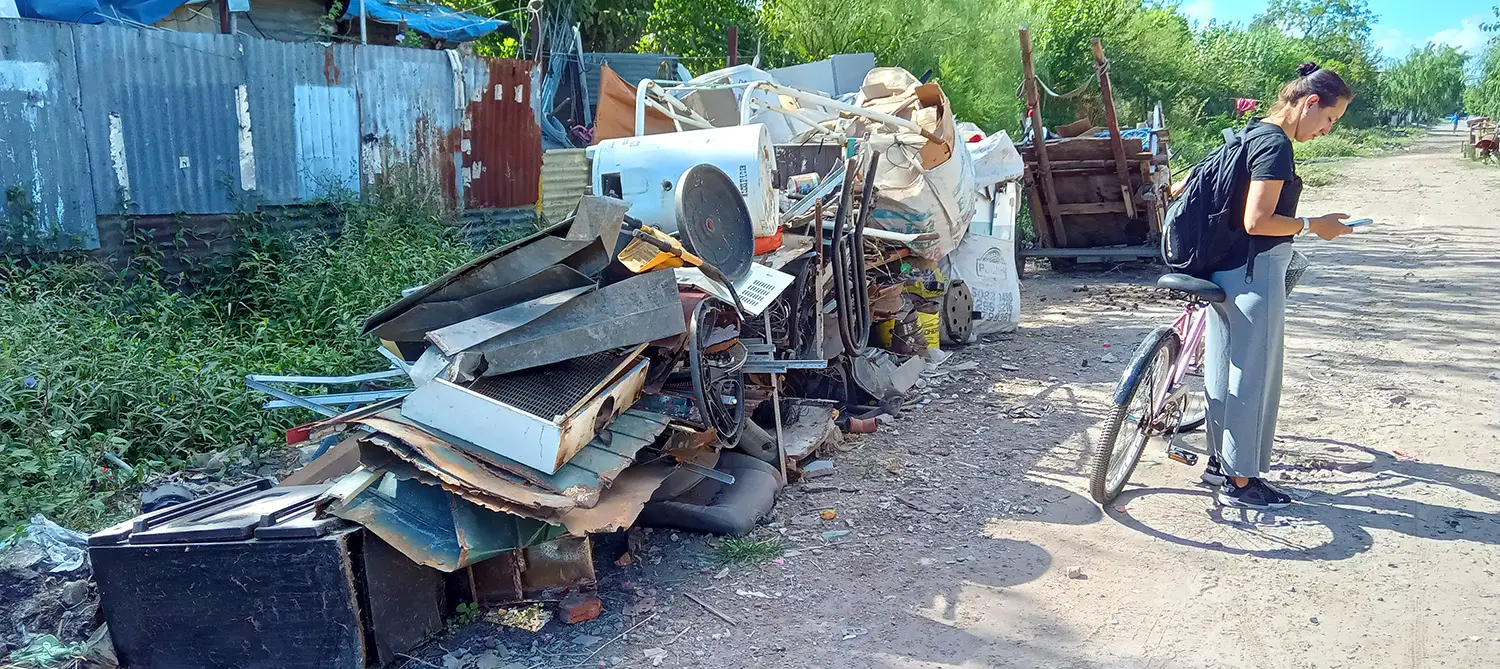
I’m glad she agreed to my request and opened the small gate and curtain, allowing me to enter her one-room home, divided by another curtain. I ask her how she ended up in this neighborhood, what her family is like, and how she supports herself since she’s alone with her three children:
-Twice a week, I work in a family’s home, an hour away by bus from here. I do everything: from cleaning to painting walls. I have to leave my children alone at home; a neighbor looks after them. But I take the youngest with me.
I look at her, thinking about how hard it must be to get by on such a meager income, and she continues: -“Whenever I can, I go with my daughter to Buenos Aires at noon. Starting at four in the afternoon, we walk through neighborhoods checking the trash bins. Sometimes I come back with clothes or other items that I wash and sell. Sometimes we come back empty-handed. We’re back home around eleven at night.”
I ask her how she manages with the electricity. -“At night, we’re almost in the dark. To save money, we share cooking duties with the neighbor.”
As she prepares her mate’s tea, she tells me what she fears most. -“When it starts to rain, I pray to the Blessed Mother. If the stream that runs through the back of the property swells, the house floods, and the water is completely contaminated since many homes don’t have wells.”
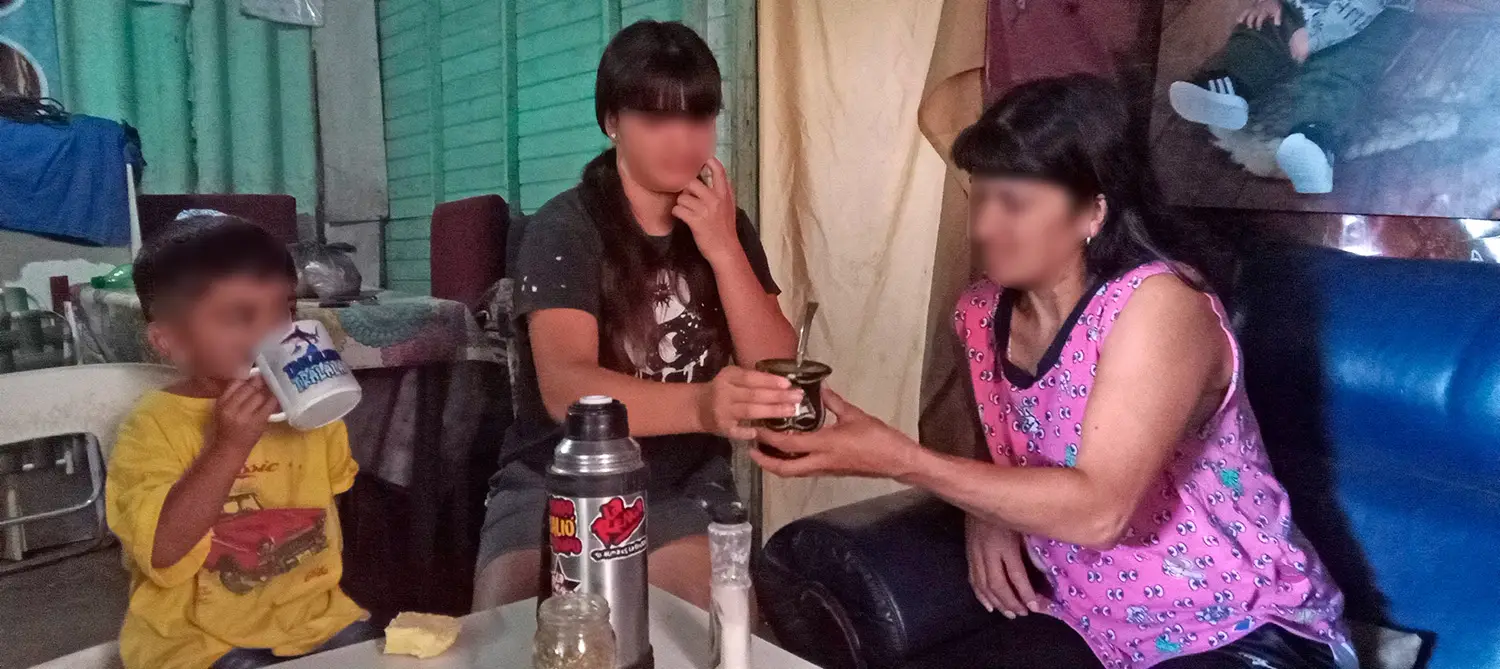
I’m struck by how well-groomed her children are, her smile, and her welcoming demeanor.
And she continues: -“La Nazarena is my home, my refuge, my salvation. There, I feel safe. I took the cooking and baking courses, and now I can sell cakes.”
During that time together, I saw how the goals of La Nazarena had become a reality:
- To promote the dignity of every woman and her family
- To educate and empower those most in need to become agents of change in their own lives, in partnership with Mary.
A center focused on the person in all her dimensions
Before saying goodbye, Silvia told me something special: at La Nazarena, she had been invited to participate in some meetings to learn more about the Blessed Mother. Then I remembered what Pope Francis told us so many times: “The worst discrimination suffered by the poor is the lack of spiritual care.” Silvia wears the medal of the Mater ter Admirabilis on her chest with special joy. I have no doubt that, as a covenant partner to Mary and as a talented painter, she will know how to bring color to her children’s lives.
I continued my visit and arrived at the home of Lorena, a 41-year-old.
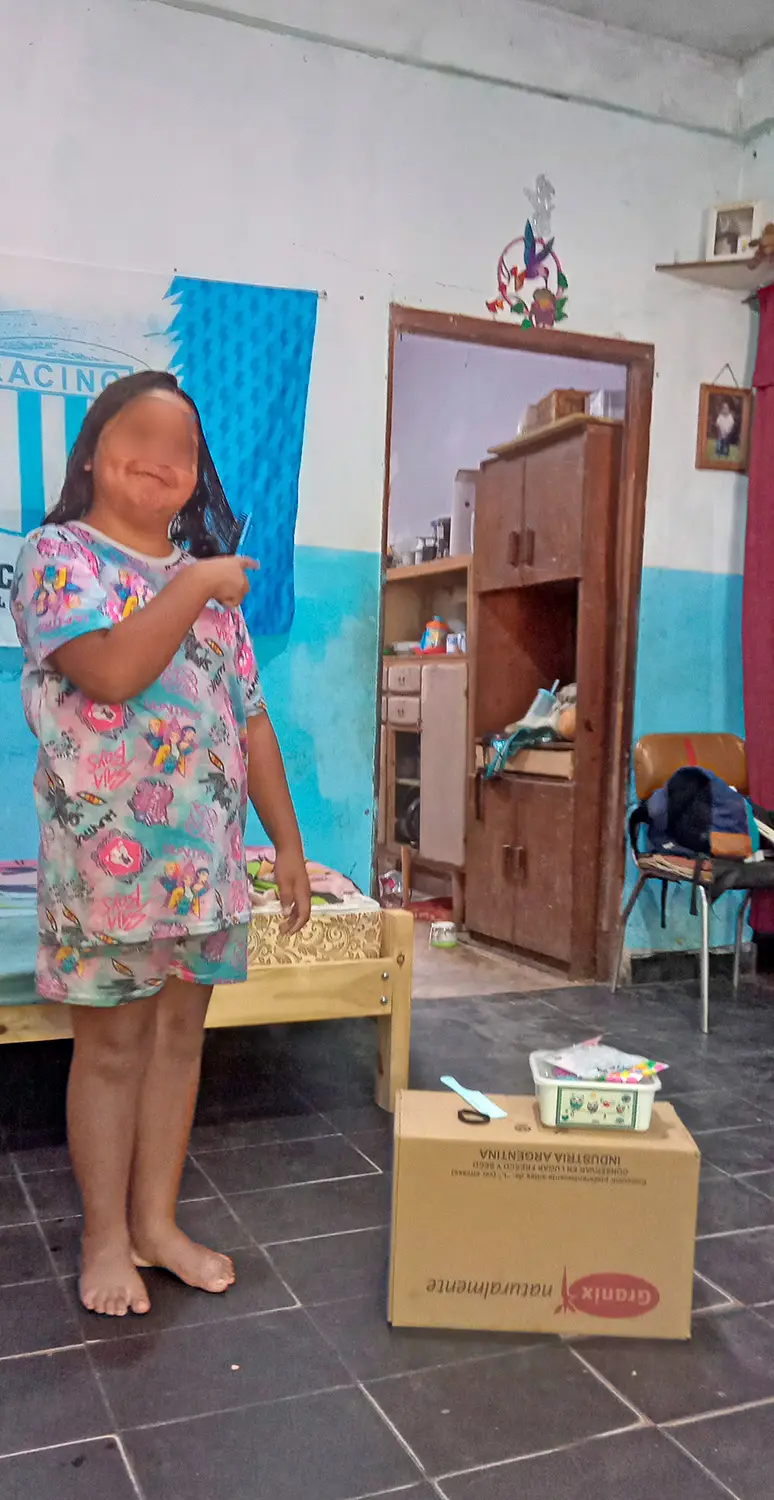
While Uma, one of her five children, fixes her hair, Lorena tells me, -“When my husband died, we were very sad and discouraged. When my 13-year-old daughter started receiving academic support at La Nazarena, she changed very quickly. She wasn’t as shy as before; she felt confident enough to ask questions and participate. Through that connection, I got involved too. It did us all good; we feel comfortable there, and now we see life differently.”
Lorena proudly shows me her room: “I received these mattresses through La Nazarena. Two of my children had to sleep on the floor. It was difficult in the winter. So, through Viviana, the Family Companion at La Nazarena, I applied for assistance. The process was very quick, and they sent us the mattresses we’d needed for so long. They also brought us wool blankets.”
I ask her about her husband’s passing. -“We miss him so much; he was a good husband. Now that he’s gone, La Nazarena helps us with food and cleaning supplies.”
As I listened, the pillars that sustain the institution came together in my mind:
- Through EDUCATION, we provide the necessary tools so that people can develop on their own.
- Through HEALTH, work to improve the conditions of those who attend the Center.
- To foster a culture of WORK through courses, workshops, and entrepreneurial initiatives.
When solidarity is synonymous with partnership
Hours passed, and I had to be on my way; I wanted to visit La Nazarena again to see how it had grown since my last visit. Sonia, the center’s coordinator, welcomed me warmly and told me where to find Viviana, who could show me around.
We walked through the garden rooms, the offices, the kitchen, and the large dining hall; the classrooms for young and older children; the library; the room for the School Orchestra that rehearses there; and the spaces for the baking, pastry, barbering, and hairdressing workshops…
To my surprise, I spotted a new building at the far end of the grounds, something like a giant, recently completed warehouse. Upon seeing it, my expected question arose: “And that?”
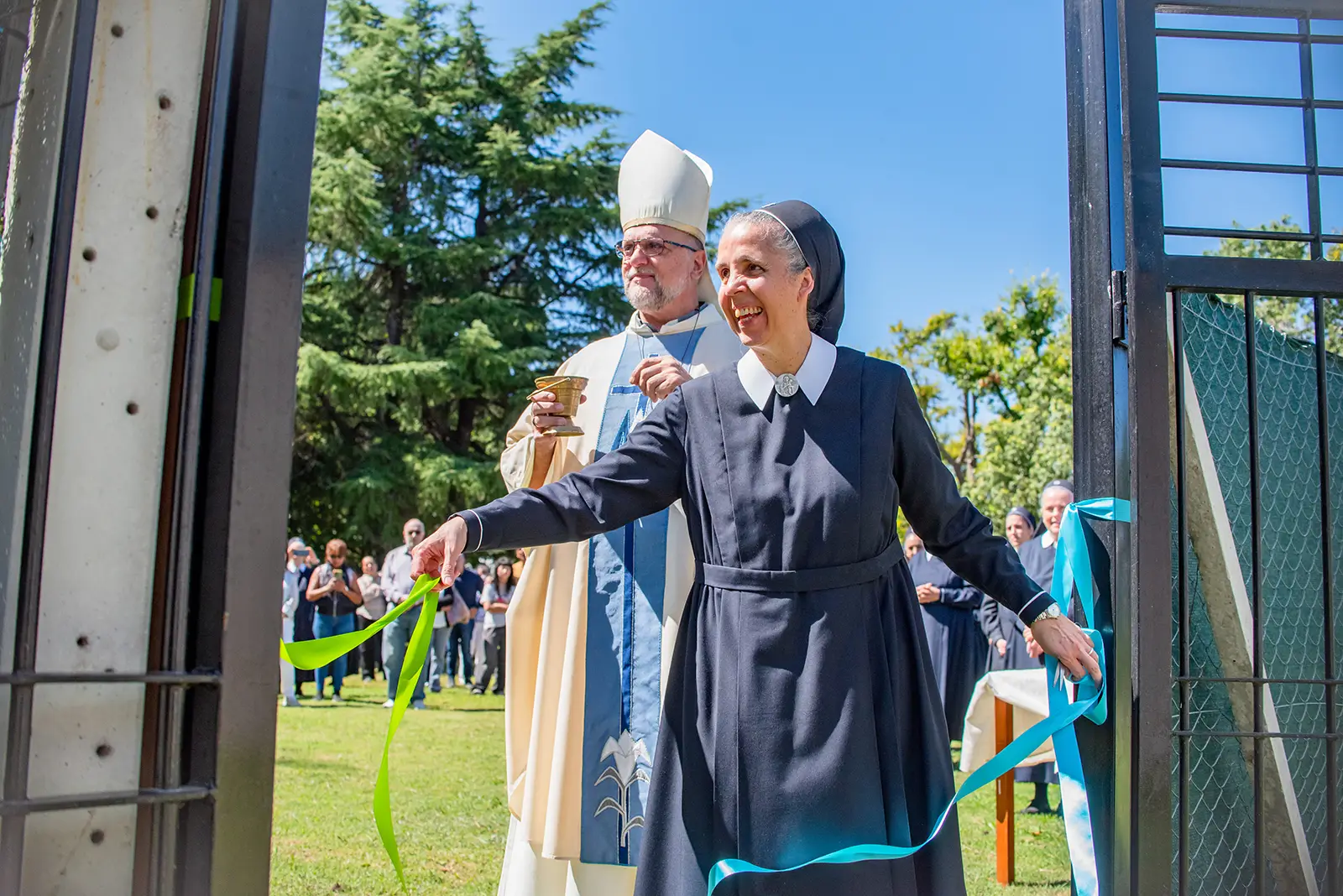
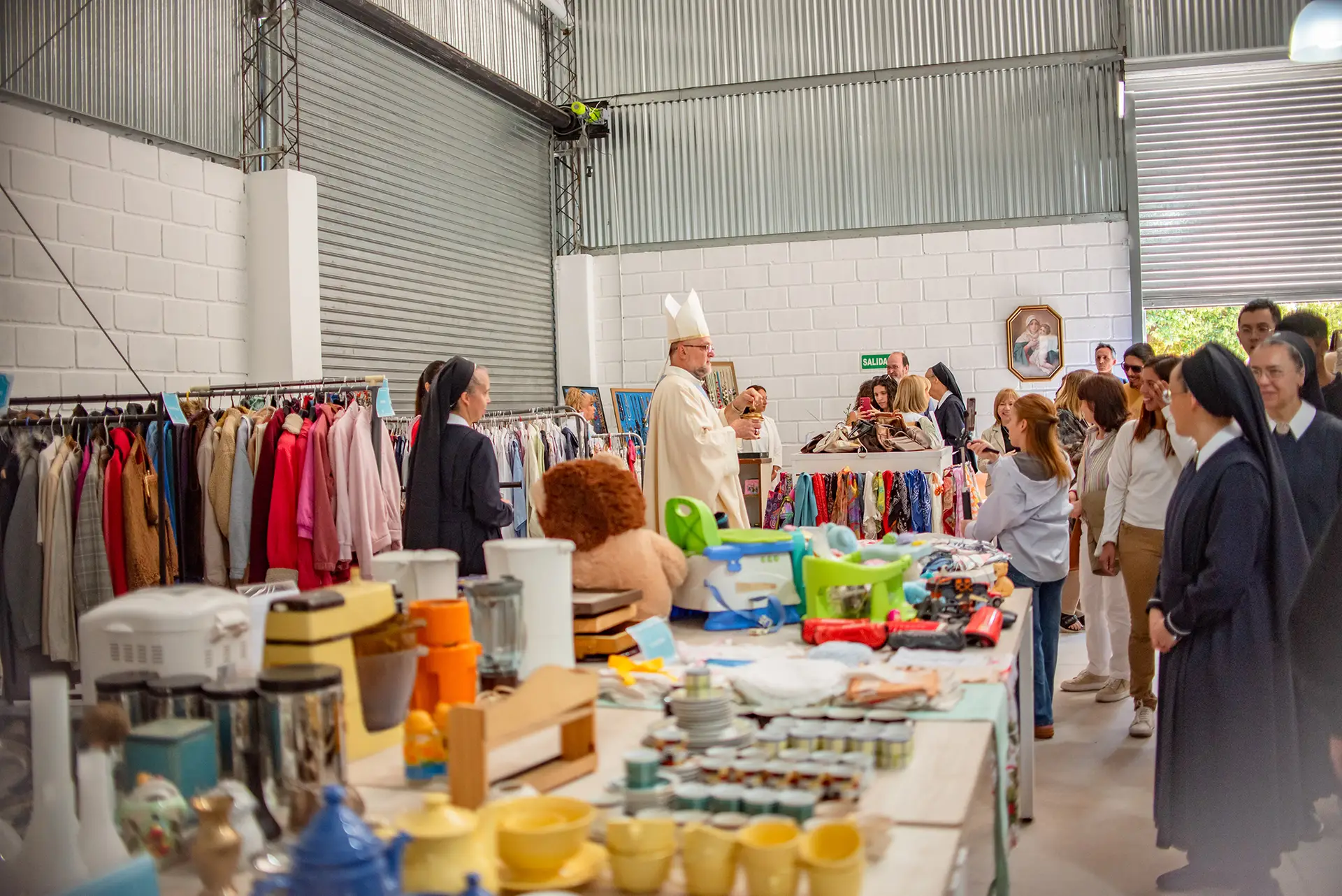
“It’s our new building!” she replied, beaming. “The venue for our Educational and Solidarity Fair. It’s just been inaugurated and blessed: an opportunity for people to donate whatever they’d like, for the sales to generate income to support the institution, and above all, to guide and test out mini-entrepreneurship initiatives.”
Everything comes full circle
I already had a lot on my mind, but I still had one wish: to learn more about those who generously donate their time to this cause. Through Sister María del Carmen, who oversees the entire institution, I was able to get in touch with one of the many volunteers—the pediatrician who visits them every week to examine the children, detect abnormalities, and guide the families. That’s how I met Sergio, a doctor who lives 30 km away in the city of La Plata. We were able to arrange a conversation that left me feeling deeply enriched.
He began by saying, “I’ve been to several soup kitchens. Usually, they offer food and, at best, school supplies. At La Nazarena, however, they care for the entire family unit, which is what sustains the individual.”
In other words, he expressed what Paul VI had already told us in the memorable Populorum Progressio: “The development We speak of here cannot be restricted to economic growth alone. To be authentic, it must be well rounded; it must foster the development of each man and of the whole man” (n. 14).
And he continued with his observations: -“Here you can feel order, hygiene, respect, and tranquility; it is a place of PEACE. Each child expresses themselves naturally, obeys—but not like in a regiment—and you can see they are relaxed and happy. Here, they sense that there is another way of life besides the one they know.”
After a very interesting exchange, he concluded our conversation with something I’d like to share as a closing thought:
-“When people thank me for what I do, I reply: Thank you for letting me come. Because everything, everything, comes back.”
As the Schoenstatt Family, we have renewed the promises made to St. Paul VI by collaborating in implementing the Second Vatican Council. May this promise continue to be fulfilled by each one of us through hundreds of acts of solidarity, because as we learn at La Nazarena, everything, everything, comes back.