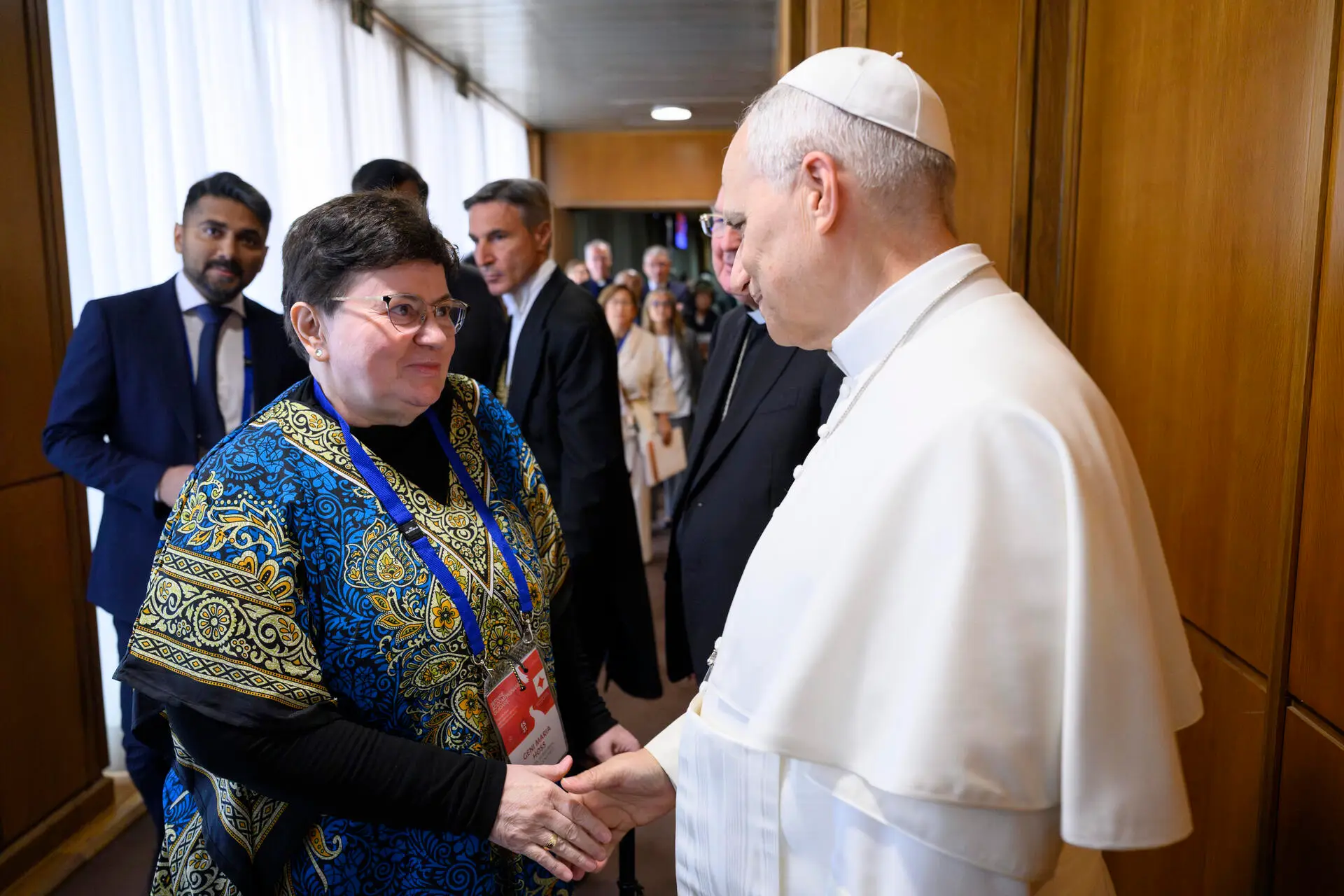
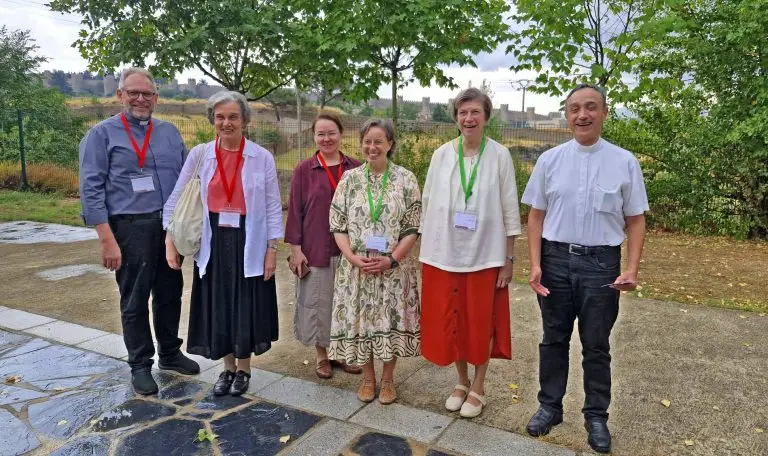
On May 21 and 22, approximately 200 moderators and representatives from 115 associations recognized by the Dicastery for Laity, Family, and Life attended the annual meeting. This year’s theme was “Serving, Accompanying, Guiding: Foundations and Practices of Governance in Associations.” Dr. Geni Maria Hoss, representing the Schoenstatt Apostolic Women’s Federation, attended.
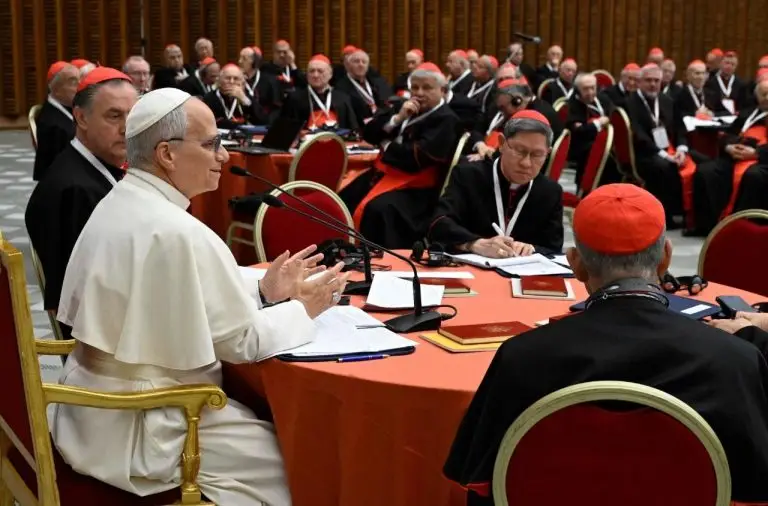
The meeting took place on Thursday in the New Synod Hall in Rome and was attended by the Holy Father, Pope Leo XIV. On the eve of Pentecost, the Pope recalled the importance of charisms and invited the movements and associations to remain in communion with the many ecclesial realities and with the Church as a whole.
Speaking about leadership, the Holy Father said: “Certain characteristics must always be present in governance: mutual listening, shared responsibility, transparency, fraternal closeness, and communal discernment. In addition to this, I would like to recall that good governance, instead of focusing everything on itself, promotes subsidiarity and the responsible participation of all the members of the community. These are simple guidelines, but ones always to be kept in mind in the exercise of authority.”
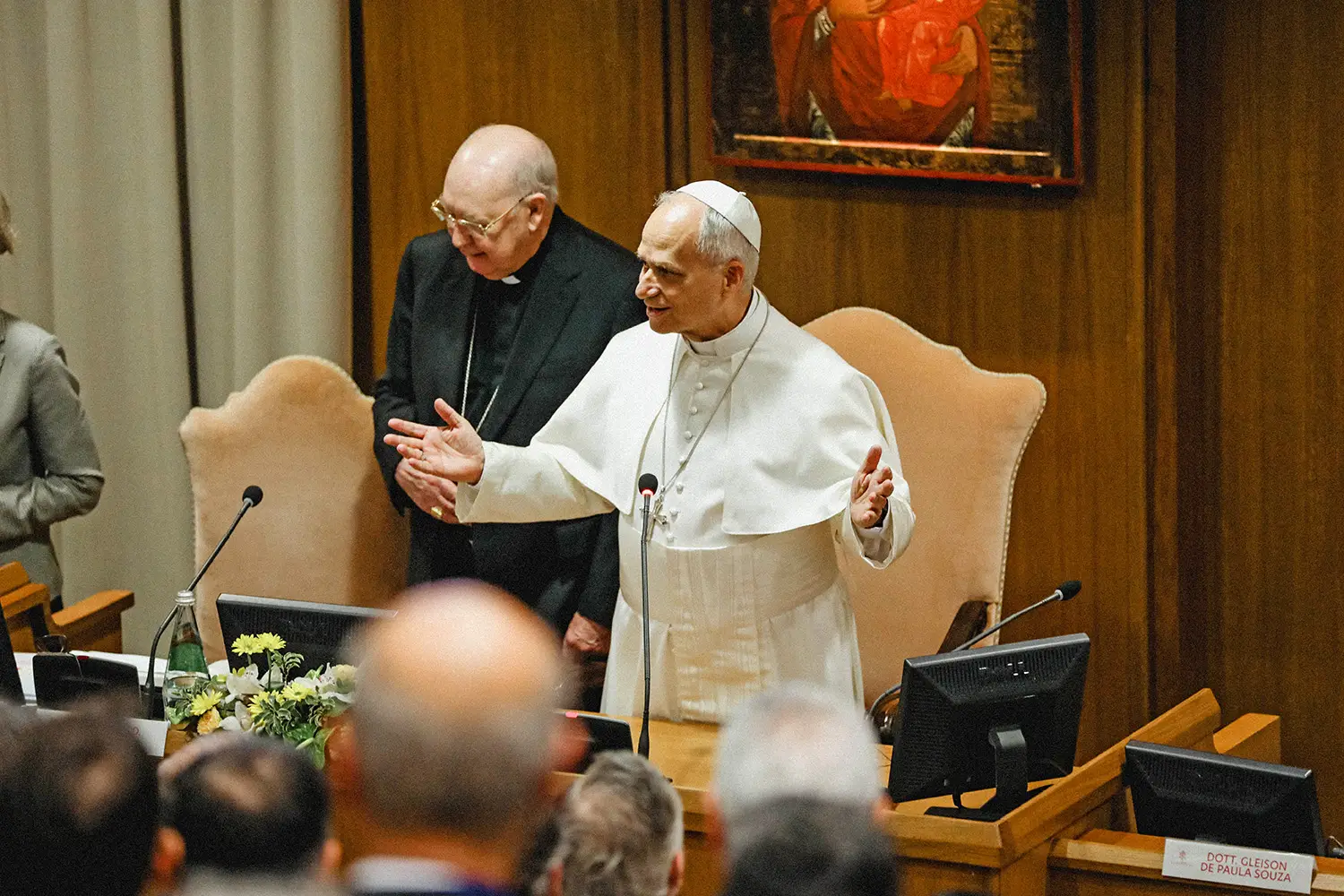
Fidelity to the Founding Charism
The Pope recalled that associations and movements have distinct origins and possess a well-defined history, identity, and ideals. This poses a special challenge for leaders: on the one hand, to preserve and value history; on the other, to play a “prophetic” role.
Before thanking everyone, the Pope’s final point addresses loyalty to the founders’ charism.
“Every authentic charism already contains within itself fidelity and openness to the Church. To govern in a manner faithful to the founding charism therefore means finding in it the inspiration to open oneself to the journey the Church is undertaking in the present, without becoming entrenched in the models—however positive—of the past, but allowing oneself to be challenged by new realities and challenges, in dialogue with all the other members of the ecclesial body.”
Pope Leo XIV
One body with the Church
Dr. Geni Hoss, general leader of the Women’s Federation, has participated in previous editions of the gathering and explains more details about this event:
This year, the gathering focuses on authority, communion, and responsibility. Is it possible to offer some concrete reflections on this theme for our Movement?
The theme of each annual meeting is situated within a broader context. It arises from the urgency of the moment and is proposed for reflection and the development of practices for the exercise of the mission of leadership. In fact, taken as a whole, these meetings function as a kind of “leadership school,” providing guidance through thematic and practical orientations relevant to the governance of international associations of the faithful, ecclesial movements, and new communities. This year’s theme was presented in stages from various angles and with different emphases. On this basis, the working groups—organized by language: Italian, Spanish, French, and English—concluded their process of listening and synthesis during the discussion panels. Among other topics, the following points are worth highlighting: authority in a synodal environment, transparency, collegiality, original and personal charism, and communion with the whole Church.
An important point of convergence is the exercise of leadership on a synodal path. When we act within our groups and communities, it is always worth emphasizing that we are not defending a personal cause but are at the service of others. Our Father and Founder never tired of reminding his listeners (especially leaders) that we must find ways to bring out the life of those entrusted to us. Generating life in Schoenstatt has a particular meaning: The leader does not generate life within himself to pour it out onto others. Rather, he creates the conditions for life to be born in each heart and shared with everyone. Generating life means helping each person open themselves to the action of the Holy Spirit, for it is His life-giving power that generates life in us and, through us, in our society.
What was your impression of the Holy Father’s meeting with the group, and which of his messages resonated with you the most?
Every encounter with a Pope is unique. This Papacy is known for delivering strong, precise messages that not only touch the heart but also awaken us to action and mission. This encounter was no exception. His message was followed by a brief, personalized greeting to nearly 200 participants. These are moments that endure as experiences of ecclesial communion. In doing so, he demonstrated his appreciation for the richness of the Church’s charisms.
In his message, Pope Leo XIV highlighted key aspects of the diversity of expressions and charisms, as well as the ecclesial communion of these realities within the Church. According to the Pope, leaders are gifts of the Holy Spirit within communities. Aware of their position and special mission in the community, leaders must promote a style of governance based on mutual listening, co-responsibility, transparency, fraternity, and discernment. The Pope also teaches that good governance does not concentrate everything in itself but promotes subsidiarity and the participation of all members of the community.
When we look at our Schoenstatt communities, there is no better way to express the core of our leaders’ mission than the Pope’s own appeal: “On the one hand, they are called to preserve and cherish the memory of a living heritage; on the other, they play a ‘prophetic’ role, which involves listening to current pastoral needs to understand how to respond to new challenges and the cultural, social, and spiritual sensibilities of our time.”
Our leadership is a call from God, expressed in the will of the one who entrusted this mission to us. It is a task of service and self-giving in the deepest sense of our mission. To be a leader in Schoenstatt is to anchor oneself in the Covenant of Love and, from there, to throw oneself into the daily realities of our time to illuminate them and help transform them.
Your participation represents the Women’s Federation community, but it also signifies the entire Schoenstatt Work present at the heart of the Church. What is the significance of this gathering for our Movement, and why bring Schoenstatt to it?
Our community’s presence at this event stems from the Church’s recognition of this Dicastery. As one of the 115 communities and ecclesial entities officially recognized by this body, the Women’s Federation is invited to these meetings. We are aware that wherever we are, whether personally or in service to a community, the entire Schoenstatt Work is present. First and foremost, what identifies us is our belonging to Schoenstatt.
Yes, it is very important that Schoenstatt be present at events like this. It is an opportunity to demonstrate our communion as a Church and to bear witness to the importance of our charism. This call was repeated on several occasions, urging the Movements to recognize their importance within the ecclesial body in communion with the local Pastors. A Movement’s unique mission becomes relevant when it is lived in communion. “We must seek to live in communion with the whole Church, both at the diocesan and universal levels.” (Leo XIV)