When we look at a simple man, with little formal education, who lived far from the big cities, we may ask ourselves: can he teach us anything about raising children?
Venerable Deacon João Luiz Pozzobon did not attend university, but he became a teacher of a true “pedagogy of love.”
Many know him primarily for his mission in the Pilgrim Mother Apostolate. However, before becoming a missionary of the Pilgrim Mother, João Pozzobon was a husband and father deeply committed to the formation of his family.
Today, we are invited to learn about some characteristics of this paternal relationship, both simple and profound, which continue to inspire our families.
Putting family first
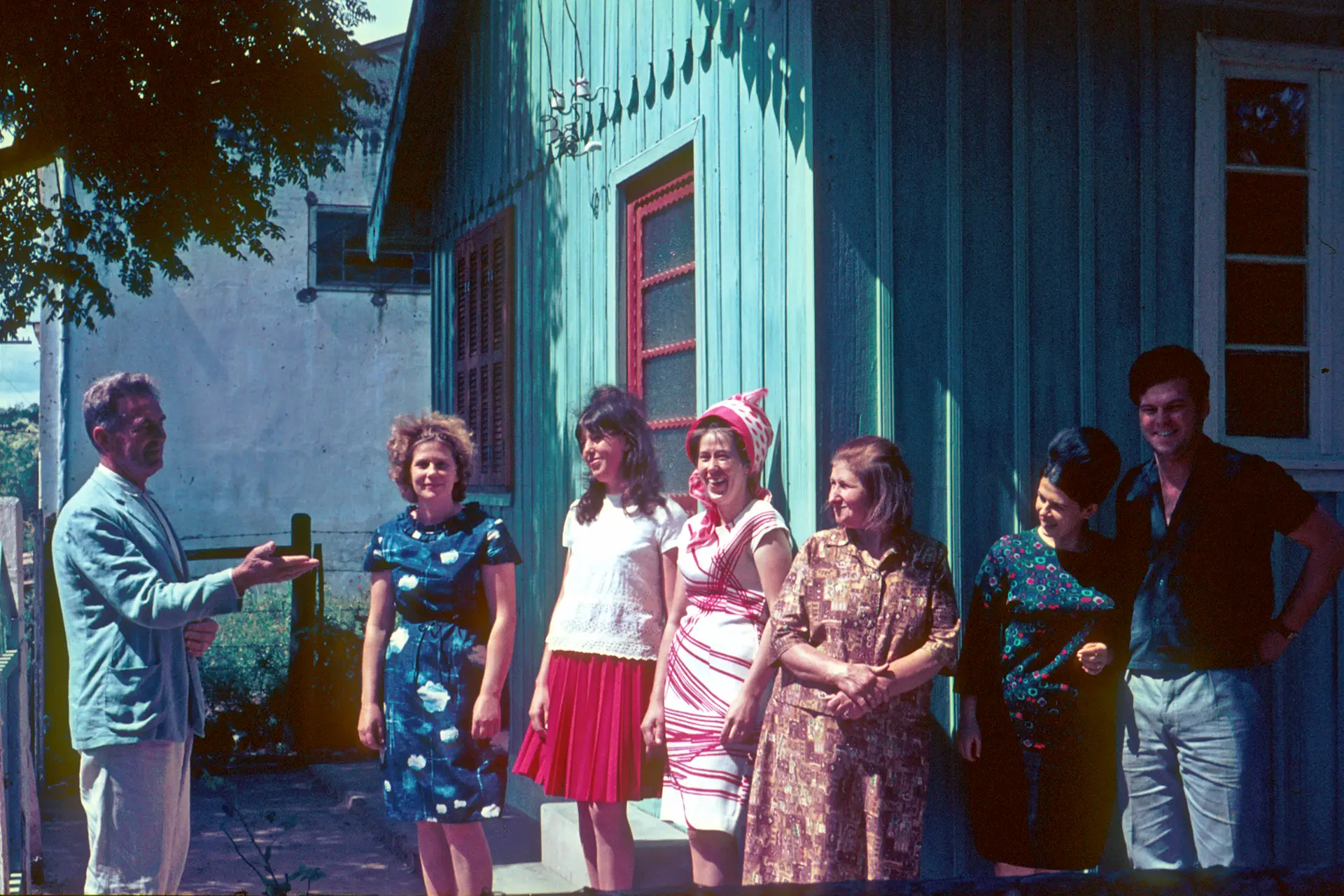
Knowing that João Pozzobon traveled so much, we might imagine that he had no time for his children and wife. However, his family was always his primary field of apostolate. From the coffee he brought his wife every day in bed to the personal conversations with his children… Many gestures reveal a man who was a missionary in his own home.
“I told the Mother and Queen that it mattered little to move the whole world if I neglected my family” (João Luiz Pozzobon).
This awareness even led him to gather all his children to ask their “permission” before dedicating more time to the Apostolate of the Pilgrim Mother, a simple but deeply symbolic gesture.
Household chores: everyone can help
As a husband, João Pozzobon never shirked his household duties. On the contrary, he tried to lighten his wife’s workload and involved his children in household responsibilities. Each had well-defined roles that adapted as they grew older.
“When his children were young, he would wax the floor to help his wife. When they grew up, each one had their own chore at home. His daughter Eli was in charge of cooking, and Vilma cleaned the house. When bread had to be made, it was he (Mr. João) who went to fetch the firewood and chop it, taking on the heaviest and most difficult tasks. He also helped around the house with all the household chores,” says Denise Moro, who was Mr. João’s secretary in the last years of his life.
Living and applying discipline
Pozzobon was extremely disciplined in his personal life. A clear example of this is his diaries and his Spiritual Schedule. The same applied to his children. He kept a written report on each of their behaviors.
His son Humberto says: “He had a notebook where he wrote down the names of all his children and put a cross or a mark next to them. For example, if I disobeyed, he would put a cross next to my name. He did this every day. And if we did a good deed, he would cross out a little cross. At the end of the month, he would give us a few coins as a reward to encourage us to be good. He did this daily check on each child; he was always checking. But he didn’t do it angrily; it was all done very delicately.”

Helping children discover their vocation and become independent
Pozzobon observed his children’s gifts and talents and tried to guide them toward a path of fulfillment. He encouraged them to seek their God-given vocation and also to find a professional career that would give them independence. His daughters were able to enroll in various courses and were trained for professional life, within the limits of what was possible at that time. His sons gradually took over the store and managed the business.
“When Eli was 18 and waxing the floor, Mr. João came in and said, ‘Eli, you can start dating now.’ Eli replied, ‘Thanks, Dad! But for now, I’d rather stay home.’ And so, she stayed, single by choice. And she was very happy. As a young woman, she wanted to work in the store, but her father wouldn’t let her. She was upset. Aware of her talents, Mr. João paid for her to take courses in sewing, embroidery, crochet, and knitting. Eli became a professional, made all her sisters’ wedding dresses, learned to make fabric-and-paraffin flowers and bouquets, and more. She was very happy and felt fulfilled,” says Denise, who heard this story firsthand.
Rebuke with love and teach through life experience
Humberto recalls that his father was a gentle and calm man, but he knew how to command respect, when necessary, always with love.
“He was a father we never saw angry. Sometimes he could be in a bad mood, but we never saw him really angry. Once, he called me gently. I had to go to an event, and he called me once, twice, three times, but I didn’t answer him, so he hit the ground with a stick, saying, ‘Come, Humberto, come!’ Later, they told me that he cried with regret for having done that. He had a beautiful heart.”

The virtue of justice
All of his children remember the solid formation in justice they received at home. For João Pozzobon, “a pound was a pound.” As a merchant, he never altered weights and measures and always gave the correct change.
That same integrity was also evident in the way he recounted the testimonies of the Pilgrim Mother Apostolate. Everything had to be told truthfully, without exaggeration, even when speaking of the graces received. For him, fidelity to the truth was an essential part of the mission.
Educating in piety
Some parents may find it difficult to talk to their children about sensitive topics such as death or illness. Pozzobon did so naturally, teaching children that suffering is part of life. He took his children to visit the sick and their families, and to pray the rosary. It was also customary to go to the cemetery to visit the grave of his deceased mother. Some families deprive children of the experience of pain. Pozzobon shows that this is necessary for a good human formation.
Being a provider of material and spiritual goods
From an early age, he taught his children the value of work. He had a store that provided for the family, but he also grew food for everyone:
“We had a vegetable garden, so he would go pruning, planting lettuce, cabbage, carrots… We had everything at home. He was always planting. He liked to plant fruit trees: orange, lemon, apple, etc. He had everything in his garden. He was very active in that sense,” says Humberto Pozzobon.
He valued the spiritual life of his seven children. “We always tried to accompany him in praying the rosary when it was prayed near the house, and when it wasn’t, we all prayed at home too,” says his youngest son.
The “seven graces”
For João Pozzobon, his children were never a burden, but a true blessing entrusted to him by God. By referring to them as his “seven graces,” he demonstrated an ability to recognize a gift and a mission in each life. May his testimony inspire today’s parents, and may we have recourse to his intercession to ask for the grace to educate our children with the same spirit of love, responsibility, and trust in God.
Translation: Sr. M. Lourdes Macías