
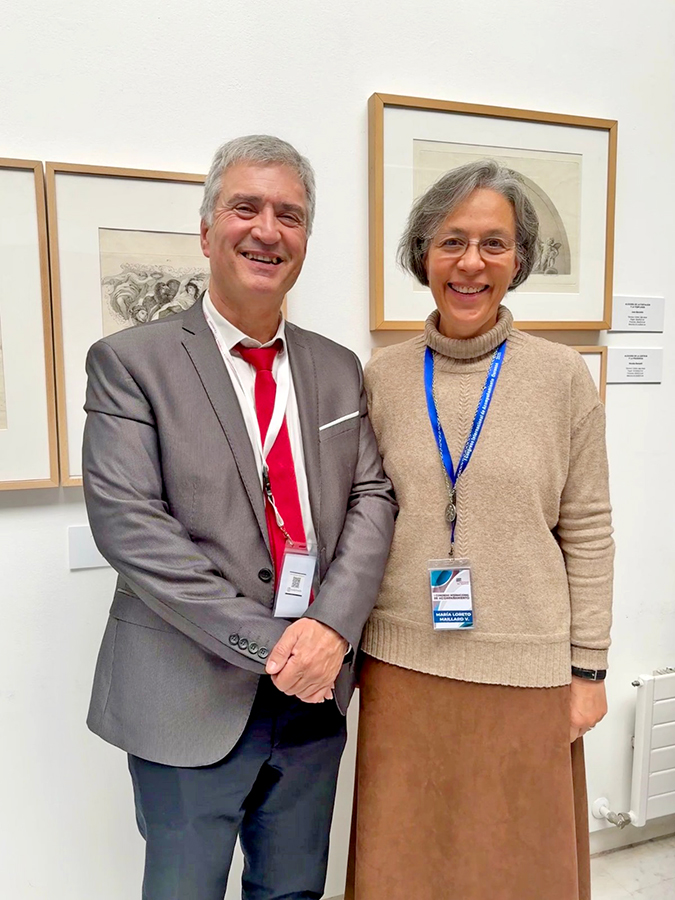
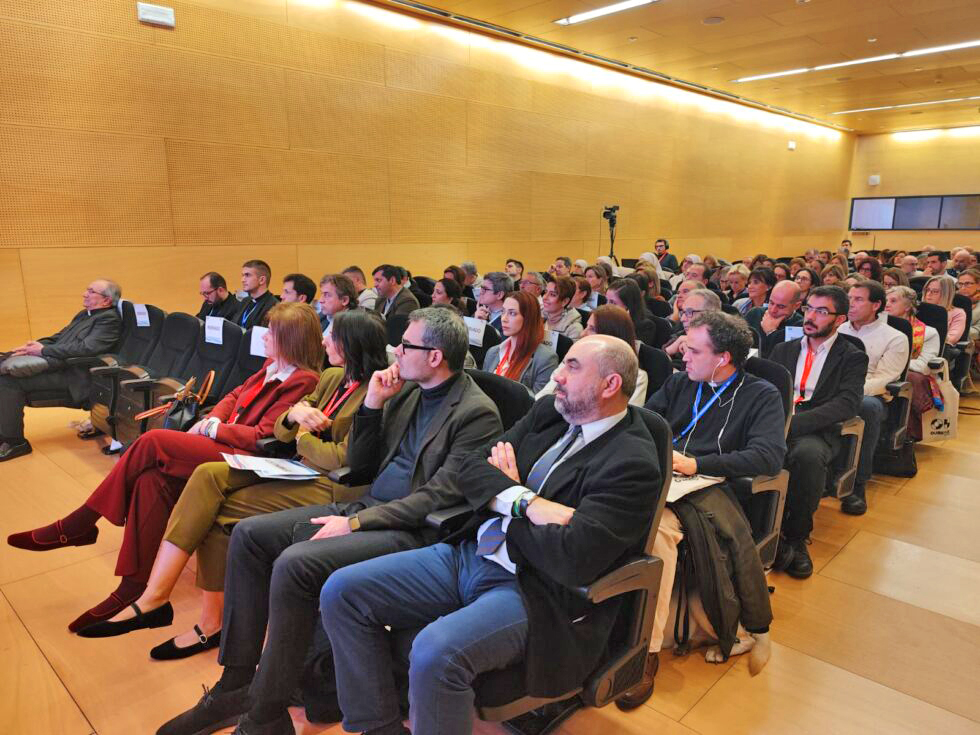
From November 20 to 22, Sr. María Ignacia Maillard, moderator of the Schoenstatt Family League in Madrid, Spain, participated in the First International Congress on Accompaniment. The event was held in Ourense, Spain, and organized by the Institute for Families and the International Institute of Accompaniment, both of which are Spanish civil institutions. Several congress participants from Spain, Portugal, and Latin America gathered to reflect, exchange experiences, and receive training in the practice of integral accompaniment, in a context marked by the growing need for support in many areas of people’s lives.
During the Congress, Sr. María Ignacia had the opportunity to present the paper “The healing power of love: a path of accompaniment in marriage,” sharing her experience as a family counselor in Madrid, where she accompanies couples and families. She focused her presentation on how the principles of our charism—the value of connection, self-knowledge, inner freedom, trust in Providence, and the transforming power of love—can guide real processes of growth, healing, and reconciliation in the daily lives of married couples.
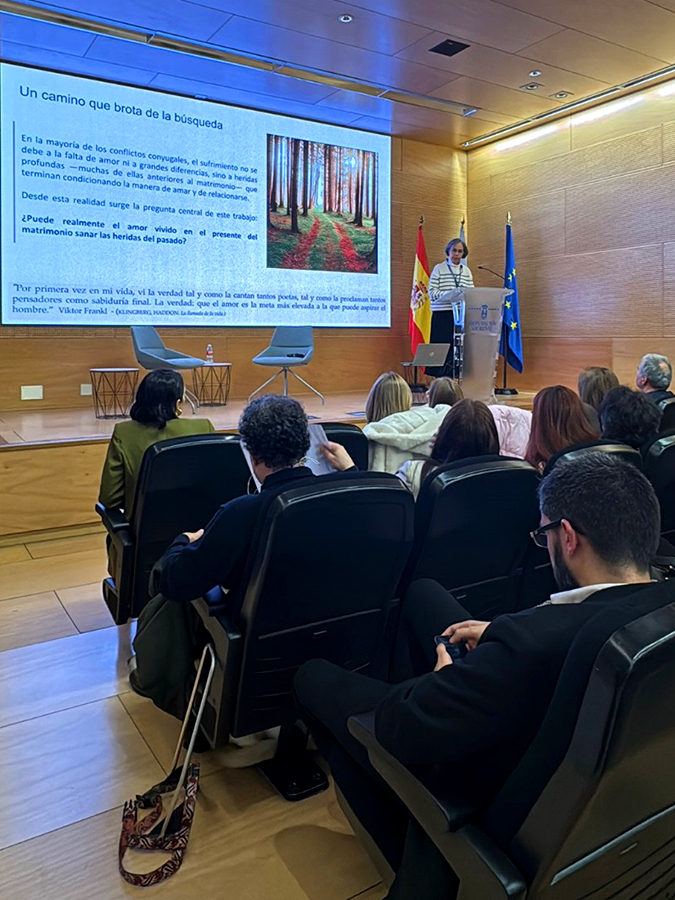
The Congress provided a profound framework for understanding what it means to accompany today and for training accompanying persons who can listen, support, and open paths for personal, family, and spiritual growth. The importance of the “inner place” from which the accompanier situates himself or herself was emphasized, as well as the decisive relevance of the bond as the axis of every process. Accompanying is not about applying techniques, but about respectfully entering into the other person’s story, walking alongside them, and helping them discover supports and horizons that illuminate their life. It involves creating a space in which the person feels seen, welcomed, and understood in their entirety, where their values, wounds, questions, and deepest desires can emerge. More than tools, it requires a mature attitude capable of generating a climate of emotional security and respect that favors the integral growth of the person being accompanied and enhances their freedom and dignity.
A broad and interdisciplinary perspective
Throughout the presentations, workshops, and round tables, perspectives from psychology, education, philosophy, spirituality, and social intervention were integrated. The Congress thus demonstrated the richness of an interdisciplinary vision of accompaniment, capable of responding to the complexity of today’s life.
Among the most valuable contributions was the reflection of Dr. Xosé Manuel Domínguez, one of the leading figures in personalist accompaniment. He emphasized the importance of combining anthropology, methodological clarity, and a human sensitivity capable of embracing the whole reality of the person. His perspective helped place accompaniment within a horizon of integral growth, where each person can integrate their history, affections, and decisions from a deep sense of dignity and freedom.
Schoenstatt’s contribution
Participating on behalf of the Schoenstatt Movement, Sr. María Ignacia tells us more about the Congress:
What was Schoenstatt’s contribution to this event?
Listening to the different contributions at the Congress—and from my own experience as a moderator for the Family League in Madrid—the question arose strongly about how we can enrich this journey through the lens of Schoenstatt spirituality.
I believe that our contribution can be expressed above all from the “organic vision” of the person, which is so central to Fr. Joseph Kentenich’s thinking. He affirmed that human beings grow when they connect healthily with themselves, others, God, and life. This vision, which integrates reason, affectivity, and will in the context of one’s personal history and mission, uniquely illuminates the current processes of accompaniment.
Based on your presentation and Schoenstatt pedagogy, what are the most salient aspects of “accompaniment” that we can draw from these reflections?
Accompanied by this perspective implies:
- caring for the bonds that allow the person to flourish,
- accompanying authentic rhythms and biographies,
- helping to interpret life from a pedagogical perspective that values inner freedom, personal responsibility, and trust in Providence.
I am convinced that this perspective can offer the world of accompaniment a unique and enriching approach, fully compatible with current developments in the professional and pastoral fields.
How was the conference, and what can you tell us about your participation?
The atmosphere of the conference was marked by dialogue, mutual learning, and a sincere desire to serve those who seek guidance and support better, especially in times of difficulty or when searching for meaning. At a time when so many people feel overwhelmed, alone, or disoriented, spaces like this renew the commitment to building an authentic culture of care.
For me, these days were also an opportunity to recognize the richness that our spirituality and pedagogy can bring to the understanding of accompaniment and to the work of those who labor in this field. These were days for deepening, sharing, and allowing ourselves to be transformed. Because accompanying—and allowing ourselves to be accompanied—remains one of the most human, necessary, and beautiful acts of our time.

Translation: Sr. M. Lourdes Macías