Schoenstatt pedagogy often uses symbols to represent the ideals and goals we set for ourselves. It is common to see flags, T-shirts, caps… with images that embody our mission. In Italy, some families in the Movement also apply this educational approach to their family life. Today, we’ll learn about something that is taking shape among Italian families in the Movement through strategies from Schoenstatt pedagogy. They have set out to create a coat of arms and define a “couple’s ideal.”
The coat of arms represents daily life between parents and children. In this image, they express their shared characteristics and the path they wish to follow as a couple. The couple’s ideal summarizes the spirit with which they want to embrace their vocation.
How can we discover the couple’s ideal?
There is no single path, but some reflections can help in this step-by-step process.
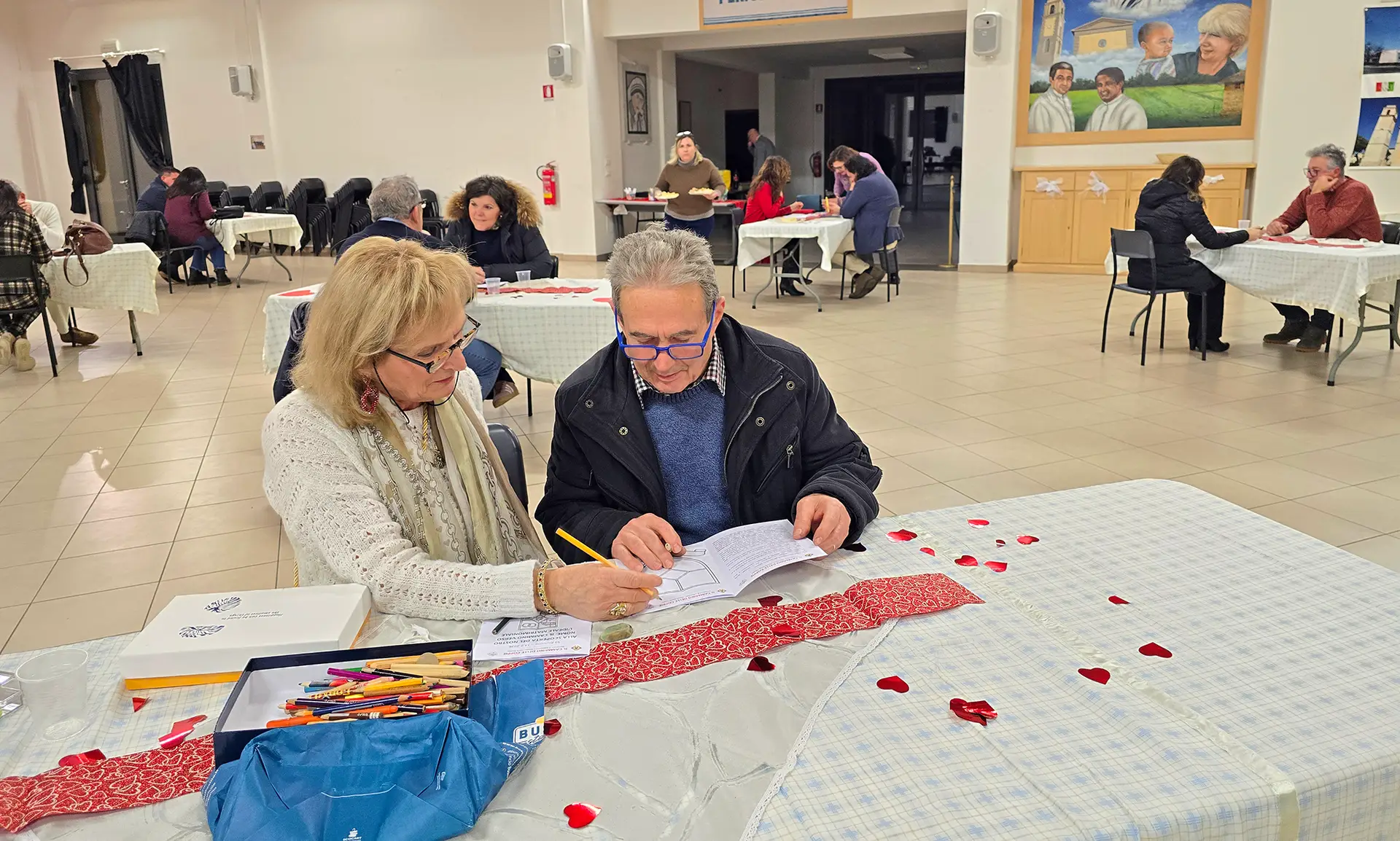
To give a concrete example, we can see how this work unfolded within the Schoenstatt Family League group in Perignano, Tuscany (Italy). Couples were invited to create a “couple’s coat of arms” and, subsequently, to define their “couple’s ideal.”
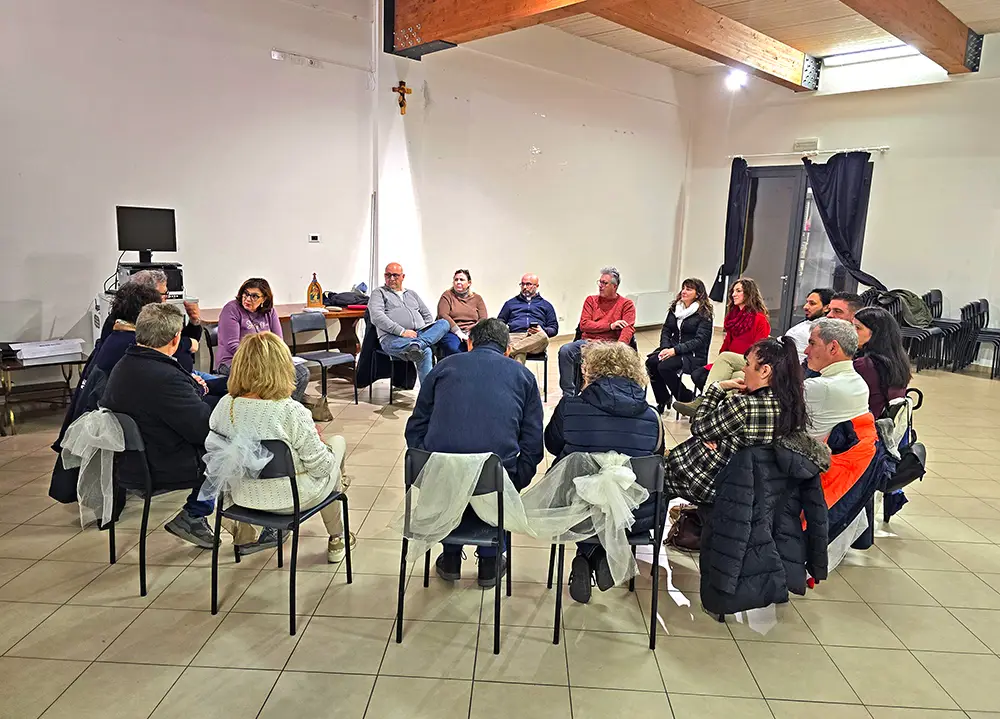
Each couple was guided toward a moment of listening and discernment, to re-examine their history through symbols, shared memories, and dialogue. This led them to embrace a more conscious vision of their couple and family identity.
The “Couple’s coat of arms” thus becomes the visual language of what the spouses are called to do: give a name, a motto, or a symbol to their ideal as a couple and recognize their concrete and unique vocation.
First stage: designing a “Couple’s Coat of Arms”
Having a coat of arms can serve as a helpful way to unify our mission as spouses, parents, and children. That’s why we will share how we created this proposal.
The proposed work is organized into four stages that involve genuine and shared discernment. By reflecting on the journey already taken—comprising commitment, dialogue, and reflection—the couple can recognize their identity and intuit God’s plan for their lives, re-examining their experience to discover their “name” as a couple.
How to develop a coat of arms?
Ideals have always been represented through symbols, such as flags, banners, or coats of arms. This symbolic language is present in both civil and ecclesial life. Just think, for example, of John Paul II’s papal coat of arms, with the letter “M” for Mary next to the cross and the motto “Totus tuus.”

In light of this experience, we propose creating a couple’s coat of arms divided into five fields:
- the first is dedicated to our history, a symbol that represents two or three key moments in our shared journey.
- the second refers to the relationship between the spouses: what attitude, most characteristic and distinctive, defines our mutual relationship?
- the third field describes the ideal setting for family and children: What kind of atmosphere do we want to create in our home?
- the fourth field reflects what best defines our apostolic spirit;
- Finally, the fifth field, which is the square in the center of the coat of arms, represents what is most characteristic of our relationship with the supernatural world.
When designing the family coat of arms, one or two symbols can be selected to represent the family’s ideals, as a symbol carries a deeper, more evocative power than words. The coat of arms becomes a personalized emblem that reflects the couple’s charism and vocation, their faith journey, and the Covenant of Love with Mary. You can include symbols and colors with spiritual significance, as well as mottos and specific values that define the family’s mission.
Next Steps in Formulating the “Couple’s Ideal”
The coat of arms allows us to have a clearer vision of our family’s characteristics. This leads us to a new stage in the search for a “couple’s ideal.”
The next step is to recapitulate and note the most important aspects of the work the couple has done throughout their life journey, in the following areas:
- Our spiritual history (2 or 3 elements from the couple’s reflection);
- Our characteristics as a couple and family (those that best define us, no more than 3);
- The values or attitudes we feel called to embody and radiate (no more than 2 or 3)
- The main tasks we feel called to carry out—as a couple, as a family, and within the Movement, the Church, our work, and so on—are those that develop or reinforce the values and attitudes that define our relationship.
Formulating the “Couple’s Ideal”
After carrying out the summary reflection described above, we can formulate a “couple’s ideal.” It can be formulated:
- With a name. Example: “House of Nazareth”;
- With a motto. Example: “House Open to the World”;
- We can also choose a symbol that represents us. Example: “fire.”
The Couple’s Prayer
Another meaningful step is for the couple to create their own prayer. They should write a short prayer together that expresses their ideals and desires. They then present it to the Lord and the Blessed Mother, asking for the grace to live by it. It is recommended that each person write their part individually and then share it with their spouse, forming a unique couple’s prayer. It should not be longer than the Lord’s Prayer or the Little Consecration.
The Importance of the “Couple’s Ideal” in Contemporary Society
The couple’s ideal is God’s dream for the couple: a force that unites, guides, and gives meaning to married life. Through the sacrament, spouses are called to make visible Christ’s faithful and fruitful love for the Church, each according to their own history and challenges. This ideal is not imposed from the outside, but grows from within, as a deep desire that asks to be recognized and cultivated.